Rajasthan CMO: 80 Lakh Tonnes of Waste Used in Roads
Synopsis
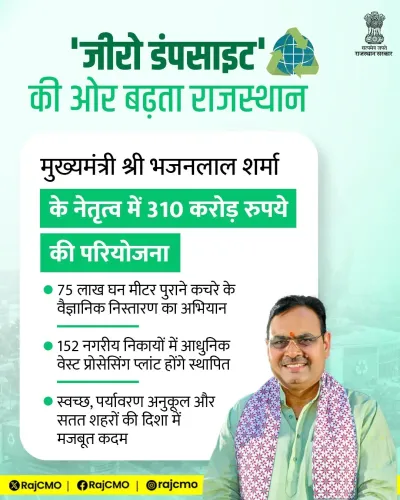
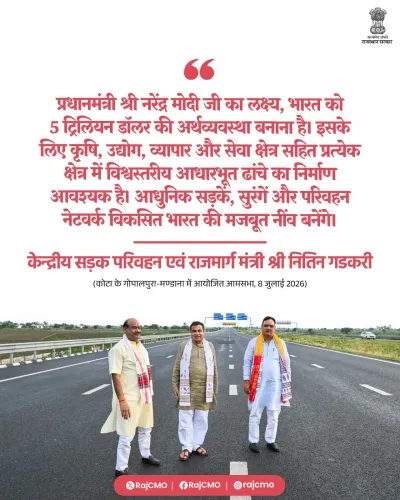
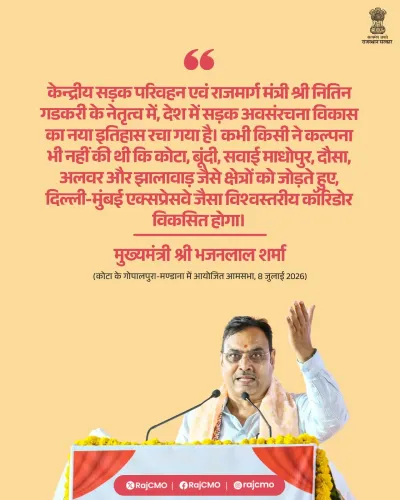
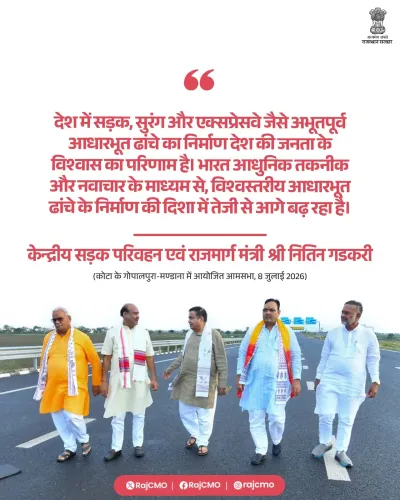
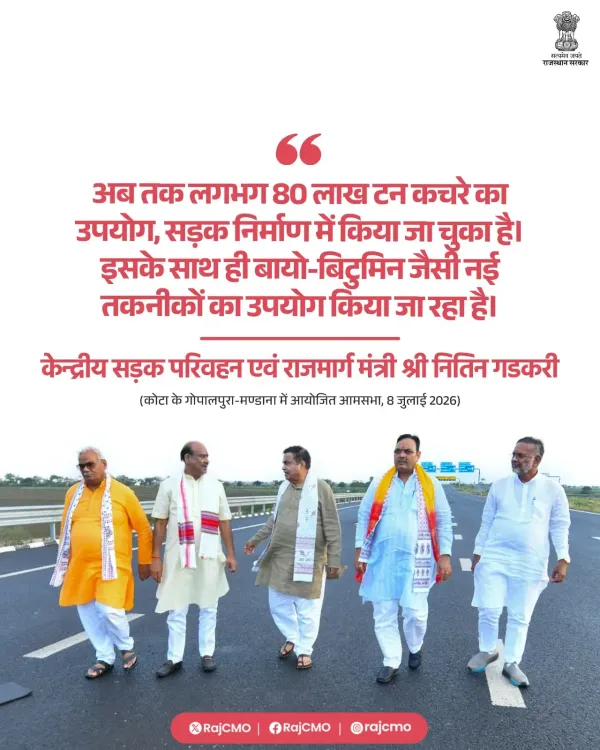
The Chief Minister's Office of Rajasthan announced on 9 July 2026 that roughly 80 lakh tonnes of waste has been used in road construction, tagging Union Minister Nitin Gadkari. The claim places Rajasthan at the centre of India's circular-economy push in highway infrastructure under MoRTH guidelines active since 2015-16.
Key Takeaways
The Chief Minister's Office of Rajasthan stated that approximately 80 lakh tonnes of waste has been used in road construction to date.
The post directly tagged Union Minister Nitin Gadkari , linking the achievement to his national waste-to-roads policy push.
MoRTH guidelines from 2015-16 formally encouraged use of plastic waste, fly ash, and recyclables in road layers to cut bitumen use.
The Swachh Bharat Mission (2014) provided the overarching framework connecting urban waste segregation to infrastructure applications.
The announcement was made under the campaign hashtag #आपणो_अग्रणी_राजस्थान , branding Rajasthan as a pioneer in governance.
Independent verification of the 80 lakh tonne figure and a waste-type breakdown have not yet been publicly released.
The Chief Minister's Office of Rajasthan announced on Thursday, 9 July 2026 that approximately 80 lakh tonnes of waste has so far been utilised in road construction across the state, tagging Union Minister Nitin Gadkari in the post under the campaign hashtag #आपणो_अग्रणी_राजस्थान ('Our Pioneering Rajasthan').
Context
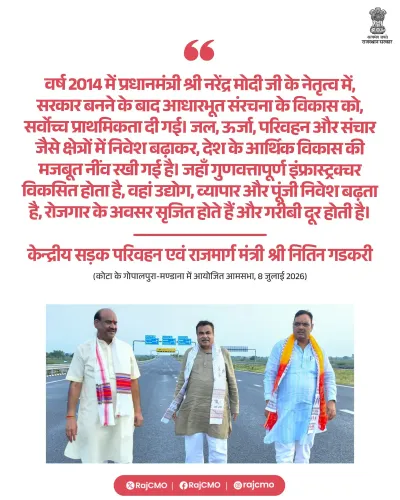
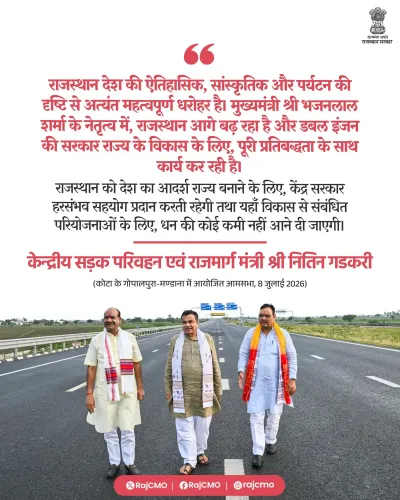
The post, shared on the official RajCMO X account, states: 'अब तक लगभग 80 लाख टन कचरे का उपयोग सड़क निर्माण में किया जा चुका है' — translated as 'So far, approximately 80 lakh tonnes of waste has been used in road construction.' The direct mention of Nitin Gadkari, who heads the Ministry of Road Transport and Highways (MoRTH), signals that Rajasthan is positioning this achievement within the broader national framework he has championed.
The hashtag #आपणो_अग्रणी_राजस्थान — meaning 'Our Pioneering Rajasthan' — is part of the state government's ongoing effort to brand itself as a front-runner in governance and infrastructure outcomes.
Policy Backdrop
India's push to embed waste in road construction dates to 2015-16, when MoRTH issued formal guidelines encouraging the use of plastic waste, fly ash, and other recyclable materials in road layers to cut bitumen consumption and reduce landfill pressure. The Swachh Bharat Mission, launched in 2014, created the overarching policy architecture that linked urban local bodies' waste-segregation efforts to downstream infrastructure applications, including roads.
Gadkari has been a consistent advocate of this circular-economy approach, pushing states and highway contractors to incorporate recycled materials as a percentage of road construction inputs. Central guidelines have been adopted unevenly across states, making Rajasthan's claimed volume — approximately 80 lakh tonnes — a significant headline figure if substantiated.
Stakeholders and Impact
Urban local bodies and public-works departments in Rajasthan are the primary operational actors in this chain, responsible for collecting, segregating, and supplying waste to highway contractors. Diverting 80 lakh tonnes from landfills would represent a substantial reduction in municipal waste burden and a proportional saving in virgin bitumen procurement costs.
Highway contractors benefit from lower material costs where recycled content is incentivised or mandated in tender conditions. Residents near construction corridors and landfill sites stand to gain from reduced environmental pressure, though independent verification of the cumulative tonnage figure has not been confirmed.
What's Next
Attention will now turn to whether MoRTH issues updated circulars raising the mandatory recycled-content percentage for future national and state highway tenders — a move that would lock in and accelerate the kind of volumes Rajasthan is now publicising. State-level disclosures on the breakdown of waste types — plastic, construction debris, fly ash — and the specific road corridors where they have been deployed would add verifiability to the headline figure.
If Rajasthan's model gains central endorsement, it could become a template for other large states seeking to align municipal solid-waste management with infrastructure spending under upcoming five-year plan allocations.
Point of View
The Rajasthan CMO's office is doing more than announcing a statistic — it is staking a claim to leadership within a nationally driven policy framework, seeking central recognition for state-level execution. The 80-lakh-tonne figure, if verified, would represent one of the larger state-level contributions to India's waste-in-roads programme, giving Rajasthan political and administrative leverage in future MoRTH negotiations over project allocations. The timing also fits a pattern of state governments using infrastructure metrics to demonstrate fiscal prudence and environmental credibility simultaneously. The unresolved question of independent verification means this announcement opens a window of scrutiny that the state will need to address with granular data.
NationPress
8 Oct 2026
Frequently Asked Questions
How much waste has Rajasthan used in road construction?
According to the Chief Minister's Office of Rajasthan, approximately 80 lakh tonnes of waste has been used in road construction in the state as of July 2026.
What is India's policy on using waste in road construction?
The Ministry of Road Transport and Highways issued guidelines in 2015-16 encouraging the use of plastic waste, fly ash, and other recyclable materials in road layers to reduce bitumen consumption and landfill burden.
What is the role of Nitin Gadkari in waste-to-roads projects?
As Union Minister for Road Transport and Highways, Nitin Gadkari has been a leading advocate of incorporating recycled waste into road construction since at least 2015, pushing states and contractors to adopt circular-economy practices.
What is the Swachh Bharat Mission's connection to road construction?
The Swachh Bharat Mission, launched in 2014, created the policy framework that linked urban local bodies' waste-segregation efforts to downstream infrastructure uses, including the incorporation of waste materials in road construction.
What does #AapnoAgraniRajasthan mean?
The hashtag #आपणो_अग्रणी_राजस्थान translates from Rajasthani/Hindi as 'Our Pioneering Rajasthan' and is used by the state government to brand Rajasthan as a front-runner in governance and development initiatives.