Rajasthan CM adds CAR-T Cell Therapy to RGHS cancer cover

Synopsis
Rajasthan CM Bhajan Lal Sharma has announced that CAR-T Cell Therapy — an advanced cancer immunotherapy — will be added to the RGHS package for state government employees and their families, marking one of the most significant expansions of the scheme's cancer coverage.
Key Takeaways
CAR-T Cell Therapy will be included in the approved treatment package under the Rajasthan Government Health Scheme (RGHS) .
The benefit covers state government employees, pensioners, and their family members .
India approved its first indigenous CAR-T therapy, NexCAR19 , in 2023 for blood cancers such as B-cell lymphoma and leukaemia.
Practical access will depend on which hospitals are empanelled, the fixed package rate, and the rollout timeline — none of which have been officially detailed yet.
Rajasthan joins a broader national trend of states expanding employee health schemes to cover high-cost critical-illness therapies.
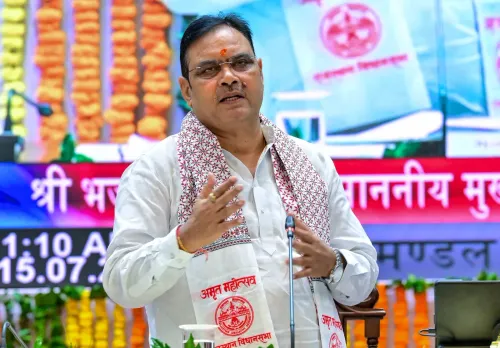
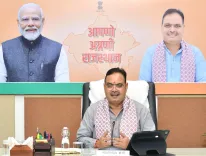
A cutting-edge cancer treatment that was out of reach for most government employees is now moving inside the safety net. Rajasthan Chief Minister Bhajan Lal Sharma announced on Wednesday, 19 August 2026 that CAR-T Cell Therapy — one of the most advanced immunotherapies available for certain blood cancers — will be included in the approved package list under the Rajasthan Government Health Scheme (RGHS), extending the benefit to state employees and their families.
Posting in Hindi, CM Sharma wrote: 'कर्मचारियों एवं उनके परिवारों की स्वास्थ्य सुरक्षा हमारी सर्वोच्च प्राथमिकता है' — 'The health security of employees and their families is our highest priority.' The decision, he said, will provide 'better access to modern treatment and strong health protection' to those battling serious illness.What CAR-T therapy actually means for a government employee
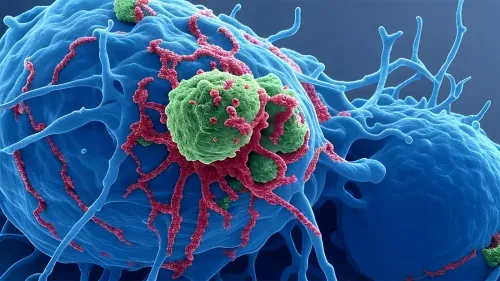
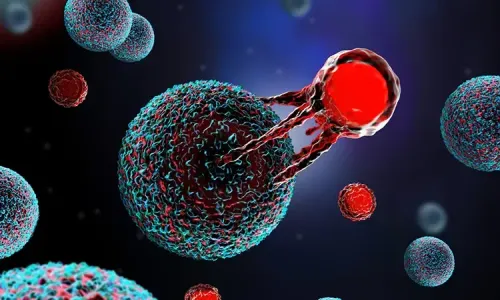
CAR-T Cell Therapy (Chimeric Antigen Receptor T-cell therapy) works by genetically re-engineering a patient's own immune cells to hunt and destroy cancer cells. It is not a drug in the conventional sense — it is a living therapy, manufactured individually for each patient, and it carries a price tag that has historically placed it far beyond the reach of salaried public servants.
India took a landmark step in 2023 when it approved NexCAR19, the country's first indigenous CAR-T therapy, developed to treat specific blood cancers including B-cell lymphomas and leukaemias. That approval was designed precisely to improve access — but reimbursement through government schemes has remained the missing link. Rajasthan's decision is a direct attempt to close that gap for its own workforce.
RGHS: the scheme that now carries the weight of this promise
The Rajasthan Government Health Scheme provides cashless medical coverage to state government employees, pensioners, and their dependants across a network of empanelled public and private hospitals. Adding CAR-T therapy to its package list means eligible beneficiaries could, in principle, access the treatment without bearing the catastrophic out-of-pocket cost themselves.
Several Indian states have moved in this direction in recent years, expanding employee health schemes to cover high-cost critical-illness treatments. Rajasthan's move fits that broader pattern — but the practical impact will hinge on details yet to be made public: which hospitals will be empanelled to deliver CAR-T therapy, what reimbursement package rate the state fixes, and when the inclusion actually takes effect on the ground.
What the rollout will need to deliver
CAR-T therapy requires highly specialised infrastructure — dedicated cell-processing facilities, trained oncology teams, and intensive post-infusion monitoring. The number of hospitals in Rajasthan currently equipped to administer it is limited. Whether RGHS empanels only government medical colleges or also brings in private centres will shape how many beneficiaries can realistically access the benefit rather than merely hold it on paper.
The announcement sets a direction. The empanelment list, the package rates, and the rollout timeline will tell us whether it becomes a genuine lifeline or a well-intentioned headline.
Point of View
The announcement also carries political logic: government employees are an organised, vocal constituency, and expanding their health entitlements is a low-friction way to demonstrate welfare intent. The harder test is implementation — CAR-T delivery requires infrastructure that most state hospitals do not yet have, meaning the gap between announcement and actual patient benefit could be wide. How quickly Rajasthan moves on empanelment and package pricing will reveal whether this is structural reform or symbolic positioning.
NationPress
3 Oct 2026
Frequently Asked Questions
What is CAR-T Cell Therapy and why is it significant?
CAR-T Cell Therapy genetically re-engineers a patient's own immune cells to target and destroy cancer cells. It is considered a breakthrough for certain blood cancers like B-cell lymphoma and leukaemia, but has historically been extremely expensive and available only at a handful of specialised centres in India.
Who is covered under RGHS in Rajasthan?
The Rajasthan Government Health Scheme covers state government employees, pensioners, and their dependent family members, providing cashless treatment at empanelled hospitals.
When was CAR-T therapy approved in India?
India approved its first indigenous CAR-T therapy, NexCAR19, in 2023 . It was developed to improve domestic access to this class of cancer treatment.
Will RGHS beneficiaries get CAR-T therapy immediately?
The announcement confirms the policy decision to include CAR-T therapy in the RGHS package, but the exact empanelled hospitals, reimbursement rates, and rollout timeline have not yet been officially announced.
Which cancers does CAR-T therapy treat?
CAR-T therapy is currently approved for certain blood cancers, including B-cell lymphomas and specific types of leukaemia. It is not yet a standard treatment for solid tumours.