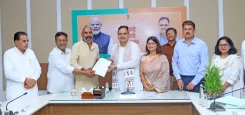
Rajasthan CM Bhajan Lal Pledges Justice for Every Needy Citizen
Synopsis
The Chief Minister's Office of Rajasthan, citing CM Bhajan Lal Sharma, has pledged that the state government will ensure justice reaches every needy citizen. The statement invokes the 'Agrani Rajasthan' brand and aligns with the state's legal aid infrastructure under the Legal Services Authorities Act, 1987.
Key Takeaways
The Chief Minister's Office of Rajasthan posted on August 9, 2026 , affirming the state's commitment to accessible justice for every needy person.
The statement is attributed to Chief Minister Bhajan Lal Sharma of the BJP .
The Rajasthan Legal Services Authority (RSLSA) , under the Legal Services Authorities Act, 1987 , is the existing institutional mechanism for free legal aid and Lok Adalats in the state.
The post carries the hashtag #आपणो_अग्रणी_राजस्थान ('Our Leading Rajasthan'), framing justice delivery as part of a broader state-branding effort.
No specific new scheme or statistic was announced; the focus is on reinforcing political commitment to legal access for marginalised communities.
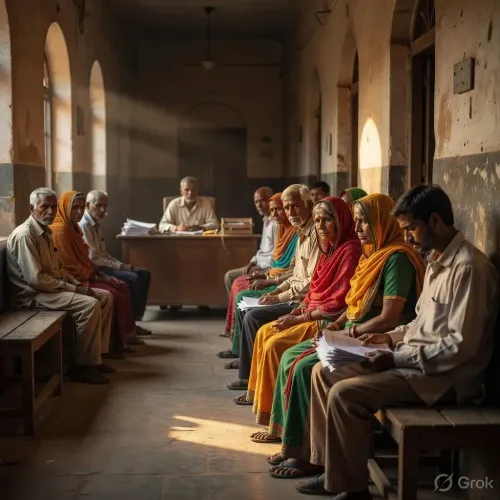
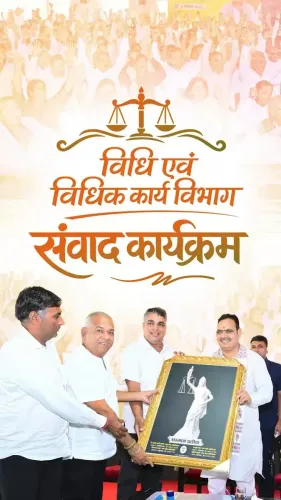
Access to justice is not a privilege — it is a promise. The Chief Minister's Office of Rajasthan, on behalf of Chief Minister Bhajan Lal Sharma, reaffirmed on Sunday, August 9, 2026, that the state government is committed to ensuring every person in need can reach the justice system without barriers.
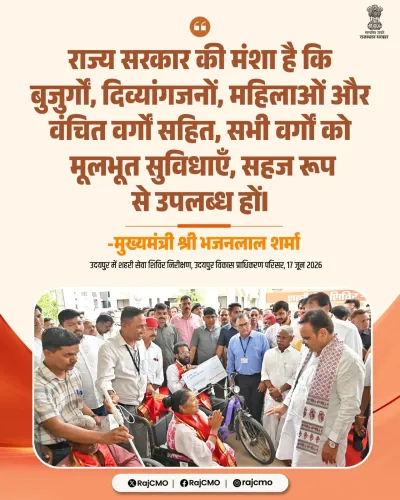
The post, carrying the hashtag #आपणो_अग्रणी_राजस्थान ('Our Leading Rajasthan'), stated plainly: 'राज्य सरकार का प्रयास है कि हर जरूरतमंद व्यक्ति तक न्याय सुलभ रूप से पहुँचे' — 'It is the state government's endeavour that justice reaches every needy person easily.' The message, attributed to CM Bhajan Lal Sharma, is brief but pointed: the administration is framing accessible justice as a governing priority, not an aspiration.
Rajasthan's Legal Aid Architecture
The institutional backbone for this commitment already exists. The Rajasthan Legal Services Authority (RSLSA), constituted under the Legal Services Authorities Act, 1987, is mandated to provide free legal aid and organise Lok Adalats — people's courts — for citizens from weaker sections and marginalised communities. The national framework gives states both the structure and the mandate; what varies is the political will to activate it.
Across India, states have used tools ranging from legal aid camps in rural blocks to e-court expansions to cut the distance — literal and procedural — between citizens and courts. Rajasthan's participation in these frameworks has been consistent, and the CM's statement signals an intent to sharpen that focus.
What the 'Leading Rajasthan' Frame Signals
The hashtag #आपणो_अग्रणी_राजस्थान is not incidental. 'Agrani' means 'leading' or 'frontrunner' — a branding choice that places justice delivery inside a broader narrative of Rajasthan positioning itself as a model state under the BJP government. For Bhajan Lal Sharma, who took charge as Chief Minister, weaving legal access into that identity is a deliberate governance signal aimed squarely at the state's vast rural and semi-urban population, where the distance to a court — or a lawyer — can be measured in hours, not minutes.
The real test will come in the specifics: new legal aid camps, expanded e-court coverage, or amendments to state legal services rules that make the promise operational. Watch this space.
Point of View
Legal access — into a competitive state-branding narrative. The 'Agrani Rajasthan' framing is an attempt to position the government as a frontrunner on governance metrics ahead of future electoral cycles. The real policy question is whether this commitment translates into measurable expansion of Lok Adalats, legal aid camps, or e-court infrastructure — without that, the statement remains aspirational. For a state with a large rural and tribal population, the gap between intent and institutional reach is where governance is actually tested.
NationPress
9 Aug 2026
Frequently Asked Questions
What did Rajasthan CM Bhajan Lal Sharma say about justice access?
CM Bhajan Lal Sharma's office stated that the state government's endeavour is to ensure justice reaches every needy person easily, as part of its 'Agrani Rajasthan' governance push.
What is the Rajasthan Legal Services Authority?
The Rajasthan Legal Services Authority (RSLSA) is a state body constituted under the Legal Services Authorities Act, 1987, that provides free legal aid and organises Lok Adalats for weaker sections and marginalised communities.
What is a Lok Adalat and how does it help citizens in Rajasthan?
A Lok Adalat is a people's court that resolves disputes through conciliation and compromise, offering a faster and cost-free alternative to regular courts — particularly useful for poor and marginalised citizens in Rajasthan.
What does #आपणो_अग्रणी_राजस्थान mean?
The hashtag translates to 'Our Leading Rajasthan' and is used by the Rajasthan government to brand its governance initiatives as positioning the state as a frontrunner in development and public welfare.
Who is Bhajan Lal Sharma?
Bhajan Lal Sharma is the Chief Minister of Rajasthan, representing the BJP, and is responsible for the state's administration and policy direction.