Rajasthan CM Bhajanlal Sharma backs drug-free India push
Synopsis
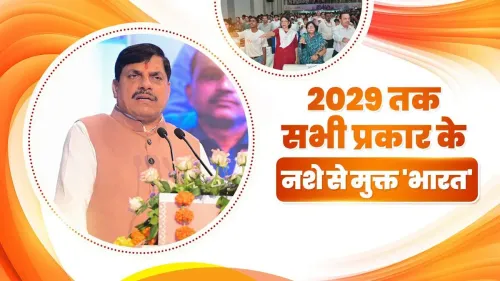
Rajasthan's Chief Minister's Office has affirmed the state's full commitment to India's 2029 drug-free target, backing the Nasha Mukt Bharat Abhiyan under CM Bhajanlal Sharma's BJP-led government in a show of cooperative federalism on substance abuse.
Key Takeaways
The Chief Minister's Office of Rajasthan posted on 12 November 2026 reaffirming state commitment to a drug-free India by 2029 .
The statement was tagged to CM Bhajanlal Sharma , who has led Rajasthan's BJP government since December 2023 .
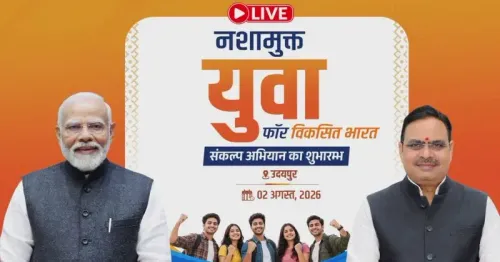
The post aligns Rajasthan with the Nasha Mukt Bharat Abhiyan , the national anti-drug campaign launched in 2020 by the Ministry of Social Justice and Empowerment.
No specific budget allocations, new facilities or state action plan details were disclosed in this announcement.
The hashtag #आपणो_अग्रणी_राजस्थान ('Our Leading Rajasthan') signals an effort to position the state as a model in national welfare missions.
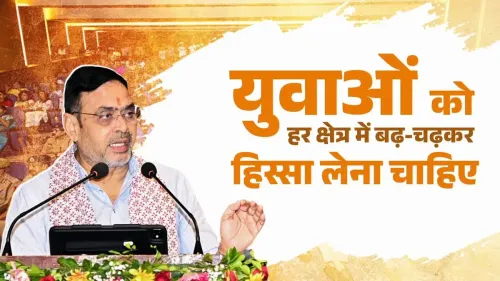
Rajasthan is putting its full weight behind India's most ambitious public health pledge. The Chief Minister's Office of Rajasthan declared on Thursday, 12 November 2026 that the state government is working with 'complete commitment' toward a drug-free India — with the year 2029 named as the target horizon.
The post, tagged to Chief Minister Bhajanlal Sharma and carrying the hashtag #आपणो_अग्रणी_राजस्थान ('Our Leading Rajasthan'), is a pointed signal that Rajasthan's BJP-led administration is aligning itself firmly with the national anti-drug mission. The phrasing — 'पूरी प्रतिबद्धता के साथ' ('with full commitment') — is deliberate. This is the state's public word.
Nasha Mukt Bharat Abhiyan: the national framework behind the pledge
The Nasha Mukt Bharat Abhiyan was launched in 2020 by the Union Ministry of Social Justice and Empowerment to tackle substance abuse through awareness drives, prevention programmes and rehabilitation infrastructure. It became the central spine around which state governments were expected to build their own action plans — from de-addiction centres to school-level outreach.
Rajasthan's reaffirmation fits a broader pattern of what analysts describe as cooperative federalism on welfare: states adopting the Centre's social mission vocabulary and tying state-level budgets and administration to national targets. For CM Bhajanlal Sharma, who took office in December 2023, this also carries a domestic political logic — positioning Rajasthan as a model BJP-governed state on a cause that resonates deeply in both rural and urban communities.
Youth, families, and the communities watching the most
Substance abuse in India touches young populations disproportionately, and state-level delivery — de-addiction camps, district-level helplines, awareness runs — determines whether a national campaign becomes a real intervention or stays a banner slogan. Rajasthan's communities affected by drug dependency will be watching whether this commitment translates into measurable expansion of rehabilitation services and enforcement coordination before the stated deadline.
The numbers that matter most — budget lines, new de-addiction facilities, enrolment in rehabilitation programmes — have yet to be detailed in this announcement. Those specifics will be the real scorecard.
Pledges are made in press releases; drug-free futures are built centre by centre, district by district. Rajasthan has set its clock to 2029.
Point of View
The optics are useful: welfare credibility is a currency that matters with rural and semi-urban constituencies. The harder question is whether the declaration is backed by a concrete state action plan or remains aspirational branding. Watch for budget allocations in Rajasthan's next welfare spending cycle as the real indicator of intent.
NationPress
12 Nov 2026
Frequently Asked Questions
What is Nasha Mukt Bharat Abhiyan?
Nasha Mukt Bharat Abhiyan is a national campaign launched in 2020 by India's Ministry of Social Justice and Empowerment to combat substance abuse through awareness, prevention and rehabilitation programmes across all states.
Who is Bhajanlal Sharma?
Bhajanlal Sharma is the Chief Minister of Rajasthan, leading the BJP government in the state since December 2023.
What is Rajasthan's target for a drug-free state?
The Chief Minister's Office of Rajasthan has stated the state is working toward the goal of a drug-free India by 2029, in line with the national mission's target horizon mentioned in the post.
What does 'Aapno Agrani Rajasthan' mean?
'Aapno Agrani Rajasthan' is a Rajasthani-Hindi phrase meaning 'Our Leading Rajasthan', used as a campaign hashtag by the Rajasthan government to promote the state's development and welfare initiatives.
How are Indian states implementing the drug-free India campaign?
States implement the Nasha Mukt Bharat Abhiyan through de-addiction centres, district-level awareness drives, school outreach programmes and coordination with central government funds and enforcement agencies.