Rajasthan CM Bhajanlal Sharma links Seva Sankalp to Viksit Bharat 2047
Synopsis
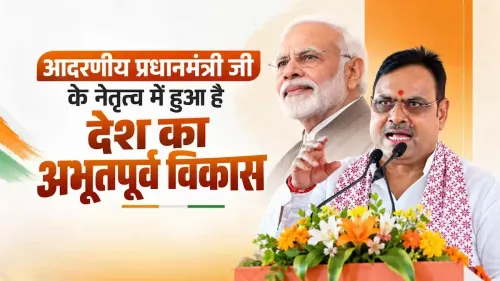
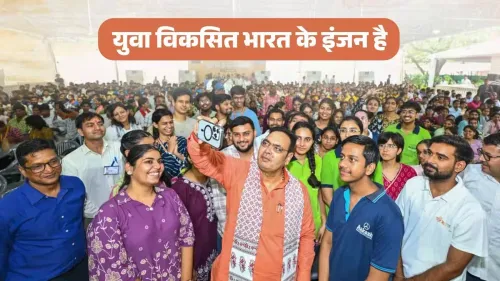
Rajasthan CM Bhajan Lal Sharma positioned India's youth as the central force behind the Viksit Bharat 2047 goal, linking the message to the state's Seva Sankalp Abhiyan outreach campaign on 26 September 2026.
Key Takeaways
The Chief Minister's Office of Rajasthan posted on 26 September 2026 , attributing the message to CM Bhajan Lal Sharma .
The post frames India's youth as the 'greatest strength' for achieving the Viksit Bharat 2047 developed-economy vision.
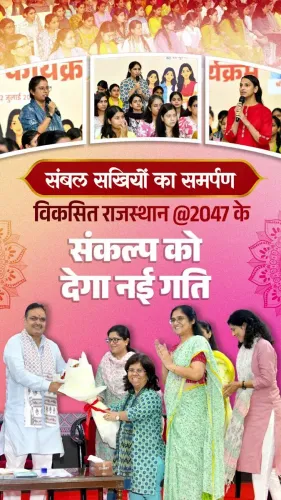
The message is directly linked to the #SevaSankalpAbhiyan , Rajasthan's public service delivery and outreach campaign.
Viksit Bharat 2047 was nationally operationalised through the Viksit Bharat Sankalp Yatra launched in November 2023 .
CM Bhajan Lal Sharma took office in December 2023 , making state alignment with the national vision a consistent feature of his administration's communication.
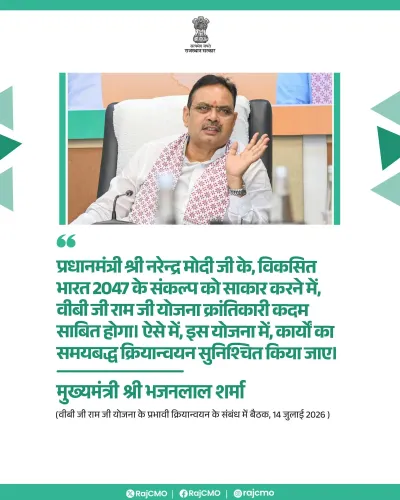
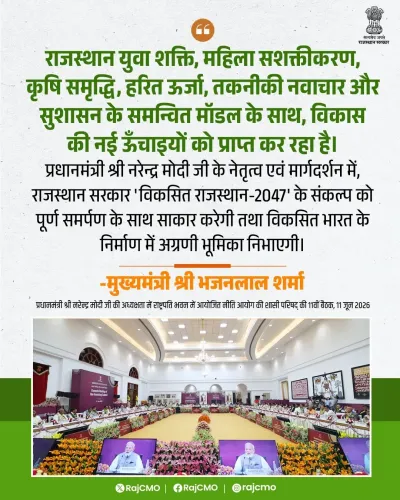
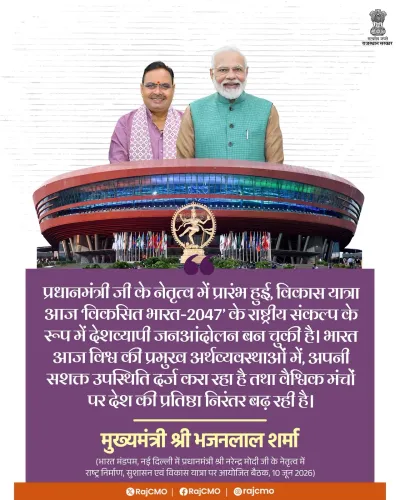
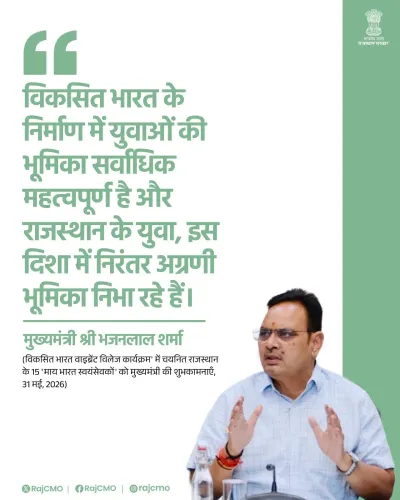
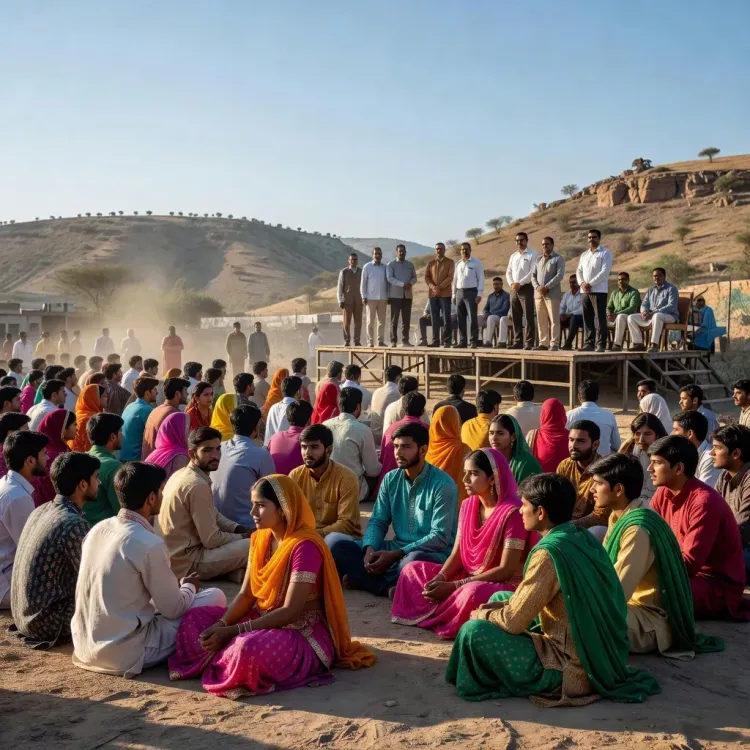
India's youth are its greatest asset — and Rajasthan Chief Minister Bhajan Lal Sharma is making sure that message anchors the state's public-outreach push. On Saturday, 26 September 2026, the Chief Minister's Office of Rajasthan posted on X, framing the youth of India as the most powerful force behind the Viksit Bharat 2047 vision, and connecting that sentiment directly to the ongoing #SevaSankalpAbhiyan campaign.
The post, brief but pointed, reads: 'Viksit Bharat-2047 ke nirmaan ke liye, sabse badi takat desh ka yuva hai' — 'For the construction of a Developed India by 2047, the greatest strength of the country is its youth.' The tagging of CM Bhajan Lal Sharma's personal handle alongside the campaign hashtag signals deliberate alignment between the Chief Minister's personal brand and the Rajasthan government's outreach machinery.
What Viksit Bharat 2047 demands from Rajasthan
Viksit Bharat 2047 is Prime Minister Narendra Modi's headline national ambition: transforming India into a fully developed economy by the centenary of independence. The vision was operationalised through the Viksit Bharat Sankalp Yatra, launched nationwide in November 2023, which carried the message of central welfare schemes — and the 2047 goal — directly to villages and urban pockets across the country. State governments, particularly BJP-administered ones, were expected to be active participants, not passive spectators.
Rajasthan under CM Bhajan Lal Sharma — who was sworn in December 2023 — has consistently sought to thread local governance priorities into this national narrative. The Seva Sankalp Abhiyan is the state's vehicle for that: a public service delivery and community outreach campaign designed to bring government closer to citizens on the ground.
Youth as the demographic dividend — and the political message
The emphasis on youth is not accidental. India's median age hovers around 29 years, and policymakers from NITI Aayog to state cabinets have spent more than a decade framing this demographic bulge as a structural advantage — a dividend waiting to be cashed through employment, skilling, and enterprise. The question that follows every such statement is the same: what specific programmes back the rhetoric?
BJP-governed states have routinely linked local youth outreach to the 2047 framework, making youth-centred messaging a consistent thread across official communication since the early 2010s. CM Sharma's post fits squarely within that tradition — but the Seva Sankalp Abhiyan also signals an attempt to give Rajasthan's own identity within the broader national project.
The next test will be concrete: whether the campaign translates into measurable skill development enrollments, employment placements, or new youth-facing initiatives that link Rajasthan's grassroots delivery to the Viksit Bharat scoreboard. Slogans set the stage — delivery writes the verdict.
Point of View
Reinforcing both his government's delivery credentials and the party's ideological continuity. For a Chief Minister still in his third year, being seen as a credible executor of the Viksit Bharat vision carries political value at both the state and national level. The youth emphasis doubles as a demographic wager: Rajasthan has a significant young electorate, and framing governance as youth-centric outreach is as much electoral positioning as it is policy communication. The real test of this alignment will come when the Seva Sankalp Abhiyan's outcomes — skill placements, employment numbers, scheme saturation rates — are audited against the ambition.
NationPress
26 Sept 2026
Frequently Asked Questions
What is Seva Sankalp Abhiyan in Rajasthan?
Seva Sankalp Abhiyan is a Rajasthan government campaign focused on public service delivery and grassroots outreach, designed to bring government schemes and contact points closer to citizens across the state.
What is Viksit Bharat 2047?
Viksit Bharat 2047 is Prime Minister Narendra Modi's national vision to transform India into a fully developed economy by 2047, the centenary of Indian independence. It was operationalised through the Viksit Bharat Sankalp Yatra launched in November 2023.
Who is Bhajan Lal Sharma?
Bhajan Lal Sharma is the Chief Minister of Rajasthan from the Bharatiya Janata Party, who was sworn into office in December 2023 after the BJP's victory in the state assembly elections.
Why is India's youth considered central to the Viksit Bharat 2047 goal?
India has one of the world's youngest populations, with a median age of around 29 years. Policymakers and government bodies including NITI Aayog have long framed this demographic advantage as a 'dividend' that, if channelled through education, skilling, and employment, can drive the country's economic transformation by 2047.
How is Rajasthan contributing to Viksit Bharat 2047?
The Rajasthan government under CM Bhajan Lal Sharma is linking its state-level Seva Sankalp Abhiyan outreach campaign to the national Viksit Bharat 2047 framework, positioning youth-focused service delivery as the state's contribution to the broader national development vision.