CM Chandrababu orders free rice for AP fishermen hit by floods
Synopsis
Chief Minister Chandrababu Naidu held an emergency teleconference on Andhra Pradesh's heavy rains and flooding, ordering 50 kg of free rice for fishermen grounded for five days. Officials reviewed Uttarandhra river flooding and reservoir-filling measures across multiple districts.
Key Takeaways
CM Nara Chandrababu Naidu convened a teleconference on September 26, 2026 to review heavy rain and flood conditions across Andhra Pradesh.
Fishing families unable to go to sea for the past 5 days will receive 50 kg of free rice each, per CM's direct order.
Minister Acchennayudu briefed the CM on rising river levels and inundation in the Uttarandhra region.
Chief Secretary Sai Prasad and senior officials participated alongside ministers in the coordination call.
The government also reviewed steps taken to fill reservoirs in several districts during the monsoon surge.
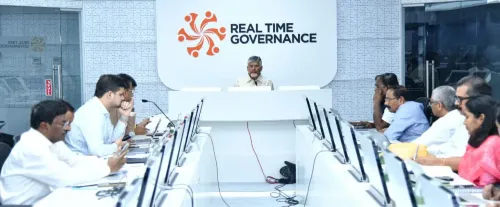
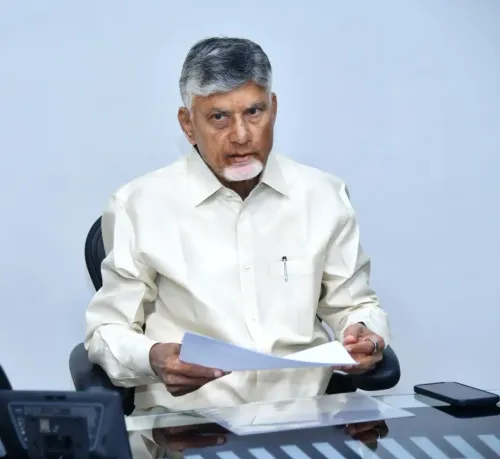
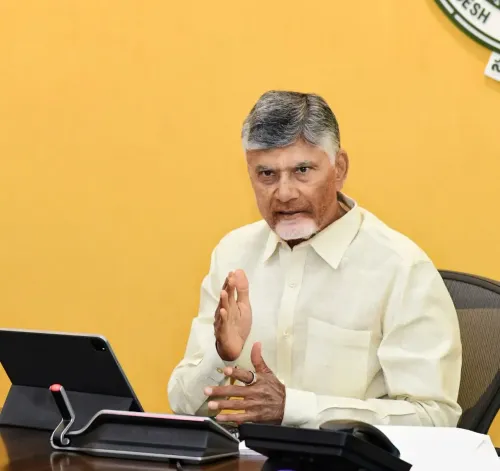
With rivers running high and coastal communities grounded for five straight days, Andhra Pradesh Chief Minister Nara Chandrababu Naidu convened an emergency teleconference on Saturday, September 26, to take stock of the heavy rains and flood conditions battering the state — and immediately directed that fishing families unable to go to sea receive 50 kg of free rice each.
Five days at shore: the fishing families left without income
The order targets a specific, acute vulnerability. Fishermen along the Uttarandhra coast — the northernmost coastal stretch of Andhra Pradesh — have been unable to venture into the sea for at least five days due to rough weather triggered by the monsoon system. No fishing means no catch, and no catch means no income. The Chief Minister's directive cuts through that gap with an immediate, tangible measure: 50 kilograms of rice, free of cost, for every affected fishing household.
Uttarandhra's river surge and what Acchennayudu told the CM
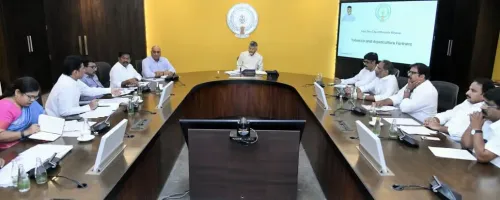
During the teleconference, Minister Acchennayudu brought the severity of conditions in the Uttarandhra region directly to the Chief Minister's attention — rising river flows and widespread inundation across multiple districts. Chief Secretary Sai Prasad and senior officials joined ministers on the call, giving the review a full-stack character, from ground-level reporting to administrative oversight in a single session.
Reservoirs filling up — a challenge and an opportunity
The teleconference was not only about damage control. CM Naidu also reviewed steps being taken to fill reservoirs across several districts, signalling that the administration is managing the monsoon's dual nature — flood threat on one hand, water storage opportunity on the other. Andhra Pradesh, which faces water-stress conditions in non-monsoon months, has historically treated reservoir replenishment as a critical seasonal priority.
Coastal Andhra and the Uttarandhra belt — comprising districts such as Visakhapatnam, Vizianagaram, and Srikakulam — are perennially among the state's most flood-exposed zones. The fishing communities concentrated along this coastline are doubly vulnerable: dependent on daily sea access for their livelihoods, they bear the economic brunt of any prolonged weather disruption before formal relief pipelines activate. The rice directive sidesteps bureaucratic lag by targeting the gap with a commodity these families actually need.
Whether the distribution machinery moves fast enough — and whether further district-level relief follows — will determine how much of that promise translates into households.
Point of View
Who is in his second major stint at the helm of the state, swift optics during monsoon crises carry both administrative and political weight in coastal constituencies. The simultaneous reservoir review signals that the administration is framing the monsoon not merely as a crisis to contain, but as a water-security opportunity — a balancing act that defines AP's complex relationship with its river systems. How quickly the rice distribution actually reaches households will be the real test of this teleconference's impact.
NationPress
26 Sept 2026
Frequently Asked Questions
Why are Andhra Pradesh fishermen getting free rice from the government?
Fishermen in Andhra Pradesh, particularly in the Uttarandhra coastal belt, have been unable to go to sea for five consecutive days due to heavy monsoon rains and rough weather. CM Chandrababu Naidu ordered 50 kg of free rice for each affected fishing family to compensate for lost income during this period.
What did CM Chandrababu Naidu do about Andhra Pradesh floods?
On September 26, 2026, CM Naidu held an emergency teleconference with ministers, Chief Secretary Sai Prasad, and senior officials to review the flood situation. He ordered free rice for fishermen, heard a briefing on Uttarandhra river flooding from Minister Acchennayudu, and reviewed reservoir-filling measures across several districts.
Which areas are most affected by floods in Andhra Pradesh right now?
The Uttarandhra region — the northernmost coastal belt including districts like Visakhapatnam, Vizianagaram, and Srikakulam — has been highlighted as severely affected, with rising river flows and widespread inundation reported during the current monsoon spell.
Who is Minister Acchennayudu in Andhra Pradesh?
Acchennayudu is a state minister in the Andhra Pradesh government who briefed Chief Minister Chandrababu Naidu during the September 26 teleconference about the flood and river-overflow situation in the Uttarandhra region.
How much free rice will AP fishermen receive due to floods?
Chief Minister Chandrababu Naidu has ordered that fishing families who could not go to sea for the past five days due to heavy rains should each receive 50 kilograms of rice free of cost.