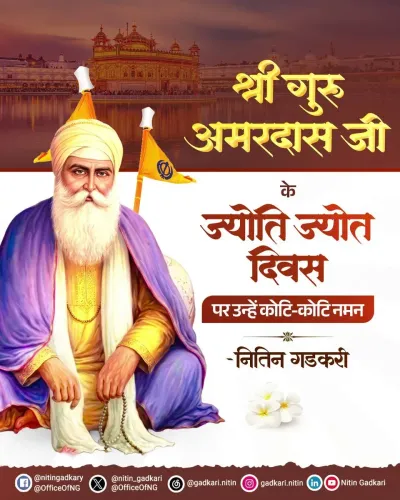
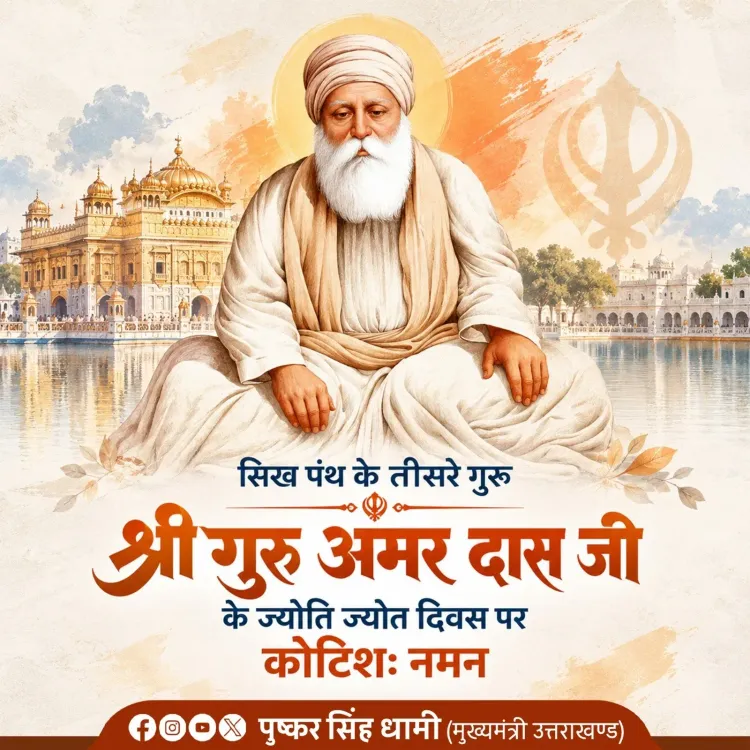
CM Dhami pays tribute to Guru Amar Das Ji on Jyoti Jot Divas
Synopsis
Uttarakhand Chief Minister Pushkar Singh Dhami marked the Jyoti Jot Divas of Guru Amar Das Ji, the third Guru of Sikhism, on September 26, 2026, honouring his legacy of equality, langar, and social reform.
Key Takeaways
CM Pushkar Singh Dhami paid tribute to Guru Amar Das Ji on his Jyoti Jot Divas on September 26, 2026 .
Guru Amar Das Ji was the third Guru of Sikhism , serving from 1552 to 1574 .
He institutionalised the langar system, mandating communal eating regardless of caste, as a pillar of equality.
He opposed practices like sati and purdah, and organised the Sikh community into 22 manjis for wider outreach.
His hymns are enshrined in the Sri Guru Granth Sahib .
Dhami invoked the Guru's message of humanity, equality, service, and harmony in his tribute post.
On the solemn occasion of Jyoti Jot Divas — the death anniversary of the third Guru of Sikhism, Guru Amar Das Ji — Uttarakhand Chief Minister Pushkar Singh Dhami offered his reverence on Saturday, September 26, 2026, invoking the Guru's timeless teachings of equality, service, and compassion.
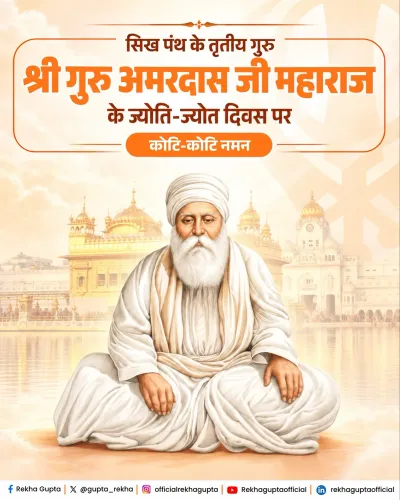
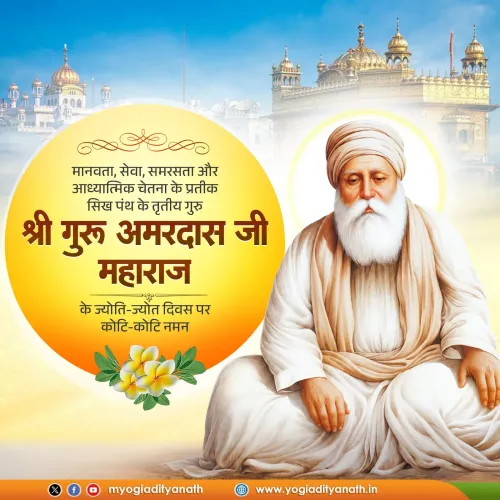
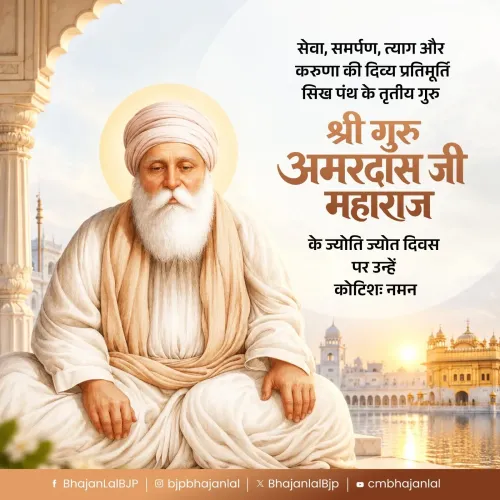
In his post, CM Dhami wrote: 'सिख पंथ के तीसरे गुरु श्री गुरु अमर दास जी के ज्योति ज्योत दिवस पर कोटिशः नमन' — 'Countless salutations on the Jyoti Jot Divas of the third Guru of the Sikh faith, Sri Guru Amar Das Ji.' He added that the Guru had given society a new direction through messages of humanity, equality, service, and harmony, and that his life and ideals would continue to inspire all to walk the path of service, dedication, and benevolence.
Who was Guru Amar Das Ji — and why his legacy endures
Guru Amar Das Ji served as the third Guru of Sikhism from 1552 to 1574, a tenure marked by transformative social reform. He is credited with institutionalising the langar — the community kitchen — as a powerful symbol of equality, requiring all visitors, regardless of caste or status, to sit and eat together before seeking an audience with the Guru. In an era of rigid social hierarchy, it was a radical act.
He also championed the rights of women, opposing the practices of sati and purdah, and organised the Sikh community into 22 manjis (administrative divisions) to spread the faith's message across a wider geography. His hymns are enshrined in the Sri Guru Granth Sahib, the eternal Guru of the Sikh faith.
Tributes, political tradition, and the Sikh community
CM Dhami's tribute follows a well-established practice among Indian political leaders of all major parties, who regularly mark Sikh Guru anniversaries with public acknowledgements. For BJP leaders at the state level, such gestures serve both as genuine expressions of cultural respect and as outreach to the Sikh community — a constituency with a significant presence across Uttarakhand, particularly in urban centres and along pilgrimage corridors.
Jyoti Jot Divas, observed on the Guru's passing, is a day of prayer, reflection, and remembrance at gurdwaras across India and the world — a moment when the Guru's reformist legacy is recalled not as history but as living instruction.
The ideals Guru Amar Das Ji articulated nearly five centuries ago — that service to humanity is the highest form of devotion — remain as pointed today as they were then.
Point of View
A state with Sikh residents concentrated in key urban and pilgrim-belt districts, such gestures carry quiet electoral and social significance. The invocation of Guru Amar Das Ji's reformist pillars — equality, community service, and social harmony — also allows political figures to align themselves symbolically with values that enjoy universal resonance across India's religious landscape. It is a soft-power ritual, but one the BJP has refined into a consistent outreach tool.
NationPress
26 Sept 2026
Frequently Asked Questions
What is Jyoti Jot Divas?
Jyoti Jot Divas is the death anniversary of a Sikh Guru, observed as a day of prayer, reflection, and remembrance at gurdwaras. The term 'Jyoti Jot' refers to the merging of the Guru's light with the eternal divine light.
Who was Guru Amar Das Ji?
Guru Amar Das Ji was the third Guru of Sikhism, serving from 1552 to 1574. He is known for institutionalising the langar community kitchen, opposing caste discrimination, championing women's rights, and organising the Sikh community into 22 administrative divisions called manjis.
What did CM Dhami say about Guru Amar Das Ji?
CM Pushkar Singh Dhami offered 'countless salutations' on Guru Amar Das Ji's Jyoti Jot Divas, saying the Guru gave society a new direction through messages of humanity, equality, service, and harmony, and that his ideals would continue to inspire paths of service and benevolence.
What is the langar tradition started by Guru Amar Das Ji?
Guru Amar Das Ji institutionalised the langar — a free community kitchen where all visitors, regardless of caste, religion, or social status, sit together and eat as equals before seeking the Guru's audience. It remains a central institution of Sikhism today.
Why do Indian political leaders pay tribute to Sikh Gurus?
Indian political leaders across parties routinely mark Sikh Guru anniversaries as a form of cultural respect and community outreach. Such tributes acknowledge the Gurus' reformist legacies and maintain goodwill with the Sikh community, which has a significant presence across many Indian states.