Rajasthan CM Bhajanlal visits Anupgarh BSF post on Independence Day eve
Synopsis
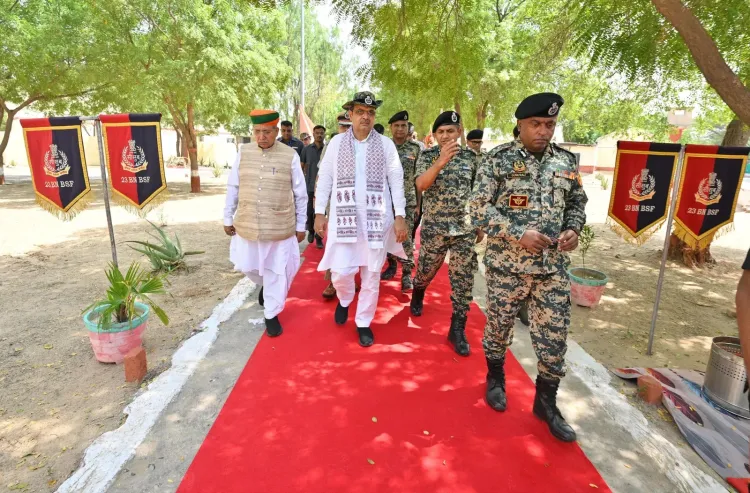
Rajasthan Chief Minister Bhajanlal Sharma visited the BSF border outpost at Anupgarh on August 14, 2026, reviewed military weapons, interacted with troops, planted saplings at the 23rd Battalion campus, and received a rakshasutra from BSF women personnel on Independence Day eve.
Key Takeaways
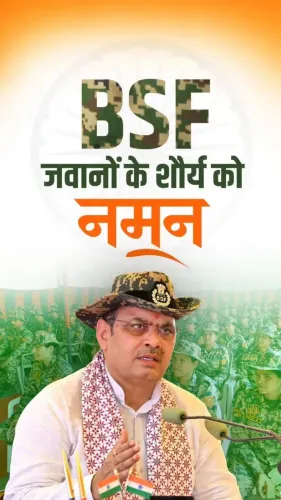
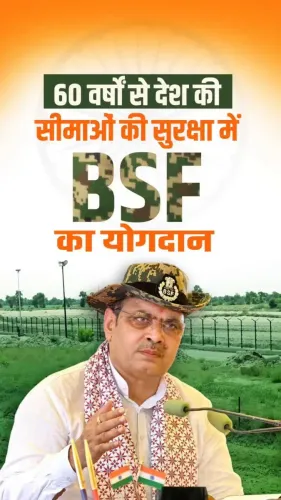
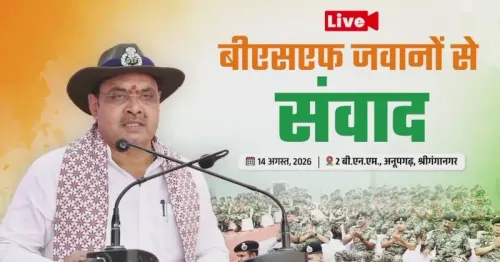
CM Bhajanlal Sharma visited the 2nd Battalion BSF post in Anupgarh , Sri Ganganagar district, on 14 August 2026 , the eve of India's 80th Independence Day.
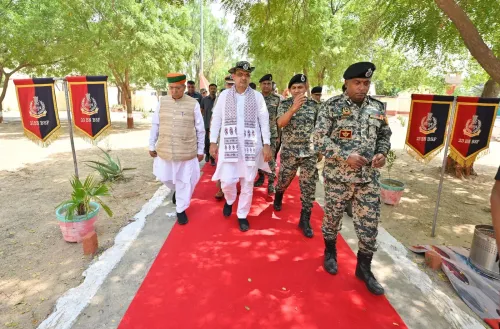
He inspected the Border Security Force's border outpost and a military weapons exhibition at the frontier location.
Addressing jawans, Sharma cited the BSF motto 'Jeevan Paryant Kartavya' and praised the force's sacrifice, valour, and dedication.
The CM planted saplings at the 23rd Battalion BSF campus before proceeding to the outpost.
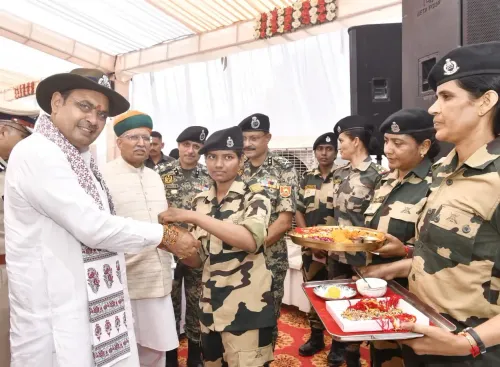
BSF women personnel tied a rakshasutra on the Chief Minister's wrist, a symbolic gesture of mutual respect between the state administration and border troops.
The visit was tagged under #HarGharTiranga and #80thIndependenceDay , anchoring it within the national Independence Day observance.
On the eve of India's 80th Independence Day, Rajasthan Chief Minister Bhajanlal Sharma travelled to the frontier — arriving at the 2nd Battalion BSF post in Anupgarh, a town that sits at the very edge of India's boundary with Pakistan, to stand shoulder-to-shoulder with the men and women who hold that line.
At the border outpost: weapons display and a word with the jawans
CM Sharma inspected the Border Security Force's border outpost and reviewed an exhibition of military weapons at the 2 BNM post in Anupgarh, Sri Ganganagar district. Speaking directly to the troops, he invoked the BSF's own motto — 'Jeevan Paryant Kartavya' (Duty for Life) — telling the jawans that the force was honouring those words through 'sacrifice, valour, courage and dedication' in strengthening India's security and sovereignty.
Tree planting at 23rd Battalion and a rakhi from women personnel
Before the outpost visit, the Chief Minister planted saplings at the 23rd Battalion BSF campus — a gesture woven into the occasion's spirit of rootedness and continuity. In a moment that drew particular attention, BSF's women personnel tied a rakshasutra (protective thread) on the Chief Minister's wrist — a symbolic inversion of the traditional gesture, with the guardians of the border honouring the state's elected head on the eve of Independence Day.
Why Anupgarh, why now
Anupgarh is not a ceremonial backdrop — it is one of Rajasthan's most strategically sensitive frontier zones, lying close to the India-Pakistan border in the Thar Desert belt. Chief Ministers of border states routinely time visits to forward BSF posts around national observances, using the occasion to signal state-level solidarity with central border-guarding forces. The visit carried the hashtags #SwatantrataKaSankalp, #HarGharTiranga, and #80thIndependenceDay, placing it squarely within the national Independence Day observance framework.
With India marking eight decades of independence, a sitting Chief Minister inspecting a live border outpost — not a parade ground — sends a message that is less ceremonial and more operational in its register.
Point of View
Such visits carry dual value: they reinforce the party's national-security positioning and give the state administration visible ownership over frontier affairs that are constitutionally a central subject. The rakshasutra gesture by women BSF personnel adds a culturally resonant layer, humanising a security narrative often dominated by hardware and statistics. Timed to the 80th Independence Day, the optics are unmistakable — and intentional.
NationPress
14 Aug 2026
Frequently Asked Questions
Why did Rajasthan CM Bhajanlal Sharma visit Anupgarh on 14 August 2026?
CM Bhajanlal Sharma visited Anupgarh on the eve of India's 80th Independence Day to inspect the BSF border outpost, review a military weapons exhibition, and interact with troops stationed at the India-Pakistan frontier.
Where is Anupgarh and why is it significant for border security?
Anupgarh is a town in Sri Ganganagar district of Rajasthan, located close to the India-Pakistan international border, making it one of the state's most strategically sensitive frontier zones.
What did CM Sharma say to BSF jawans during his visit?
CM Sharma invoked the BSF's motto 'Jeevan Paryant Kartavya' (Duty for Life) and told the jawans that the force was strengthening India's security and sovereignty through sacrifice, valour, courage, and dedication.
What was the significance of BSF women personnel tying a rakshasutra on CM Sharma?
BSF women jawans tying a rakshasutra on the Chief Minister's wrist was a symbolic gesture of mutual respect and solidarity, with the border guardians honouring the state's elected head on the eve of Independence Day.
Which BSF battalions did CM Bhajanlal Sharma visit in Anupgarh?
CM Sharma visited the 2nd Battalion BSF post for the border outpost inspection and weapons exhibition, and also planted saplings at the 23rd Battalion BSF campus in Anupgarh.