Mandaviya Shares President Murmu's Call on Infrastructure & Jobs
Synopsis
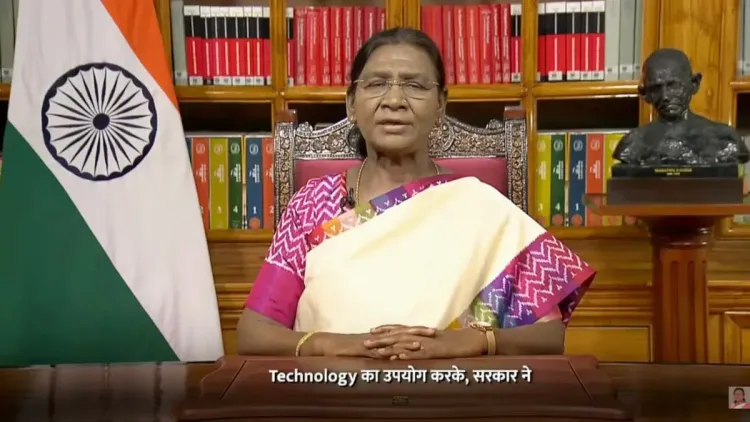
Union Labour Minister Mansukh Mandaviya shared President Draupadi Murmu's statement on 14 August 2026 linking India's modern infrastructure expansion to new enterprise opportunities and employment generation, underscoring the government's core economic narrative on Independence Day eve.
Key Takeaways
Union Labour and Sports Minister Mansukh Mandaviya shared a quote from President Draupadi Murmu on 14 August 2026 , Independence Day eve.
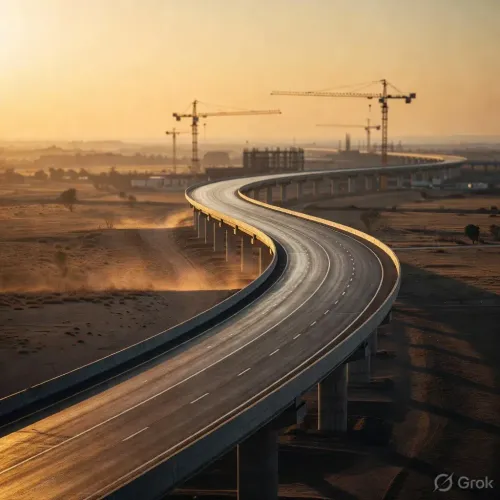
President Murmu stated that 'unprecedented expansion of modern infrastructure is generating opportunities for new enterprises and creating new employment.' The National Infrastructure Pipeline (2019) outlined planned investment of Rs 111 lakh crore over five years in roads, railways, ports, and digital networks.
The PM Gati Shakti master plan, launched October 2021 , coordinates multimodal infrastructure projects across ministries to boost connectivity.
As Labour Minister, Mandaviya's ministry is directly responsible for tracking whether infrastructure spending converts into measurable job creation.
On the eve of Independence Day, Union Labour and Sports Minister Mansukh Mandaviya amplified a pointed message from the highest constitutional office: that India's infrastructure push is not merely about concrete and steel — it is about livelihoods.
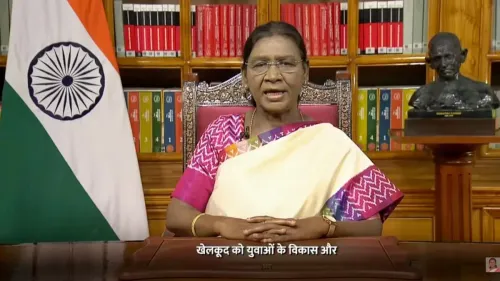
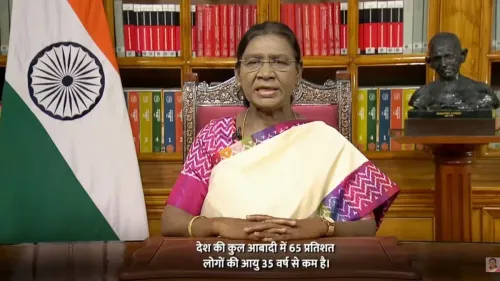
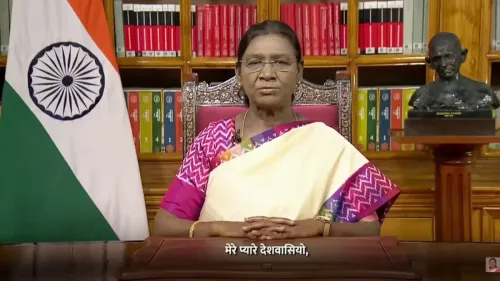
Mandaviya shared a quote from President Draupadi Murmu on 14 August 2026, in which she stated: 'The unprecedented expansion of modern infrastructure is generating opportunities for new enterprises and creating new employment.' The timing — Independence Day eve — gave the remark a deliberate resonance, linking national development ambition with the promise of economic opportunity for ordinary citizens.
President Murmu's framing: infrastructure as an employment engine
President Murmu, who assumed office in July 2022 as India's first tribal woman President, has consistently used public platforms to spotlight the government's development agenda. Her formulation here is specific: it draws a direct causal line from physical infrastructure expansion to entrepreneurial opportunity and job creation — a linkage that sits at the heart of India's current economic strategy.
The logic traces back to the National Infrastructure Pipeline, announced in 2019, which charted planned investment of Rs 111 lakh crore over five years across roads, railways, ports, and digital networks. The PM Gati Shakti master plan, launched in October 2021, then gave that ambition an operational spine — coordinating multimodal projects across ministries to reduce logistics costs and improve connectivity for businesses of every size.
Why a Labour Minister is amplifying this message
Mandaviya's decision to share this quote is not incidental. As the minister responsible for employment policy, his ministry is directly accountable for demonstrating that capital expenditure on infrastructure translates into measurable jobs. Construction activity, supply-chain growth, and the downstream services that cluster around new connectivity corridors all feed into the employment data his ministry tracks and publishes.
The broader pattern is well-established: successive governments have positioned infrastructure spending as a multiplier for private investment, building on frameworks like Make in India and Atmanirbhar Bharat that treat physical connectivity as foundational to manufacturing and services growth. A presidential endorsement of that thesis — shared by the labour minister on a national occasion — is a signal that the government wants this narrative front and centre as India marks another year of independence.
The real test, as always, lies in the numbers. Forthcoming Union Budget capital expenditure allocations and periodic employment data from the Ministry of Labour will determine whether the infrastructure-to-jobs chain is delivering at the scale the rhetoric demands.
Point of View
Mandaviya is performing a deliberate act of political communication: anchoring the government's infrastructure narrative to the constitutional authority of the Presidency. For a Labour Minister, it also pre-empts scrutiny — framing capital expenditure as an employment strategy before critics can question the jobs data. The move fits a broader BJP pattern of using ceremonial occasions to reinforce economic messaging. Whether the infrastructure-to-employment chain is actually closing at scale remains the central unanswered question heading into the next budget cycle.
NationPress
14 Aug 2026
Frequently Asked Questions
What did President Draupadi Murmu say about infrastructure and jobs?
President Murmu stated that the unprecedented expansion of modern infrastructure is generating opportunities for new enterprises and creating new employment in India.
Why did Mansukh Mandaviya share President Murmu's quote?
As Union Labour Minister, Mandaviya shared the quote to reinforce the government's position that infrastructure investment directly drives job creation — a key accountability area for his ministry.
What is the National Infrastructure Pipeline?
The National Infrastructure Pipeline, announced in 2019, is a government plan outlining investment of Rs 111 lakh crore over five years across roads, railways, ports, and digital infrastructure to boost economic growth.
What is PM Gati Shakti?
PM Gati Shakti is a national master plan launched in October 2021 to coordinate multimodal infrastructure projects across central ministries, aimed at reducing logistics costs and improving connectivity.
Who is Draupadi Murmu?
Draupadi Murmu is the President of India since July 2022 and the first tribal woman to hold the office. She regularly highlights government development initiatives in public addresses.