Mandaviya Hails India's Connectivity Push Under PM Modi
Synopsis
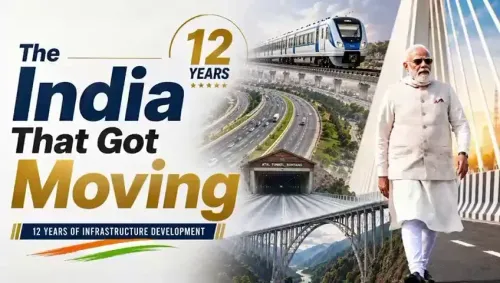
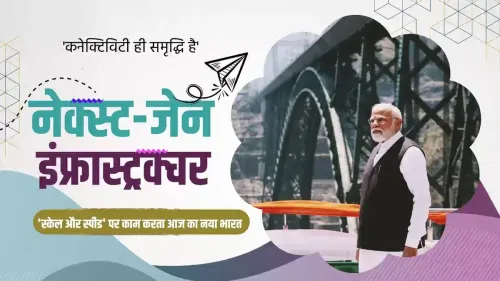
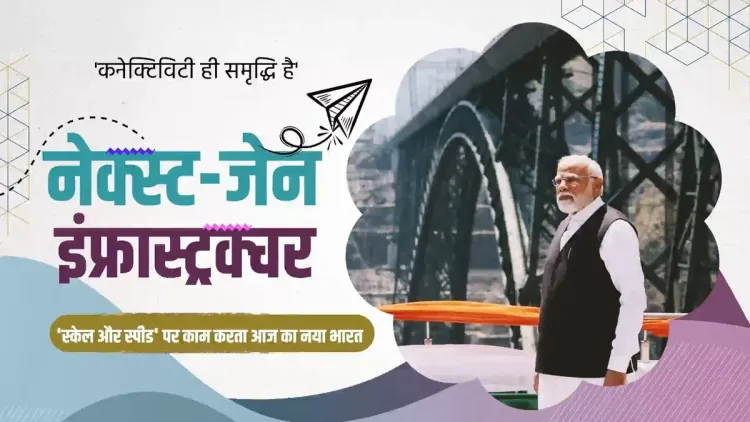
Union Minister Mansukh Mandaviya marked 12 years of the Modi government on 16 June 2026 by celebrating India's connectivity expansion, linking modern network growth to the 'Naya Bharat' vision and crediting PM Modi's leadership for connecting every corner of the country.
Key Takeaways
Union Minister Mansukh Mandaviya posted on X on 16 June 2026 celebrating India's connectivity growth under PM Narendra Modi .
The post used the hashtag #12YearsOfNayaBharatNirman , marking the twelfth anniversary of the current central government.
The Digital India programme, launched in July 2015 , and BharatNet — targeting 250,000 gram panchayats — are the two flagship connectivity schemes underpinning this narrative.
The government has framed physical and digital connectivity as foundational to inclusive growth and reduced regional disparities under the 'Naya Bharat' framework.
Future Union Budget allocations and fresh targets for 5G and BharatNet saturation are expected to be the next policy markers in this space.
Union Labour and Sports Minister Mansukh Mandaviya on Tuesday, 16 June 2026, took to X to celebrate India's expanding connectivity network, crediting the progress to the leadership of Prime Minister Narendra Modi and framing it as a realisation of the 'Naya Bharat' vision.
Context
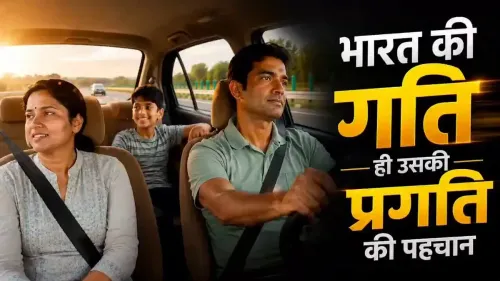
Mandaviya's post, written in Hindi, declared: 'Behtar connectivity, behtar kal!' ('Better connectivity, better tomorrow!'), adding that the modern network being built under Modi's 'able leadership' is giving 'new flight to the dreams of New India' by connecting every corner of the country. The post was accompanied by a video and carried the hashtag #12YearsOfNayaBharatNirman, marking twelve years since the formation of the current central government in 2014.
The hashtag situates the post within a broader ruling-party communication exercise marking the anniversary of the National Democratic Alliance government's first term. Several cabinet ministers and BJP leaders have used similar messaging on social media to mark the occasion.
Policy Backdrop
India's connectivity push has two principal pillars: physical infrastructure — roads, rail, and ports — and digital infrastructure, chiefly broadband and mobile networks. The Digital India programme, launched in July 2015, set out to provide digital infrastructure as a core public utility, expanding e-governance and internet access to citizens across the country.
Running alongside it is BharatNet, a project that traces its origins to 2011 and was significantly scaled up after 2014, with the target of connecting 250,000 gram panchayats via optical fibre. Successive Union Budgets have allocated substantial capital to both physical and digital connectivity, presenting them as prerequisites for inclusive growth and the narrowing of regional disparities.
The government has also accelerated 5G network rollout across urban and semi-urban centres, with stated ambitions to extend coverage to rural areas. Together, these programmes form the infrastructure backbone of what the ruling dispensation calls the 'Naya Bharat' or New India framework.
Stakeholders and Impact
Rural citizens stand as the primary intended beneficiaries of connectivity expansion, particularly through BharatNet's gram panchayat links, which aim to bring banking, health, and education services within digital reach. Youth entrepreneurs in tier-2 and tier-3 cities have also been highlighted by the government as a constituency empowered by improved broadband and mobile connectivity.
Critics and opposition parties have periodically questioned the pace of last-mile delivery and the gap between announced targets and on-ground saturation, particularly in remote tribal and hilly regions. However, independent assessments have acknowledged measurable gains in internet subscriber numbers and mobile penetration over the twelve-year period.
What's Next
Parliamentary discussions on the next Union Budget's infrastructure allocations are expected to set fresh targets for both 5G coverage and BharatNet completion. The government's ability to translate the connectivity narrative into verifiable last-mile outcomes — especially for underserved communities — will determine whether the 'better tomorrow' promise moves from political messaging to measurable policy delivery.
Point of View
Using connectivity as a signature achievement to reinforce the 'Naya Bharat' brand ahead of future electoral cycles. The choice of infrastructure — both physical and digital — as the celebratory theme reflects the ruling party's consistent strategy of linking governance to tangible, visible outcomes that resonate with rural and aspirational urban voters. However, the gap between announced targets and last-mile delivery in BharatNet and 5G rollout remains a live policy question that opposition parties and civil society are likely to press. The anniversary messaging, while politically routine, also signals that connectivity will remain a central pillar of the government's self-presentation in budget and policy debates to come.
NationPress
15 Sept 2026
Frequently Asked Questions
What is the #12YearsOfNayaBharatNirman hashtag about?
The hashtag marks twelve years since the Narendra Modi-led government came to power in 2014, with BJP leaders and ministers using it to highlight development and infrastructure achievements under the 'Naya Bharat' or New India vision.
What did Mansukh Mandaviya say about India's connectivity?
Mandaviya said that a modern network being built under PM Modi's leadership is connecting every corner of India and giving 'new flight to the dreams of New India,' summarising his message with the phrase 'better connectivity, better tomorrow.'
What is BharatNet and how does it relate to India's connectivity push?
BharatNet is a government project, initiated in 2011 and significantly expanded after 2014, aimed at connecting 250,000 gram panchayats across India with optical fibre to bring digital services to rural citizens.
What is the Digital India programme?
Digital India is a flagship central government scheme launched in July 2015 to provide digital infrastructure as a core utility, expanding broadband access, e-governance, and digital services to citizens across the country.
What are the next steps for India's connectivity goals?
Parliamentary discussions on the next Union Budget are expected to set fresh targets for 5G network coverage and BharatNet completion, with last-mile delivery to rural and remote communities remaining the key benchmark for progress.