Kejriwal slams BCI chief over NALSAR enrolment ban, demands resignation

Synopsis
AAP convenor Arvind Kejriwal on 14 August 2026 condemned BCI Chairman and BJP MP Manan Kumar Mishra for ordering all State Bar Councils to block NALSAR's entire 2026 batch from enrolment, calling it a dictatorial overreach. The order was later withdrawn after public opposition. Kejriwal demands Mishra's resignation.
Key Takeaways
BCI Chairman Manan Kumar Mishra , also a BJP Rajya Sabha MP, directed all State Bar Councils to halt enrolment of the entire NALSAR University of Law 2026 batch .
The order was subsequently withdrawn following public opposition, according to AAP convenor Arvind Kejriwal's post on 14 August 2026 .
Kejriwal demanded Mishra's immediate resignation, asserting the Bar Council of India is an independent statutory body under the Advocates Act, 1961 , not a political wing.
Without State Bar Council enrolment, law graduates cannot legally practise in Indian courts — making the directive a direct threat to the professional futures of an entire graduating cohort.
Kejriwal linked the episode to what he called a broader central government pattern of suppressing dissent and capturing independent institutions.
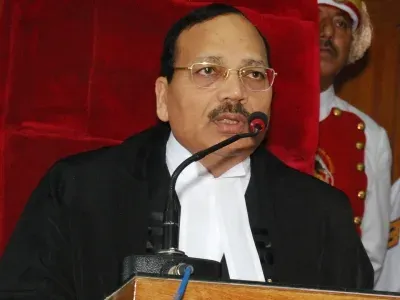
A directive that would have frozen the professional futures of an entire graduating class of lawyers was issued — and then hastily reversed — in what AAP convenor Arvind Kejriwal is calling a textbook case of institutional overreach. On Friday, 14 August 2026, Kejriwal took to X to condemn Bar Council of India (BCI) Chairman and BJP Rajya Sabha MP Manan Kumar Mishra for ordering all State Bar Councils to halt enrolment of the complete NALSAR University of Law 2026 batch — and to demand his resignation.
The order that stopped a batch in its tracks
The directive, as described by Kejriwal, was addressed to every State Bar Council in the country and effectively blocked the entire 2026 graduating cohort of NALSAR University of Law — one of India's premier national law universities, based in Hyderabad, Telangana — from being enrolled as advocates. For law graduates, enrolment with a State Bar Council is the mandatory gateway to legal practice; without it, a degree confers no right to appear in court.
Kejriwal called the directive a 'tanashaahi farmaan' — a 'dictatorial decree' — and said public pressure forced its withdrawal. 'The BCI is an independent statutory body of lawyers, not a BJP cell,' he wrote, in a pointed assertion that the regulator's statutory character under the Advocates Act, 1961 places it beyond partisan command.
Why Manan Kumar Mishra is in the crosshairs
Manan Kumar Mishra occupies a dual position that critics say is itself a structural tension: he is simultaneously a sitting BJP Rajya Sabha MP and the Chairman of the Bar Council of India, the apex statutory regulator of the legal profession. The BCI was constituted under the Advocates Act, 1961 to regulate legal education standards and advocate enrolment across the country — functions that are meant to be insulated from executive or political direction.
Kejriwal argued that the episode illustrates a broader pattern: what he described as the central government's growing tendency to suppress dissent, capture institutions, and impose arbitrary orders. He called on Mishra to step down immediately.
Rollback after public pushback
According to Kejriwal's post, the order was eventually withdrawn following opposition from what he termed 'Cockroach Janta Party' — a sharp, derisive label for the BJP — and from 'aware citizens across the country.' The reversal, he argued, is proof that democratic pressure works, but the fact that such a directive was issued at all raises questions about the insulation of statutory regulators from political influence.
The NALSAR batch at the centre of the controversy would have completed a rigorous five-year integrated BA LLB programme at an institution that consistently ranks among India's top law schools. Blocking their enrolment would have had immediate, concrete consequences for their careers and for the courts that absorb national law university graduates each year.
Statutory autonomy vs. political reach
The episode lands in a long-running debate about the independence of India's professional regulators. The BCI's mandate — setting standards for legal education, overseeing State Bar Councils, maintaining rolls of advocates — requires it to function at arm's length from any government of the day. When its chairman also holds a parliamentary seat from a ruling party, that arm's length becomes harder to maintain in public perception, regardless of intent.
Kejriwal closed with a warning and a confidence: the people of India, he said, will neither accept the arrogance of power nor allow democratic institutions to be turned into political weapons.
The question now is whether the BCI issues a formal clarification on enrolment procedures for the NALSAR 2026 batch — and whether State Bar Councils act on it before the academic year closes.
Point of View
Not of the executive, yet its current chairman simultaneously holds a ruling-party parliamentary seat. Kejriwal's intervention — framing the enrolment block as institutional capture rather than a regulatory dispute — is a calculated move to expand AAP's anti-establishment appeal beyond Delhi into a national professional constituency. The swift rollback of the order, however it came about, hands the opposition a ready-made narrative: that civic and democratic pressure can reverse authoritarian impulses. Whether this translates into sustained scrutiny of BCI's governance, or fades as a one-cycle controversy, depends on whether affected NALSAR graduates and bar associations formalise their demands for accountability.
NationPress
14 Aug 2026
Frequently Asked Questions
What did the Bar Council of India order regarding NALSAR graduates?
BCI Chairman Manan Kumar Mishra reportedly directed all State Bar Councils to stop enrolment of the complete NALSAR University of Law 2026 graduating batch. The order was later withdrawn after public opposition.
Why is Arvind Kejriwal demanding Manan Kumar Mishra's resignation?
Kejriwal argues that Mishra, as a sitting BJP Rajya Sabha MP, used his position as BCI Chairman to issue a politically motivated directive against NALSAR graduates, violating the statutory independence of the Bar Council of India.
What is the Bar Council of India and who controls it?
The Bar Council of India is a statutory body established under the Advocates Act, 1961, to regulate the legal profession and legal education standards. It is not under government control; its chairman is elected by the bar councils.
What is NALSAR University of Law?
NALSAR University of Law is a national law university in Hyderabad, Telangana, established in 1998. It offers a five-year integrated BA LLB programme and is ranked among India's top law schools.
Why does State Bar Council enrolment matter for law graduates?
Enrolment with a State Bar Council is the mandatory legal requirement for any law graduate to practise as an advocate in Indian courts. Without it, a law degree alone does not confer the right to appear before any court or tribunal.