CJI Surya Kant calls BCI intervention in NALSAR row 'unnecessary', backs student protest rights
Synopsis
The Chief Justice of India publicly rebuked the Bar Council of India for wading into a student protest dispute at NALSAR — and then shielded the very students who had objected to his own convocation appearance. The Supreme Court's interim order barring punitive action against students or faculty at any National Law University sets a significant precedent for academic freedom and the limits of statutory bar body authority.
Key Takeaways
CJI Surya Kant on 14 August called the Bar Council of India 's intervention in the NALSAR row “completely unnecessary.” The Supreme Court issued an interim order barring punitive action against students or faculty at NALSAR or any other National Law University .
The BCI informed the court it had already withdrawn the impugned circular; it has been given two weeks to file a formal reply.
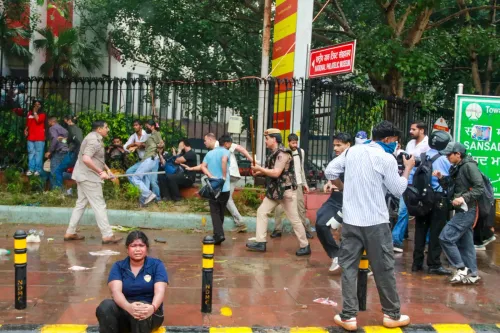
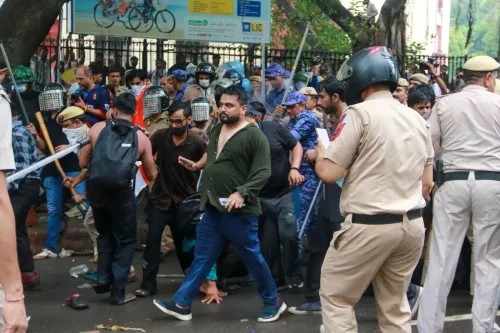
NALSAR students had protested CJI Kant 's convocation invitation, citing alleged inaction over police excesses at Jantar Mantar protests.
The CJI invited protesting students to join the Supreme Court Bar and participate in legal aid panels, signalling a conciliatory stance.
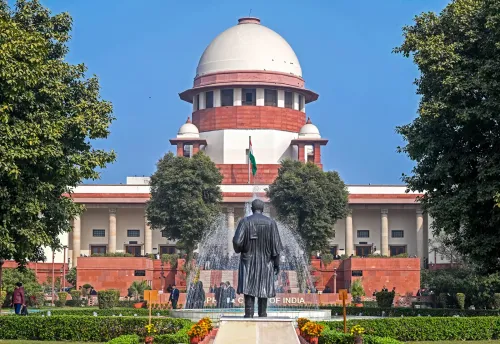
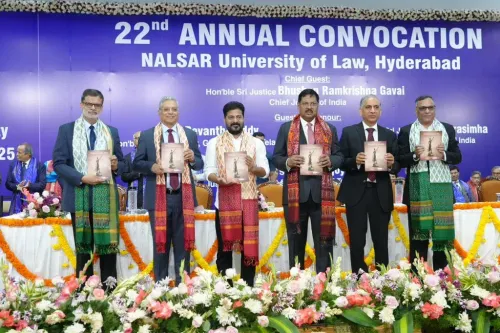
Chief Justice of India Surya Kant on Friday, 14 August firmly characterised the Bar Council of India (BCI)'s involvement in the NALSAR University of Law controversy as “completely unnecessary,” while reaffirming that students hold a fundamental right to protest — even when their views may be factually mistaken. The remarks came during a Supreme Court hearing in New Delhi over letters the BCI had issued to NALSAR following a student agitation against the CJI's invitation as chief guest at the university's convocation.
What the Supreme Court Said
Senior Advocate K. Parameshwar, appearing in the matter, argued that the BCI had no legitimate basis to interfere in a university's internal affairs. CJI Kant agreed, observing that the dispute was fundamentally between the students and the Court itself, and did not call for a statutory body's intervention. “This is a dialogue between the students and me. Who are they to raise this issue? It is completely unnecessary,” the CJI said from the bench.
The Chief Justice went further, stressing that young people must be given space to express dissent. “Even if students are wrong, they have a right to protest. The BCI has no role in this matter,” he added. Emphasising the principle of democratic engagement, he observed: “Just because a person makes an incorrect statement in their youth does not mean they lose the right to protest.”
Key Directions Issued by the Court
The Supreme Court issued notice in the case and, by way of an interim order, directed that no punitive action be taken against any student or faculty member of NALSAR or any other National Law University in connection with the controversy. The court further clarified that no adverse action was to be initiated against NALSAR students over the specific incidents referenced in the challenged BCI letters.
The BCI accepted notice during the hearing and informed the court that the impugned circular had already been withdrawn. The apex court nonetheless granted the regulatory body two weeks to file its formal response.
Background: Why Students Protested
The controversy originated when a group of NALSAR students wrote a letter objecting to CJI Kant's invitation as convocation chief guest. The students cited what they described as his alleged inaction over claims of police excesses during recent protests at Jantar Mantar in Delhi. In their letter, the students stated they were uncomfortable receiving degrees from a dignitary whose recent public conduct, in their view, appeared dismissive of serious allegations of police brutality against protesting citizens.
This is the kind of institutional friction that has periodically surfaced at National Law Universities, where student bodies have historically been vocal on constitutional and civil liberties issues.
CJI's Conciliatory Gesture
Despite the controversy, CJI Kant struck a conciliatory tone, encouraging the protesting students to enrol with and join the Supreme Court Bar. He also indicated they would be included in panels for legal aid programmes and courses — a gesture widely seen as an effort to keep dialogue open rather than escalate the standoff.
What Happens Next
The BCI has been given two weeks to submit its reply before the Supreme Court. The interim protection for students and faculty at NALSAR and other National Law Universities remains in force until the matter is heard again. Legal observers note that the court's framing — treating the episode as a dialogue between students and the judiciary rather than a disciplinary matter — signals a deliberate effort to de-escalate and protect academic freedom.
Point of View
Which is a meaningful signal about the judiciary's appetite for academic freedom. What the episode also reveals, however, is a structural tension: the BCI's instinct to discipline student criticism of senior judicial figures sits uneasily with the constitutional guarantee of free expression that law schools are supposed to model. The court's framing of this as a ‘dialogue’ rather than a disciplinary matter is the right instinct — but the underlying question of how bar regulators should relate to law university communities remains unresolved.
NationPress
28 Sept 2026
Frequently Asked Questions
Why did NALSAR students protest against CJI Surya Kant?
A group of NALSAR University of Law students objected to CJI Surya Kant being invited as chief guest at the university's convocation, citing what they described as his alleged inaction over claims of police brutality during protests at Jantar Mantar in Delhi. They stated in a letter that they were uncomfortable receiving degrees from a dignitary whose conduct they believed was dismissive of serious civil liberties concerns.
What did the Supreme Court order in the NALSAR case?
The Supreme Court issued an interim order directing that no punitive action be taken against any student or faculty member of NALSAR or any other National Law University in connection with the controversy. The order remains in force while the matter is pending.
Why did CJI Surya Kant call the BCI's intervention 'completely unnecessary'?
CJI Kant said the dispute was fundamentally a dialogue between the students and the Court, and that a statutory body like the Bar Council of India had no role in it. He stressed that students have a fundamental right to protest, even if their views are mistaken, and that the BCI's involvement was unwarranted.
What action did the Bar Council of India take in the NALSAR row?
The BCI had issued letters to NALSAR University of Law following the student protest against CJI Kant's convocation invitation. During the Supreme Court hearing, the BCI informed the court that it had already withdrawn the impugned circular and was given two weeks to file a formal reply.
What is NALSAR University of Law?
NALSAR — the National Academy of Legal Studies and Research University of Law — is a premier National Law University located in Hyderabad, Telangana. It is one of India's top-ranked law schools and is governed under a dedicated state act, with the Chief Justice of India traditionally serving as its chancellor.