SC refuses urgent hearing on plea against police action at 'Sansad Chalo' march
Synopsis
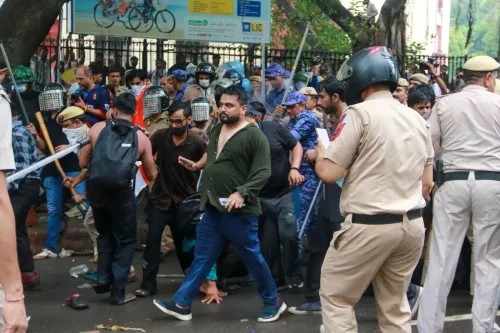
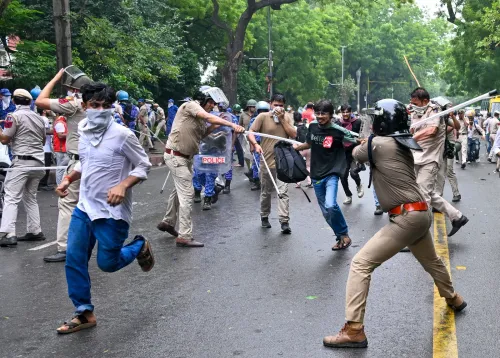
The Supreme Court refused to urgently hear a plea against alleged police action at the CJP-led 'Sansad Chalo' march, with CJI Surya Kant telling counsel not to 'waste' the court's time. Even as 10 FIRs were filed across central Delhi, both the SCBA and SCAORA broke ranks to condemn the alleged lathi charge — a rare public rebuke of police conduct by the legal fraternity.
Key Takeaways
The Supreme Court on 22 July declined to urgently list a petition against alleged police action at the 'Sansad Chalo' march in New Delhi .
CJI Surya Kant told the petitioner's counsel: 'Please don't waste our time and don't waste yours.' Students were protesting for NEET exam reforms and the dissolution of the National Testing Agency (NTA) .
10 FIRs were registered across central Delhi following the protests; investigations are underway.
Delhi Police denied stone-pelting and brutality claims, calling circulating videos 'false and misleading.' Both SCBA and SCAORA condemned the alleged 'brutal lathi charge' and called for an independent, impartial inquiry.
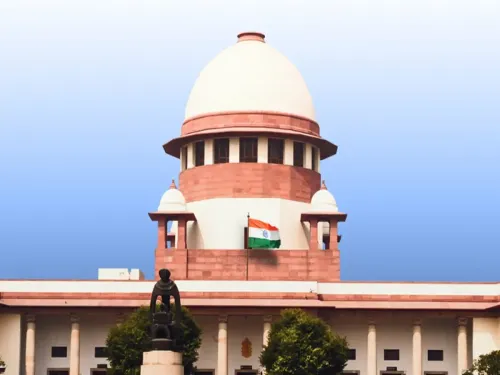
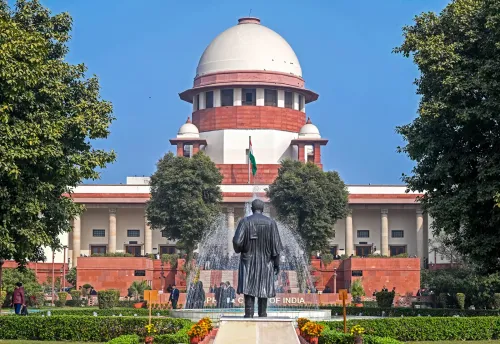
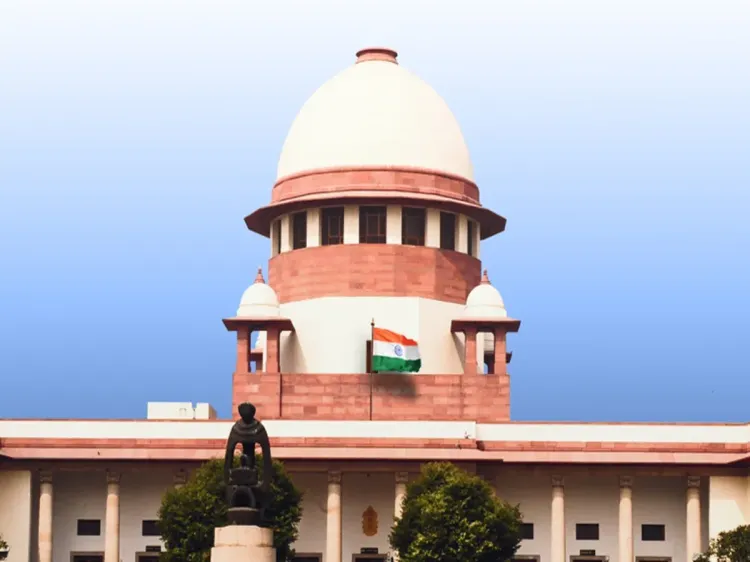
The Supreme Court on Wednesday, 22 July declined to urgently list a petition challenging the alleged police action against student protesters during the Citizens for Justice and Peace (CJP)-led 'Sansad Chalo' march in New Delhi, with Chief Justice of India (CJI) Surya Kant telling the petitioner's counsel not to waste the court's time.
What Happened in Court
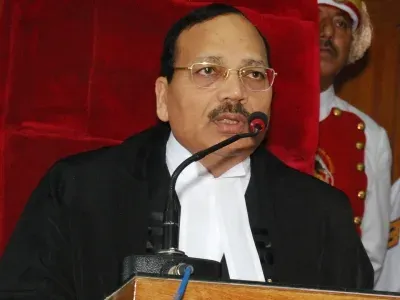
A bench comprising CJI Surya Kant, Justice Joymalya Bagchi, and Justice V. Mohana was hearing an oral mentioning of the matter when the petitioner's counsel sought urgent listing, citing alleged police brutality against students who had gathered at Jantar Mantar.
CJI Kant cut short the submissions, telling the counsel: 'Please don't waste our time and don't waste yours. Your time is more valuable than ours.' When the counsel persisted, citing videos purportedly showing police atrocities, the court was unequivocal. 'We are not interested in videos. We don't have time to watch,' CJI Kant remarked, declining the urgent listing.
What the Protesters Were Demanding
The petition related to students who had marched from Jantar Mantar towards Parliament, raising demands including fair conduct of the NEET examination and structural reforms at the National Testing Agency (NTA) — including its dissolution — in light of repeated allegations of paper leaks. Delhi Police had erected barricades and imposed restrictions to prevent the march from proceeding beyond the designated protest site.
FIRs and Police Response
Following the protests, 10 FIRs were registered across central Delhi. According to police, four FIRs were lodged at Parliament Street Police Station, three at Connaught Place Police Station, and one each at Mandir Marg, Barakhamba Road, and Kartavya Path police stations in connection with different incidents during the protest. Investigations in all cases are reportedly underway.
Delhi Police denied claims circulating on social media regarding stone-pelting and alleged police action, describing the videos as 'false and misleading.' The Deputy Commissioner of Police (New Delhi) posted on X urging the public not to share unverified videos and to rely only on official sources.
Bar Associations Condemn Alleged Force
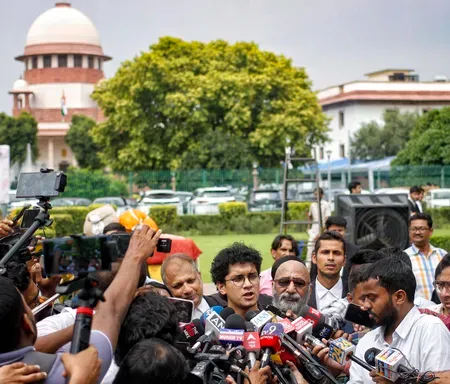
Both the Supreme Court Bar Association (SCBA) and the Supreme Court Advocates-on-Record Association (SCAORA) issued statements condemning the alleged use of excessive force against student protesters and members of the legal fraternity.
In a resolution adopted on Wednesday, the SCBA condemned the alleged 'brutal lathi charge' on students and lawyers, sought an immediate, impartial, and time-bound inquiry, and called for medical assistance to those injured. SCAORA, in a separate statement, emphasised that peaceful dissent is protected under Articles 19(1)(a) and 19(1)(b) of the Constitution, and called for an independent examination of the allegations — noting that any restriction on peaceful assembly must satisfy constitutional requirements of legality, necessity, and proportionality.
The Supreme Court's refusal to fast-track the matter leaves the petition to follow the regular listing process, even as bar associations and civil society groups press for accountability over the alleged police action.
Point of View
And the government's reform response so far has not resolved the structural complaints. If the petition proceeds through regular listing, the court will eventually have to weigh the constitutional proportionality of the police response — the very test SCAORA has already invoked.
NationPress
21 Oct 2026
Frequently Asked Questions
Why did the Supreme Court refuse to urgently hear the 'Sansad Chalo' petition?
The Supreme Court declined to grant an urgent listing to the petition challenging alleged police action at the 'Sansad Chalo' march, with CJI Surya Kant telling the petitioner's counsel not to 'waste' the court's time. The court did not rule on the merits of the case; the petition will follow the regular listing process.
What were students protesting about at the 'Sansad Chalo' march?
Students marching from Jantar Mantar towards Parliament were demanding fair conduct of the NEET examination and reforms at the National Testing Agency (NTA), including its dissolution, citing repeated allegations of paper leaks. Delhi Police barricaded the route and restricted the march to the designated protest site.
How many FIRs were registered after the 'Sansad Chalo' protests?
A total of 10 FIRs were registered across central Delhi following the protests. Four were lodged at Parliament Street Police Station, three at Connaught Place Police Station, and one each at Mandir Marg, Barakhamba Road, and Kartavya Path police stations. Investigations are reportedly underway in all cases.
What did the Supreme Court Bar Association and SCAORA say about the police action?
The Supreme Court Bar Association (SCBA) condemned the alleged 'brutal lathi charge' on students and lawyers, sought an immediate impartial inquiry, and called for medical aid to the injured. SCAORA separately emphasised that peaceful dissent is constitutionally protected and called for an independent examination of the use-of-force allegations.
How did Delhi Police respond to the allegations of brutality?
Delhi Police denied claims of stone-pelting and alleged police brutality, describing circulating videos as 'false and misleading.' The Deputy Commissioner of Police (New Delhi) posted on X urging the public not to share unverified videos and to rely only on official sources for information.