Amit Shah visits BSF's Sanchu Post in Bikaner, inaugurates 14 women barracks
Synopsis
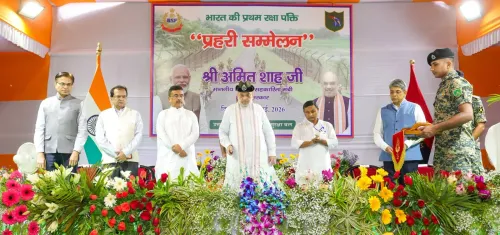
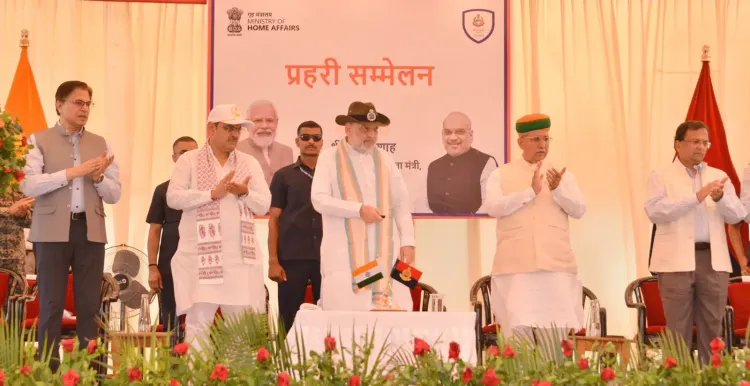
Union Home Minister Amit Shah visited BSF's Sanchu Post in Bikaner on 27 May 2026, addressed a border guards' conference alongside CM Bhajanlal Sharma, e-inaugurated 14 new women's barracks, reviewed drone technology, and offered prayers at Sanchu Mata temple.
Key Takeaways
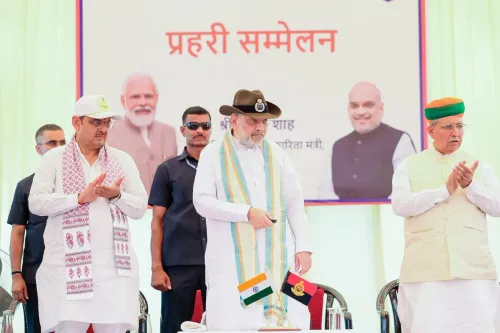
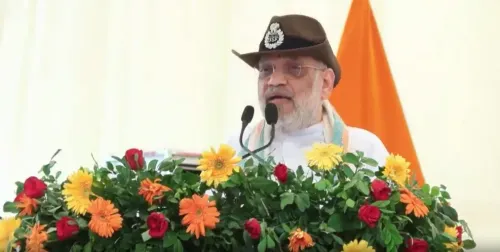
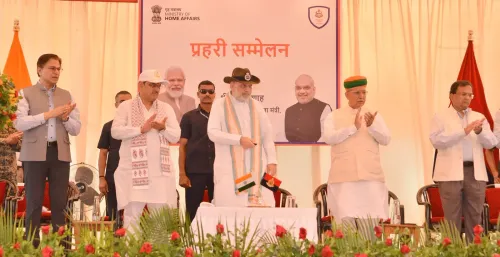
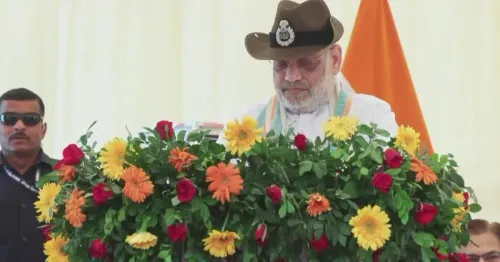
Amit Shah addressed the Prahari Sammelan at BSF's Sanchu Post on the international border in Bikaner, Rajasthan on 27 May 2026 .
14 newly constructed women's barracks at BSF border outposts were e-inaugurated by the Home Minister during the visit.
Shah reviewed the Prahari Shastra Gallery and was briefed on the operational functioning of modern drone technology .
CM Bhajanlal Sharma was present throughout, joining Shah in meeting jawans and participating in a tree-planting drive.
Both leaders planted a Khejri sapling , Rajasthan's state tree, as a symbol of environmental conservation.
Shah offered prayers at Sanchu Mata temple , seeking the welfare and prosperity of the nation and state.
Union Home Minister Amit Shah on Tuesday, 27 May 2026, visited the Border Security Force's Sanchu Post on the international border in Bikaner, Rajasthan, where he addressed a Prahari Sammelan (border guards' conference) and e-inaugurated 14 newly constructed women's barracks at BSF border outposts. Rajasthan Chief Minister Bhajanlal Sharma was present alongside the Home Minister throughout the visit, according to a post by the Chief Minister's Office of Rajasthan.
What happened at Sanchu Post
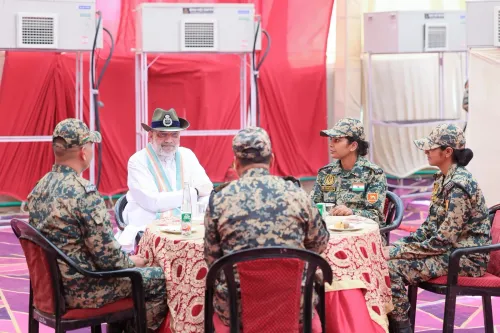
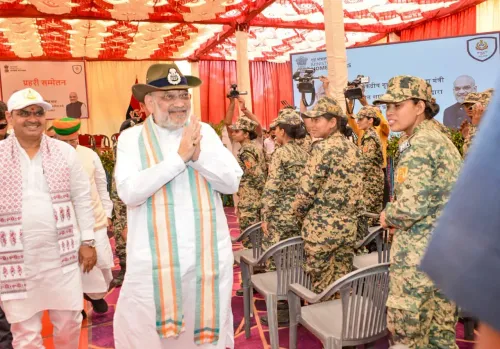
Shah and CM Sharma met with jawans deployed on the border, boosting their morale and joining them for refreshments and informal conversation — a gesture that the CMO described as 'utshahvardhan' (encouragement). Shah also visited the Prahari Shastra Gallery, where he reviewed modern drone technology and was briefed on its operational functioning. The e-inauguration of the 14 women's barracks marks a concrete addition to gender-sensitive infrastructure at frontier outposts.
Before the official programme, Shah offered prayers at the Sanchu Mata temple at the post, seeking the welfare and prosperity of the nation and the state. Both Shah and CM Sharma also planted a Khejri sapling — Rajasthan's state tree — sending a message of environmental conservation.
Context: BSF's western border role
The Border Security Force is India's primary paramilitary force guarding the western international border with Pakistan, including the long desert frontier that runs through Rajasthan. Bikaner district hosts several BSF outposts that are operationally significant given their proximity to the international boundary. The Prahari Sammelan format is a periodic high-level interaction designed to assess ground conditions and maintain troop morale.
The visit comes amid sustained central government emphasis on modernising border infrastructure, with drone-based surveillance emerging as a key pillar of the BSF's operational upgrade along the western frontier.
Policy backdrop: Women in paramilitary forces
The e-inauguration of 14 women's barracks reflects a policy direction that has been in motion since 2019, when the central government began prioritising dedicated facilities for women personnel across Central Armed Police Forces, including the BSF. The construction of gender-specific barracks at border posts is part of a broader drive to improve service conditions and encourage the induction of women into frontline paramilitary roles.
The Ministry of Home Affairs, which Shah heads, oversees the BSF and has championed both the infrastructure expansion and the integration of modern surveillance tools such as drones into border management.
Stakeholders and impact
The most direct beneficiaries are BSF women personnel now set to receive dedicated barrack facilities at border outposts — a change that addresses longstanding concerns about basic amenities for women in field postings. Male jawans at Sanchu and surrounding posts also stand to benefit from the morale boost and the upgraded drone-surveillance capabilities reviewed during the visit.
For Rajasthan, CM Sharma's presence signals active state-centre coordination on border security, reinforcing the ruling dispensation's emphasis on national security as a governance priority. The #AapnoAgraniRajasthan hashtag used in the CMO's post frames the visit within the state government's broader 'leading Rajasthan' narrative.
What's next
Attention will now turn to the rollout of additional drone-equipped surveillance systems across other BSF sectors along the Rajasthan border, and to further phases of women-specific infrastructure at outposts beyond Sanchu. The pace of these expansions will be a measure of how quickly the policy commitments translate into field-level change for BSF personnel.
Point of View
Lending institutional weight to what might otherwise appear ceremonial. CM Sharma's prominent presence signals that the BJP government in Rajasthan is keen to project state-centre alignment on national security. The drone-technology review, meanwhile, points to the next phase of border modernisation that will define BSF's operational posture along the India-Pakistan frontier.
NationPress
20 Sept 2026
Frequently Asked Questions
Why did Amit Shah visit BSF's Sanchu Post in Bikaner?
Amit Shah visited BSF's Sanchu Post on 27 May 2026 to address a Prahari Sammelan (border guards' conference), e-inaugurate 14 new women's barracks, review drone surveillance technology, and boost the morale of jawans deployed on the international border.
What are the 14 women's barracks inaugurated by Amit Shah?
The 14 newly constructed women's barracks are dedicated facilities for female BSF personnel at border outposts in the Bikaner sector, part of a central government drive since 2019 to build gender-sensitive infrastructure across Central Armed Police Forces.
Where is BSF's Sanchu Post located?
Sanchu Post is a BSF border outpost in the Bikaner district of Rajasthan, situated on the international border with Pakistan along India's western frontier.
Was Rajasthan CM Bhajanlal Sharma present at the Bikaner BSF visit?
Yes, Chief Minister Bhajanlal Sharma was present throughout the visit, joining Amit Shah in meeting jawans, participating in refreshments and conversation with troops, and planting a Khejri sapling.
What is a Prahari Sammelan?
A Prahari Sammelan is a periodic high-level conference held with BSF border guards, allowing senior officials such as the Home Minister to interact directly with deployed personnel, assess ground conditions, and address operational matters.