Rajasthan CMO credits PM Modi for Digital India reach
Synopsis
The Chief Minister's Office of Rajasthan credited Prime Minister Narendra Modi's Digital India programme for extending digital technology to ordinary citizens and small traders, framing Rajasthan as a frontrunner in adopting the Centre's digital agenda.
Key Takeaways
The Rajasthan CMO posted on 20 June 2026 crediting PM Narendra Modi with bringing digital technology to common citizens and small traders via Digital India .
Digital India was launched on 1 July 2015 to bridge the digital divide through infrastructure, e-governance and citizen empowerment.
The Unified Payments Interface (UPI) , introduced in 2016 , has been a key tool enabling small traders to adopt cashless transactions.
Chief Minister Bhajan Lal Sharma has aligned Rajasthan's state portals and welfare delivery with national digital stacks since taking office in December 2023 .
The hashtag #आपणो_अग्रणी_राजस्थान ('Our Frontrunner Rajasthan') signals the state government's intent to project itself as a leading implementer of central digital schemes.
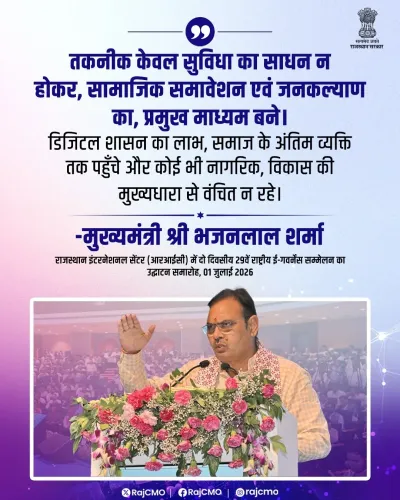
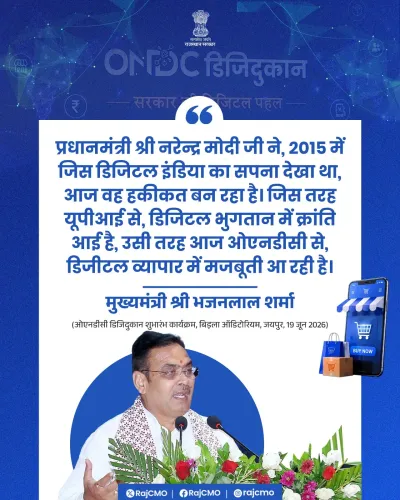
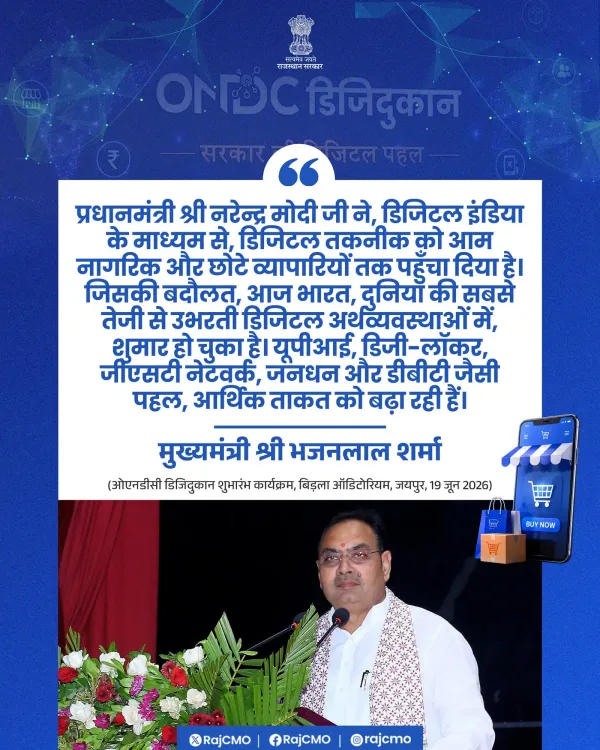
The Chief Minister's Office of Rajasthan, the official handle of the state government, on Saturday, 20 June 2026, credited Prime Minister Narendra Modi with bringing digital technology within reach of ordinary citizens and small traders through the Digital India programme. The post, attributed to Chief Minister Bhajan Lal Sharma and tagged #आपणो_अग्रणी_राजस्थान ('Our Frontrunner Rajasthan'), underscores the ruling dispensation's effort to align state messaging with the Centre's flagship digital push.
Context
The post states, in translation: 'Prime Minister Shri Narendra Modi has, through Digital India, brought digital technology to the common citizen and small traders.' The message is brief but pointed — positioning the national programme as a direct enabler of grassroots economic participation in Rajasthan. The hashtag frames the state as a leading adopter of the Centre's digital agenda.
Policy Backdrop
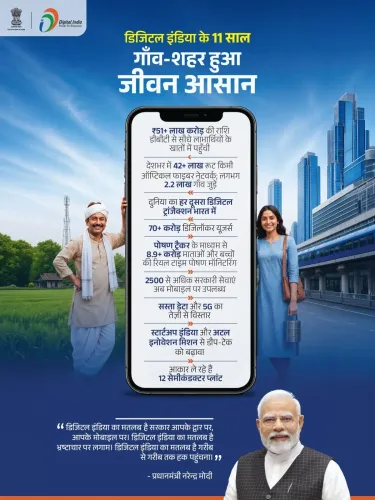
Digital India was formally launched on 1 July 2015 by Prime Minister Modi with the stated aim of bridging the digital divide by building infrastructure, expanding e-governance and empowering citizens. A critical milestone within this programme was the rollout of the Unified Payments Interface (UPI) in 2016 by the National Payments Corporation of India (NPCI), which allowed small traders to accept digital payments without expensive point-of-sale hardware.
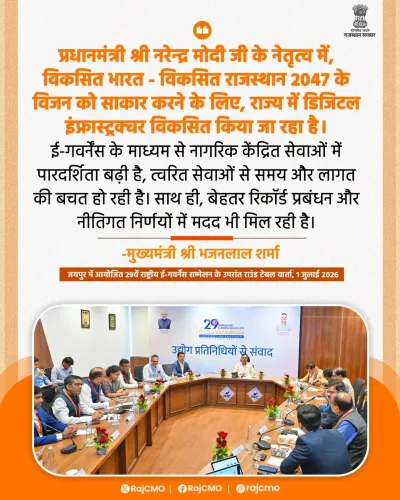
The broader architecture links Aadhaar-based identification, direct benefit transfers and public digital infrastructure to expand service delivery to the last mile. Successive Union budgets have continued to fund broadband expansion, e-governance platforms and digital literacy drives across states, with Rajasthan aligning its own portals and welfare delivery mechanisms to these national digital stacks.
Stakeholders and Impact
The two groups explicitly named — common citizens and small traders — represent the core constituency that Digital India's transactional layer was designed to serve. For small and micro enterprises in Rajasthan, access to UPI and government e-marketplaces has lowered barriers to digital commerce. For ordinary residents, e-governance portals have reduced the need for physical visits to government offices for services ranging from land records to welfare entitlements.
Chief Minister Bhajan Lal Sharma, who took office in December 2023, has sought to present the state as an active partner in national-level digital initiatives. The CMO's social media messaging consistently frames local implementation of central schemes as evidence of the BJP-led government's development record ahead of future electoral cycles.
What's Next
Policy watchers will track the rollout of Digital India Phase 2.0 components and any Rajasthan-specific digital MSME or citizen-service dashboards expected to be announced in the next state budget session. The state's ability to demonstrate measurable outcomes — in digital transaction volumes, e-governance uptake and small-business onboarding — will determine how credibly this narrative of 'frontrunner' status holds up to scrutiny.
Point of View
' the messaging targets two groups that form a broad voter base in a predominantly semi-urban and rural state. The move also reflects a wider BJP pattern of using social media handles of state governments to reinforce national-level achievements, effectively blurring the line between governance communication and political outreach. The durability of this narrative will depend on whether Rajasthan can point to concrete, measurable digital-inclusion outcomes in the months ahead.
NationPress
19 Sept 2026
Frequently Asked Questions
What is the Digital India programme?
Digital India is a flagship Central government programme launched on 1 July 2015 by Prime Minister Narendra Modi to build digital infrastructure, expand e-governance services and empower citizens — including small traders — through technology access.
What did the Rajasthan CMO post about Digital India?
The Chief Minister's Office of Rajasthan posted on 20 June 2026 crediting PM Modi with bringing digital technology to common citizens and small traders through the Digital India programme, tagging Chief Minister Bhajan Lal Sharma .
How has Digital India helped small traders in Rajasthan?
The Unified Payments Interface (UPI) , a key Digital India tool launched in 2016 , allows small traders to accept digital payments without expensive hardware, lowering barriers to cashless commerce for micro and small enterprises.
Who is Bhajan Lal Sharma?
Bhajan Lal Sharma is the Chief Minister of Rajasthan , in office since December 2023 , representing the BJP. His office regularly posts on social media aligning state governance with Central government schemes.
What is Digital India Phase 2.0?
Digital India Phase 2.0 refers to the next generation of components under the programme, expected to deepen broadband access, expand MSME digital onboarding and upgrade e-governance platforms. Specific rollout timelines and features for Rajasthan are expected to emerge in upcoming state and Union budget sessions.