Rajasthan CMO calls Yamuna water pact historic for Shekhawati
Synopsis
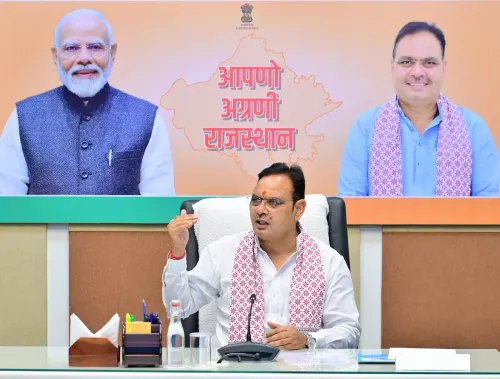
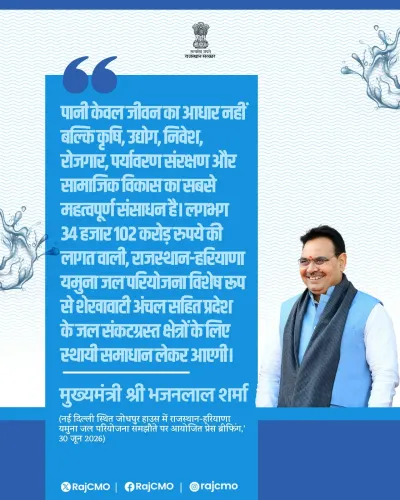
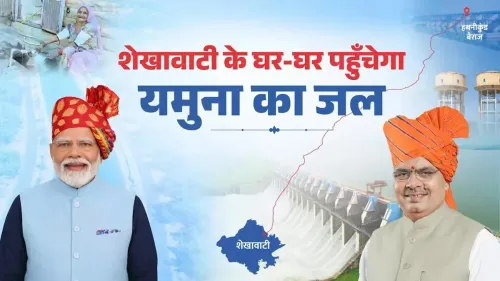
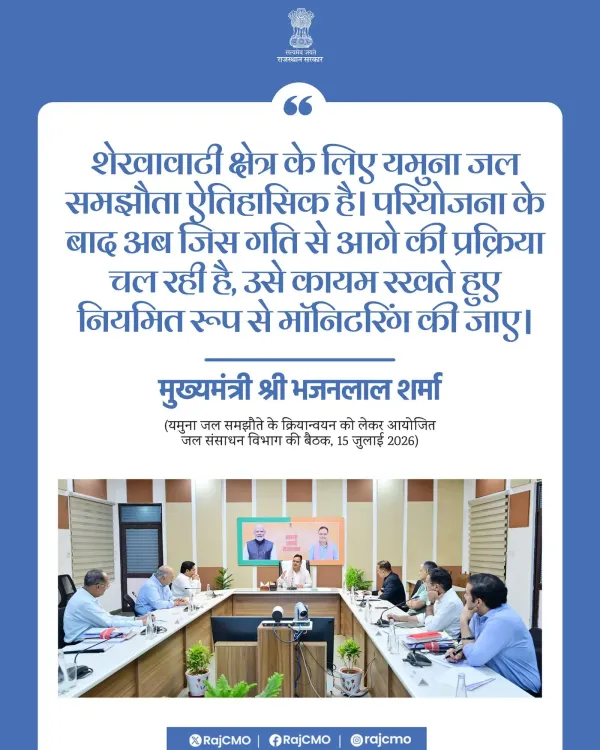
The Rajasthan CMO on 16 July 2026 termed the Yamuna water agreement for the semi-arid Shekhawati region historic and called for sustained momentum and regular monitoring of the ongoing implementation process, tagging Chief Minister Bhajanlal Sharma.
Key Takeaways
The Rajasthan CMO on 16 July 2026 publicly described the Yamuna water agreement for Shekhawati as historic.
Chief Minister Bhajanlal Sharma was directly tagged, indicating a directive from the highest level of the state government.
The CMO called for maintaining the current pace of implementation and instituting regular monitoring .
The Shekhawati region — covering Sikar, Jhunjhunu and Churu — is semi-arid and heavily dependent on external water sources.
A 1994 MoU had allocated Rajasthan 0.4 billion cubic metres of Yamuna water annually for its northern districts.
The post signals the project has progressed past the agreement stage into active implementation requiring oversight.
The Chief Minister's Office of Rajasthan on Thursday, 16 July 2026 described the Yamuna water agreement for the Shekhawati region as historic and directed that the momentum of ongoing implementation be sustained through regular monitoring, tagging Chief Minister Bhajanlal Sharma in the post.
The CMO posted in Hindi: 'Shekhawati kshetra ke liye Yamuna jal samjhauta aitihasik hai' — 'The Yamuna water agreement for the Shekhawati region is historic.' It further stated that following the project, the pace at which subsequent processes are moving must be maintained and monitored on a regular basis.
Context
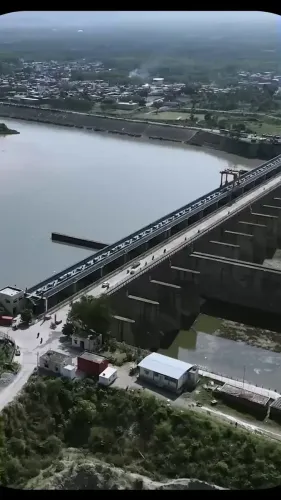
The Shekhawati region, comprising the semi-arid districts of Sikar, Jhunjhunu and Churu in northern Rajasthan, has historically depended on external water sources for both agriculture and drinking needs. The area receives low and erratic rainfall, making river-linked water supply agreements critical for its rural economy and farm livelihoods.
Inter-state river water sharing in India is governed by a combination of tribunal awards, memoranda of understanding, and bilateral or multilateral agreements among riparian states. Rajasthan has long sought enhanced allocations from the Yamuna to supplement canal networks in its northern belt.
Policy Backdrop
A 1994 Memorandum of Understanding on Yamuna waters allocated Rajasthan an annual share of 0.4 billion cubic metres for use in its northern districts, providing the foundational legal basis for the state's claim on Yamuna flows. Subsequent governments have pursued infrastructure to actually deliver that allocation to end-users in Shekhawati.
Indian states routinely follow inter-state river agreements with phased project execution — covering canal construction, distribution networks, and lift irrigation schemes — before instituting monitoring frameworks to track water delivery. The CMO's emphasis on 'regular monitoring' aligns with standard practice for large water infrastructure rollouts.
Stakeholders and Impact
Shekhawati farmers and rural households stand to be the primary beneficiaries of improved Yamuna water delivery, which could reduce dependence on rapidly depleting groundwater in the region. The districts of Sikar, Jhunjhunu and Churu together account for a substantial share of Rajasthan's wheat and mustard cultivation in the northern belt.
Chief Minister Bhajanlal Sharma, who took office in December 2023, has positioned water security for arid Rajasthan as a development priority. The CMO's public directive to maintain pace and institute monitoring signals that the project has moved beyond the agreement stage into active implementation.
What's Next
The CMO's call for 'regular monitoring' suggests that formal review mechanisms — potentially including inter-departmental committees or inter-state coordination meetings with Haryana and other basin states — are expected to be institutionalised. Physical infrastructure milestones such as canal works and lift irrigation installations will be key indicators of on-ground progress.
Any scheduled inter-state review meetings or state-level project updates from the Rajasthan Water Resources Department will be closely watched as benchmarks for whether the momentum cited by the CMO translates into measurable delivery for Shekhawati's water-stressed communities.
Point of View
The CMO frames water security for Shekhawati as a personal priority of the Chief Minister, reinforcing his government's development narrative in a region that has historically felt neglected on infrastructure. The emphasis on 'regular monitoring' also reflects a broader pattern in Indian state governance where inter-state water agreements frequently stall at the implementation stage, and public accountability mechanisms are used to pre-empt criticism. For the BJP in Rajasthan, delivering tangible water access to the semi-arid north could be a significant electoral asset in the districts of Sikar, Jhunjhunu and Churu.
NationPress
16 Jul 2026
Frequently Asked Questions
What is the Yamuna water agreement for Shekhawati?
It is an inter-state water-sharing arrangement under which Rajasthan receives an allocation of Yamuna river water for use in the semi-arid Shekhawati region covering Sikar, Jhunjhunu and Churu districts. A foundational 1994 MoU allocated Rajasthan 0.4 billion cubic metres annually for its northern districts.
Why is Shekhawati dependent on external water sources?
Shekhawati is a semi-arid belt in northern Rajasthan that receives low and erratic rainfall, making groundwater and river-linked canal supplies essential for agriculture and drinking water needs.
What did the Rajasthan CMO say about the Yamuna water project on 16 July 2026?
The CMO described the Yamuna water agreement for Shekhawati as historic and directed that the current pace of implementation be sustained with regular monitoring, tagging Chief Minister Bhajanlal Sharma in the post.
Who is Bhajanlal Sharma?
Bhajanlal Sharma is the BJP Chief Minister of Rajasthan, who assumed office in December 2023 and has identified water security as a key development priority for the state.
What happens after an inter-state water agreement in India?
After an inter-state water agreement, states typically undertake phased infrastructure construction — canals, lift irrigation, distribution networks — followed by monitoring frameworks to track actual water delivery to end-users.