Rajasthan CMO Pushes RRTS Extension to Behror and Kotputli
Synopsis
The Chief Minister's Office of Rajasthan announced on 29 September 2026 that steps are being taken to extend the proposed Delhi-Haryana RRTS corridor to Behror and further to Kotputli, deepening the state's integration with National Capital Region rapid-transit infrastructure.
Key Takeaways
The Rajasthan CMO confirmed on 29 September 2026 that action is being initiated to bring the RRTS from the Delhi-Haryana region to Behror .
A further extension to Kotputli is also being pursued, pushing rapid transit deeper into northern Rajasthan.
The Delhi-Gurgaon-Alwar RRTS corridor has been a priority NCR planning corridor since the 2010s , with NCRTC as the executing body.
Behror is located in Alwar district near the Haryana border; Kotputli lies further south on the same alignment.
A tripartite agreement among the Union government, Haryana, and Rajasthan will be required to advance the extension.
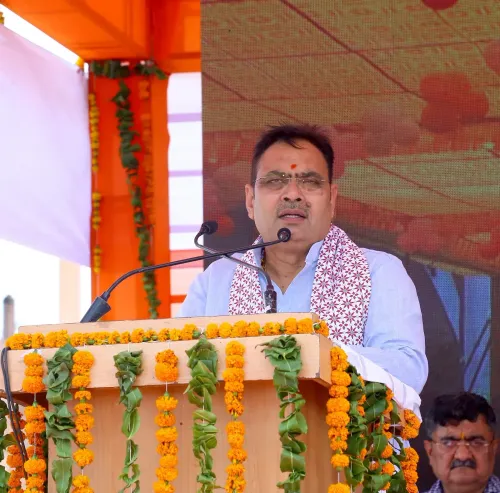
CM Bhajanlal Sharma is the political face behind this connectivity push under the #AapnoAgraneeRajasthan agenda.
Rajasthan's connectivity ambitions just got a northward nudge. The Chief Minister's Office of Rajasthan announced on Tuesday, 29 September 2026 that action is being taken to bring the proposed Regional Rapid Transit System (RRTS) — originating from the Delhi-Haryana region — all the way to Behror, with a further extension planned towards Kotputli.
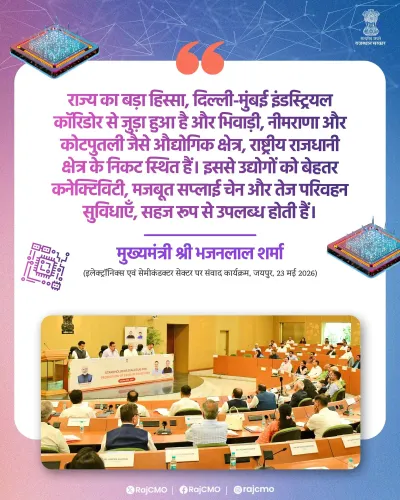
The post, addressed to Chief Minister Bhajanlal Sharma, states: 'Dilli-Haryana kshetra se prastavit, RRTS ko Behror tak lane tatha aage Kotputli tak vistar dene ki disha mein bhi, karvai ki ja rahi hai' — 'Steps are being taken to bring the proposed RRTS from the Delhi-Haryana region to Behror, and to extend it further towards Kotputli.' The hashtag #AapnoAgraneeRajasthan ('Our Progressive Rajasthan') frames the announcement as part of a wider state-development narrative.
From NCR to Rajasthan's border towns — why Behror and Kotputli matter
Behror, a town in Alwar district situated near the Haryana border, sits squarely on the commuter belt connecting Delhi-NCR to northern Rajasthan. Kotputli, further south on the same corridor, marks a deeper push into the state. Together, the two towns represent a two-stage extension that could bring semi-high-speed rail within reach of hundreds of thousands of residents who currently depend on road and conventional rail to reach the capital region.
The Delhi-Gurgaon-Alwar RRTS corridor has been on the planning radar since the 2010s, when the National Capital Region Transport Corporation (NCRTC) — the central body executing RRTS corridors — identified it as a priority alignment. Alwar was always the nominal southern terminus, but Behror and Kotputli lie beyond that anchor, suggesting the state government is now lobbying to pull the corridor deeper into its own territory.
The NCRTC framework and what Rajasthan needs next
RRTS corridors are a tripartite undertaking — they require the Union government, the originating state (Haryana, in this leg), and the receiving state (Rajasthan) to align on financing, land acquisition, and right-of-way. For the Behror-Kotputli stretch, that means a formal agreement involving all three parties, alongside feasibility studies and funding approvals that are yet to be publicly confirmed.
Chief Minister Bhajanlal Sharma has made infrastructure connectivity a centrepiece of his administration. Tying border districts such as Alwar and Jaipur-rural into the NCR's rapid-transit network would compress commute times dramatically, potentially unlocking real-estate, logistics, and employment value along the corridor — a pattern already visible in the operational Delhi-Meerut RRTS stretch in Uttar Pradesh.
The road from announcement to rolling stock is long. Feasibility clearances, funding structures, and inter-state coordination with Haryana remain the decisive next moves. But the direction is set — Rajasthan is formally in the queue.
Point of View
Securing this extension would be a tangible deliverable in border districts that vote heavily and commute heavily to Delhi. The announcement, however, remains at the 'action being taken' stage, which means the harder work — inter-state funding negotiations and NCRTC clearances — lies ahead. Until a tripartite agreement is signed, this is political intent, not an infrastructure guarantee.
NationPress
29 Sept 2026
Frequently Asked Questions
What is the RRTS and how does it connect to Rajasthan?
The Regional Rapid Transit System is a semi-high-speed rail network planned across the National Capital Region. The Delhi-Gurgaon-Alwar corridor, one of its priority alignments, passes through Haryana into Rajasthan, with the state now seeking extensions to Behror and Kotputli beyond Alwar.
Where is Behror and why is it significant for the RRTS extension?
Behror is a town in Alwar district, Rajasthan, located near the Haryana border on the Delhi-NCR commuter belt. Its proximity to the existing corridor alignment makes it a natural first extension point for the RRTS into deeper Rajasthan territory.
What is Kotputli's role in the proposed RRTS expansion?
Kotputli is proposed as a second-stage extension point beyond Behror, further south along the same corridor. Its inclusion signals Rajasthan's ambition to draw rapid-transit benefits well past the border districts.
Who is responsible for building the RRTS corridor?
The National Capital Region Transport Corporation (NCRTC), a central government body, is tasked with planning and executing RRTS corridors. Extensions into Rajasthan would require a tripartite agreement involving the Union government, Haryana, and Rajasthan.
What are the next steps for the Behror-Kotputli RRTS extension?
Key next steps include feasibility studies, funding approvals, and a formal inter-state agreement among the Union government, Haryana, and Rajasthan. None of these have been publicly confirmed yet, according to available information.