CM Bhajanlal flags off 144 new RSRTC buses from Jaipur
Synopsis
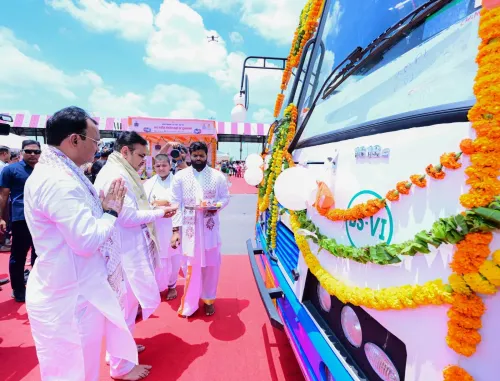
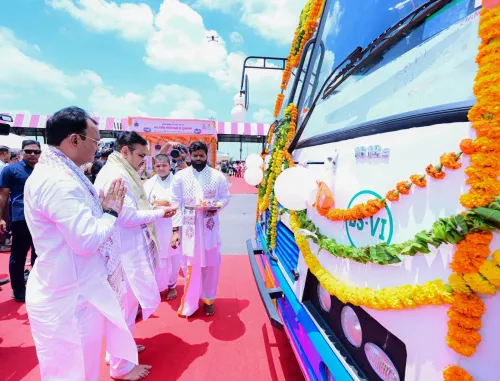
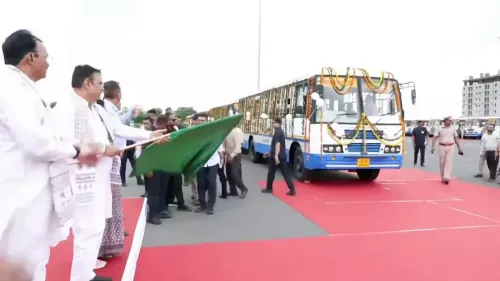
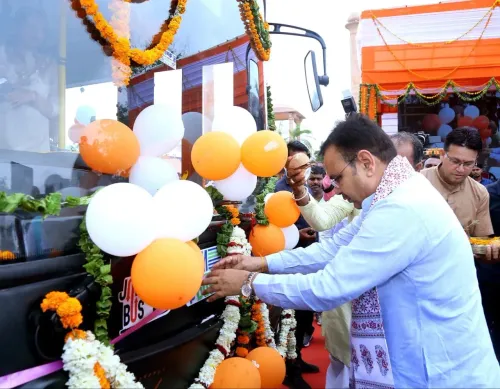
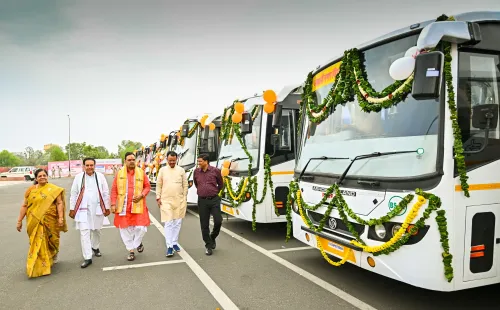
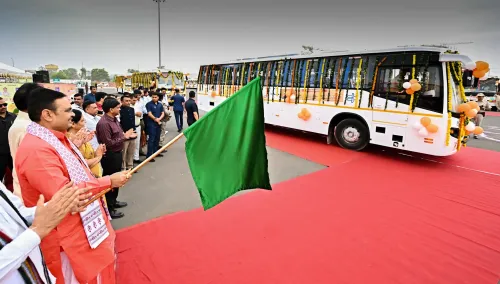
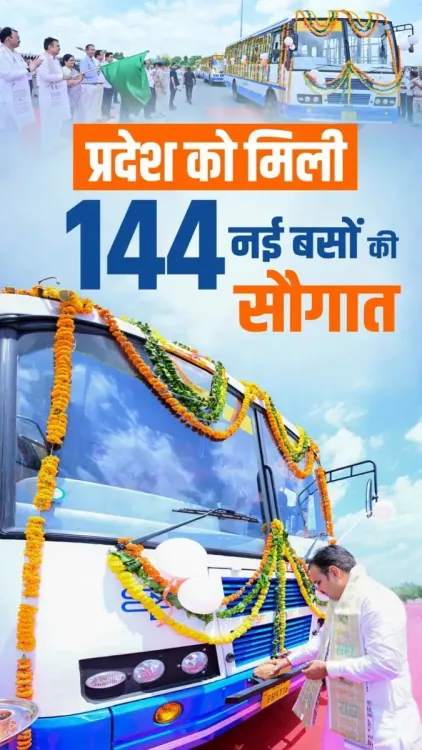
Chief Minister Bhajanlal Sharma flagged off 144 new RSRTC buses from Hirapura Bus Stand in Jaipur on 26 July 2026, pledging a safer and more modern public transport system, while distributing helmets to women road safety ambassadors at the event.
Key Takeaways
144 new RSRTC buses were flagged off by CM Bhajanlal Sharma from Hirapura Bus Stand, Jaipur on 26 July 2026 .
The Chief Minister's Office of Rajasthan announced the event via an official post on X, accompanied by a video.
Helmets were distributed to women road safety ambassadors ( सड़क सुरक्षा अग्रदूत ) at the ceremony.
CM Sharma reaffirmed the state government's commitment to a safe, smooth, and modern public transport system.
The expansion is part of Rajasthan's ongoing efforts to modernise the RSRTC fleet and improve connectivity across the state.
The event was branded under the hashtag #आपणो_अग्रणी_राजस्थान , the government's development outreach campaign.
Chief Minister Bhajanlal Sharma on Sunday, 26 July 2026 flagged off 144 new buses of the Rajasthan State Road Transport Corporation (RSRTC) from Hirapura Bus Stand in Jaipur, marking a significant expansion of the state's public transport fleet. The Chief Minister's Office of Rajasthan announced the event, which also featured the distribution of helmets to women road safety volunteers.
Context
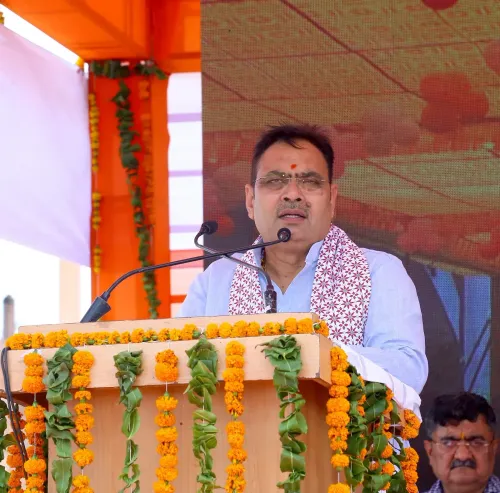
Speaking at the flagging-off ceremony, CM Bhajanlal Sharma stated that the state government remains 'निरंतर प्रतिबद्ध' (continuously committed) to strengthening a safe, smooth, and modern public transport system across Rajasthan. The event was held at Hirapura Bus Stand, one of Jaipur's primary RSRTC terminals and a key hub for inter-city and rural bus operations.
Alongside the bus launch, CM Sharma personally distributed helmets to women identified as 'सड़क सुरक्षा अग्रदूत' (road safety ambassadors), underlining the government's dual focus on expanding connectivity and reducing road fatalities.
Policy Backdrop
The RSRTC, a state-owned corporation, has historically been the backbone of public mobility across Rajasthan's vast geography, connecting urban centres with remote rural districts. Successive state governments have periodically augmented the corporation's fleet to address rising demand driven by urbanisation and population growth.
The addition of 144 buses aligns with a broader national trend of state transport corporations modernising ageing fleets. Across India, states have been investing in newer, more fuel-efficient buses — including CNG and electric variants — to improve service reliability and reduce emissions. The hashtag #आपणो_अग्रणी_राजस्थान ('Our Leading Rajasthan') accompanying the post reflects the current government's branding around development milestones.
Stakeholders and Impact
The fleet expansion directly benefits daily commuters — students, working professionals, and rural residents — who depend on RSRTC services for affordable intercity and intra-state travel. Improved frequency and coverage can reduce overcrowding on existing routes and bring underserved areas into the public transport network.
The helmet distribution to women road safety ambassadors signals an effort to embed safety culture at the grassroots level. Women volunteers acting as 'अग्रदूत' (frontrunners) are expected to spread awareness in their communities about helmet use and road discipline, addressing Rajasthan's persistently high road accident statistics.
What's Next
The government is expected to announce subsequent phases of fleet induction, potentially including electric buses, in line with central government incentives under national clean mobility schemes. Road safety campaigns linked to this initiative may be rolled out at the district level in the coming months.
Observers will watch whether the RSRTC expansion is accompanied by route rationalisation and digital ticketing upgrades — measures that would determine the long-term impact on ridership and the corporation's financial health.
Point of View
Photo-op-friendly governance signal from the Bhajanlal Sharma administration, less than three years into its tenure, demonstrating delivery on public infrastructure promises. Pairing the fleet launch with helmet distribution for women ambassadors is a calculated move to address two persistent Rajasthan concerns — inadequate rural connectivity and high road fatality rates — within a single event. The 'आपणो अग्रणी राजस्थान' branding suggests the government is building a development narrative ahead of future electoral cycles. Whether the expansion translates into measurable improvement in RSRTC ridership and financial viability will be the real test of this initiative's depth.
NationPress
25 Oct 2026
Frequently Asked Questions
How many new RSRTC buses did CM Bhajanlal Sharma flag off?
CM Bhajanlal Sharma flagged off 144 new RSRTC buses from Hirapura Bus Stand in Jaipur on 26 July 2026 .
Where was the RSRTC bus inauguration held?
The inauguration was held at Hirapura Bus Stand in Jaipur , one of the city's major terminals for Rajasthan State Road Transport Corporation services.
What is RSRTC and what does it do?
The Rajasthan State Road Transport Corporation (RSRTC) is a state-owned entity that operates public bus services across Rajasthan, connecting urban centres with rural and remote districts.
Why were helmets distributed at the RSRTC bus launch event?
Helmets were distributed to women road safety ambassadors ( सड़क सुरक्षा अग्रदूत ) as part of a grassroots awareness drive to promote road safety and reduce accident fatalities in Rajasthan .
What is the 'Aapno Agrani Rajasthan' campaign?
'आपणो अग्रणी राजस्थान' ('Our Leading Rajasthan') is a development outreach hashtag used by the Bhajanlal Sharma government to highlight governance and infrastructure milestones across the state.