CM Bhajan Lal Flags Off 144 New Rajasthan Roadways Buses
Synopsis
Rajasthan Chief Minister Bhajan Lal Sharma flagged off 144 new Rajasthan Roadways buses from Hirapura Bus Stand on 26 July 2026, reaffirming his government's commitment to strengthening public transport infrastructure and delivering last-mile connectivity across the state.
Key Takeaways
144 new Rajasthan Roadways buses were flagged off by Chief Minister Bhajan Lal Sharma on 26 July 2026 .
The ceremony was held at Hirapura Bus Stand , a major bus terminal in Rajasthan.
The fleet expansion is aimed at improving last-mile connectivity for commuters, rural residents, students, and workers.
The Rajasthan State Road Transport Corporation (RSRTC) operates the state's public bus network across one of India's largest states by area.
The BJP government in Rajasthan, in power since December 2023 , has prioritised infrastructure upgrades as a core governance agenda.
Further route announcements and budget allocations for RSRTC are expected in upcoming state assembly sessions.
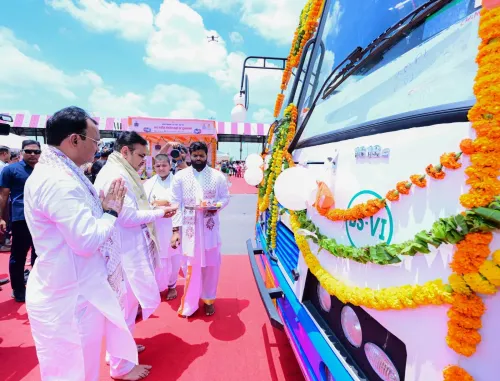
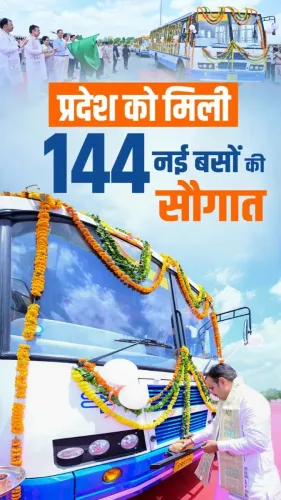
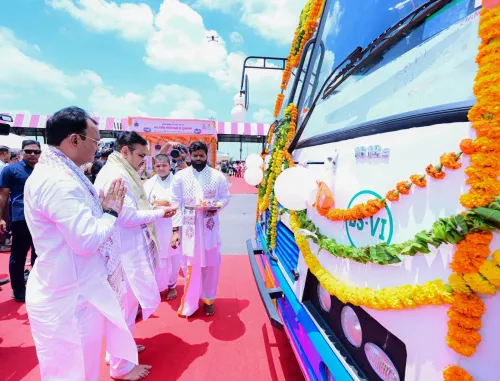
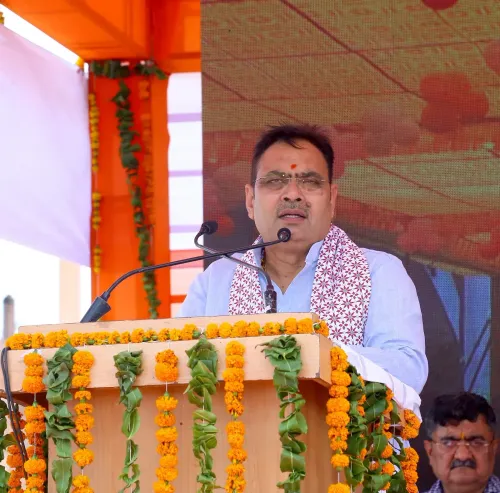
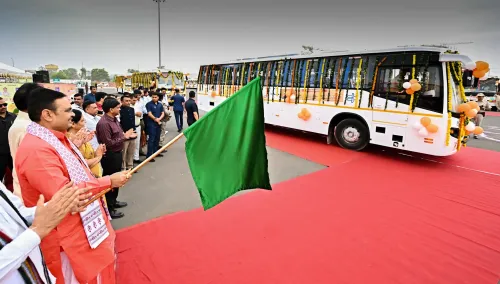
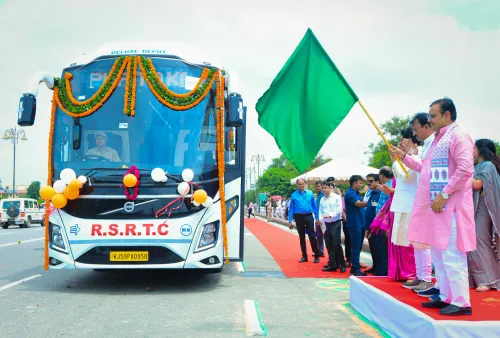
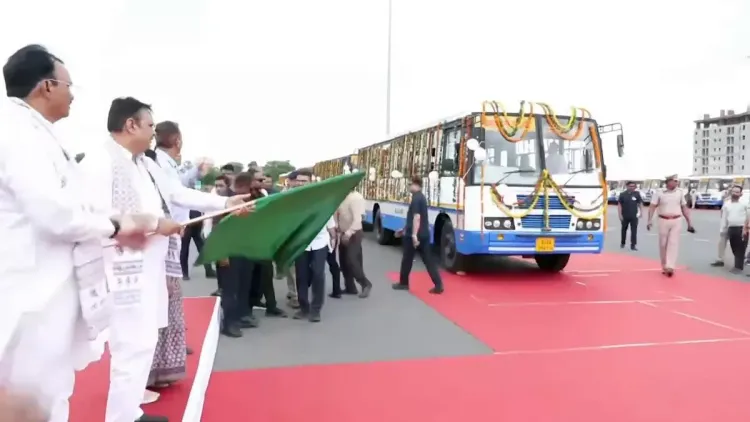
Rajasthan Chief Minister Bhajan Lal Sharma on Sunday, 26 July 2026, flagged off 144 new Rajasthan Roadways buses from Hirapura Bus Stand, marking a significant expansion of the state's public transport fleet aimed at improving connectivity for residents across the state.
Sharing the development on X, the Chief Minister wrote: 'aaj pradeshvasiyon ke sugam evam aaramdayak aavagaman ko badhava dene hetu Hirapura Bus Stand se 144 nayi Rajasthan Roadways busson ko hari jhandi dikhakar ravana kiya' — ['Today, to promote easy and comfortable travel for the people of the state, I flagged off 144 new Rajasthan Roadways buses from Hirapura Bus Stand.'] He added that the government is 'fully committed to strengthening the state's basic infrastructure and delivering accessible services to the last mile.'
Context
The flagging-off ceremony at Hirapura Bus Stand underscores the Bhajan Lal Sharma government's push to modernise public transport in Rajasthan since assuming office in December 2023. The event signals a deliberate effort to address long-standing gaps in intercity and rural bus connectivity across one of India's largest states by area.
The Rajasthan State Road Transport Corporation (RSRTC), commonly known as Rajasthan Roadways, is the state-owned body responsible for running public bus services across the state. Fleet additions of this scale are relatively infrequent and typically signal a multi-crore capital outlay by the state government.
Policy Backdrop
State governments across India have periodically expanded public bus fleets as a cost-effective tool to improve last-mile connectivity, particularly for rural and semi-urban populations who depend on affordable public transport. The BJP administration in Rajasthan has identified infrastructure upgrades as a core governance priority since taking power in late 2023.
Fleet modernisation drives serve dual purposes: they retire ageing vehicles that are costly to maintain and fuel-inefficient, and they extend route coverage to underserved areas. The addition of 144 buses in a single tranche represents a meaningful increment to the RSRTC operational fleet.
Stakeholders and Impact
The primary beneficiaries of this fleet expansion are daily commuters, students, migrant workers, and rural residents who rely on affordable public transport for access to markets, hospitals, and employment centres. Rajasthan's vast geography — the state is India's largest by area — makes reliable bus services especially critical for communities in remote districts.
The move also has economic implications for RSRTC, which, like many state road transport corporations, has historically grappled with financial losses. A larger, more modern fleet can improve fare revenue and reduce per-kilometre operating costs over time, though the corporation's financial health will depend on route planning and ridership levels.
What's Next
Attention will now turn to the specific routes these 144 buses will serve and whether the government follows up with further procurement rounds or route rationalisation announcements in the next state budget or assembly session. Advocacy groups representing rural commuters are likely to push for priority allocation to underserved districts in Rajasthan's interior regions.
The expansion also sets a benchmark for the administration's infrastructure commitments ahead of future electoral cycles, with the government keen to demonstrate tangible delivery on its connectivity agenda.
Point of View
Photogenic governance moment that the Bhajan Lal Sharma administration is deploying to signal delivery on its infrastructure promises, less than three years into its term. Public transport expansion is a politically low-risk, high-visibility move: it benefits a broad cross-section of voters — particularly rural and lower-income commuters — without generating significant opposition. The emphasis on 'last-mile' delivery echoes a phrase that has become central to BJP-governed states' communication strategies, framing infrastructure spending as welfare rather than mere capital expenditure. The real test will be whether RSRTC can sustain and operationalise the expanded fleet without the financial strain that has historically afflicted state road transport corporations across India.
NationPress
26 Oct 2026
Frequently Asked Questions
How many new buses did Rajasthan Roadways add on 26 July 2026?
Rajasthan Roadways added 144 new buses , flagged off by Chief Minister Bhajan Lal Sharma from Hirapura Bus Stand on 26 July 2026.
Where were the new Rajasthan Roadways buses flagged off from?
The 144 new buses were flagged off from Hirapura Bus Stand , a major bus terminal in Rajasthan.
What is RSRTC and who runs it?
RSRTC stands for Rajasthan State Road Transport Corporation , the state-owned body responsible for operating public bus services across Rajasthan. It functions under the state government.
Why is Rajasthan expanding its public bus fleet?
The Rajasthan government is expanding the bus fleet to improve last-mile connectivity , reduce reliance on private transport, and provide affordable travel options particularly for rural and semi-urban commuters.
When did Bhajan Lal Sharma become Chief Minister of Rajasthan?
Bhajan Lal Sharma became Chief Minister of Rajasthan in December 2023 following the state assembly elections, leading the BJP government.