Rajasthan CMO sets one-cooperative-per-village goal, tags Amit Shah
Synopsis
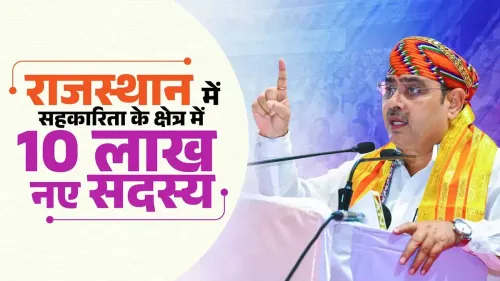
The Chief Minister's Office of Rajasthan has announced a target of placing a cooperative society in every village, building on an existing base of 44,000 societies. The goal aligns with Union Minister Amit Shah's national cooperative expansion drive launched in 2021.
Key Takeaways
The Rajasthan government currently has 44,000 cooperative societies operating across the state.
The Chief Minister's Office has set a target of establishing a cooperative society in every village in Rajasthan.
The announcement explicitly tags Union Minister Amit Shah , signalling alignment with the national Ministry of Cooperation agenda.
The central government has promoted village-level cooperative expansion since 2021 , including computerisation of PACS and model bye-laws.
Timelines, funding mechanisms and staffing plans for the expansion have not yet been disclosed.
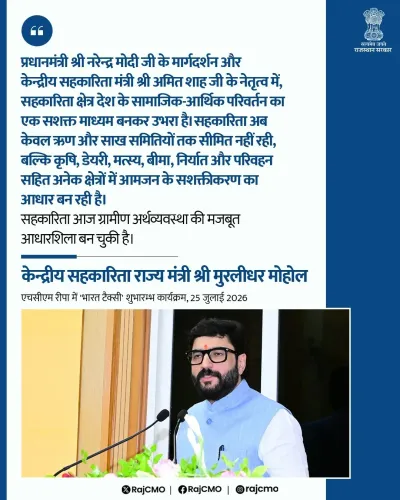
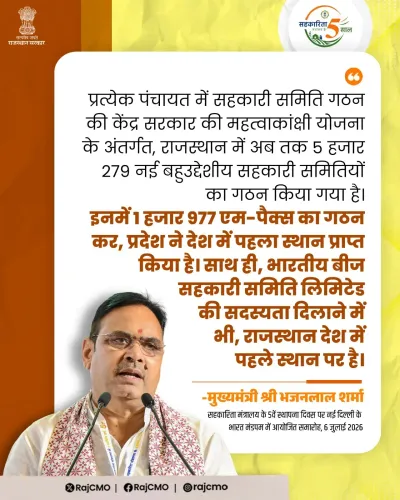
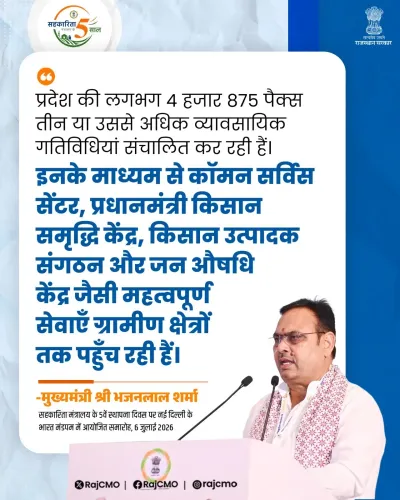
A cooperative society in every village — that is the stated ambition of the Rajasthan government, announced Monday morning in a post that also invoked Union Cooperation Minister Amit Shah and the state's flagship banner Aapno Agrani Rajasthan ('Our Leading Rajasthan').
The Chief Minister's Office of Rajasthan declared on 17 August 2026 that the state currently hosts 44,000 cooperative societies and has set a target of extending that network to every single village in the state. The post, in Hindi, reads: 'Rajasthan currently has 44 thousand cooperative societies. Our goal is that every village should have a cooperative society.'
What 44,000 societies already mean for rural Rajasthan
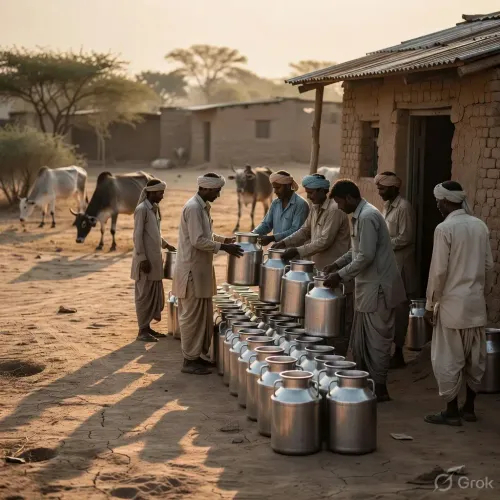
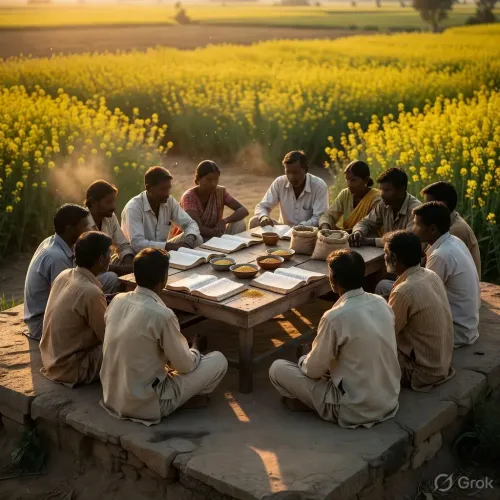
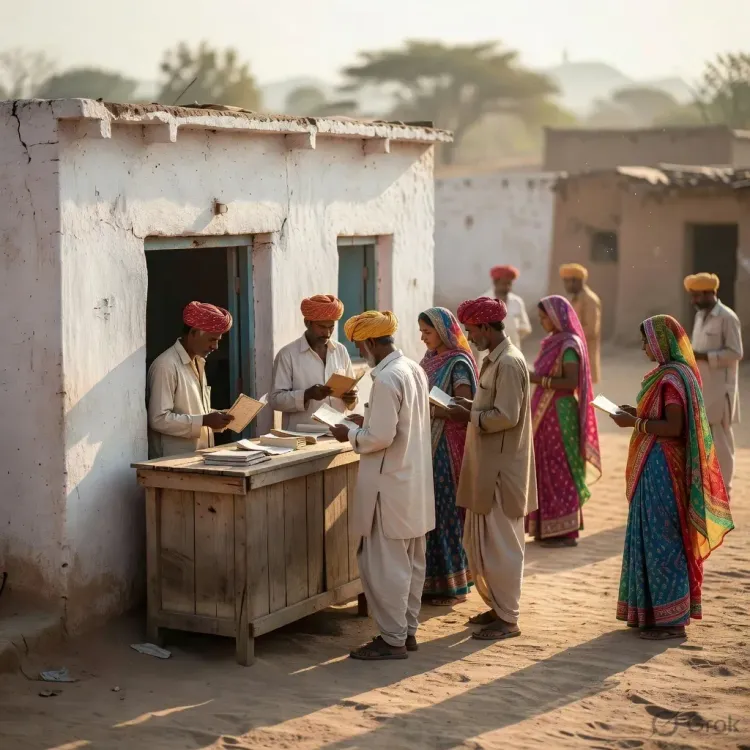
Cooperative societies in Rajasthan primarily serve farmers and rural households — providing agricultural credit, inputs and marketing linkages that formal banks have historically struggled to reach. A network of 44,000 societies across one of India's largest states by area represents a substantial rural-finance backbone, yet the CMO's framing makes clear that coverage gaps remain. The aspiration is universal reach: no village left without a member-owned institution at its doorstep.Amit Shah's cooperation ministry and the national push behind the goal
The CMO's decision to tag Amit Shah is deliberate. Since 2021, Shah has led a dedicated Ministry of Cooperation — the first standalone such ministry in independent India — with a mandate to deepen cooperative penetration at the grassroots. The ministry has driven computerisation of Primary Agricultural Credit Societies (PACS), introduced model bye-laws to standardise governance, and encouraged states to set village-level expansion targets. Rajasthan's announcement fits squarely within that national framework, signalling an intent to align state infrastructure with central-government schemes and potentially access the funding that comes with them.What the village-level target will require
Rajasthan has roughly 44,000 villages and habitations; matching each one with a functioning cooperative is an administrative undertaking of considerable scale. The path from announcement to execution will run through state budget allocations for cooperative infrastructure, possible central co-funding under Ministry of Cooperation schemes, and the regulatory and human-resource capacity to register, train and monitor potentially thousands of new societies. Those details — timelines, funding lines, staffing plans — have not yet been disclosed. The cooperative model has proved resilient when it has genuine member ownership and professional management; where those conditions are absent, societies have historically become dormant shells. Rajasthan's real test will be not just the count of new registrations, but whether each new society is operationally alive for the farmer walking in from the fields.Point of View
The CMO is openly positioning the state as a willing partner in the Centre's cooperative-expansion agenda, which carries both ideological weight for the BJP and potential access to central funding. The 44,000-society baseline is a credible foundation, but the leap to universal village coverage is where the political promise meets administrative reality. India's cooperative sector has a long history of societies that exist on paper but are functionally dormant; the true measure of this goal will be operational quality, not registration numbers. Watch whether Rajasthan's next budget translates this announcement into specific line items.
NationPress
17 Aug 2026
Frequently Asked Questions
How many cooperative societies does Rajasthan currently have?
According to the Chief Minister's Office of Rajasthan, the state currently has 44,000 cooperative societies .
What is Rajasthan's cooperative society target?
The Rajasthan government has announced a goal of establishing a cooperative society in every village across the state.
What is Amit Shah's role in India's cooperative sector?
Amit Shah has headed India's dedicated Ministry of Cooperation since 2021 , leading efforts to expand and modernise cooperative societies, including PACS computerisation and model bye-laws.
What is 'Aapno Agrani Rajasthan'?
Aapno Agrani Rajasthan ('Our Leading Rajasthan') is the Rajasthan government's campaign banner used to promote state development initiatives.
What do cooperative societies do for farmers in Rajasthan?
Cooperative societies in Rajasthan primarily provide agricultural credit, farming inputs and marketing support to rural farmers and households, especially in areas underserved by formal banks.