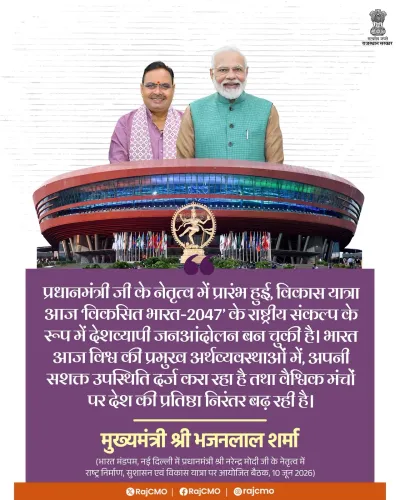
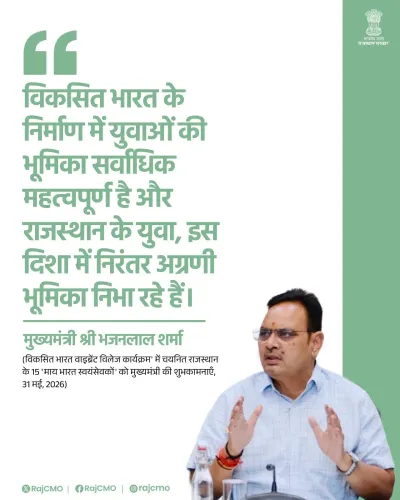
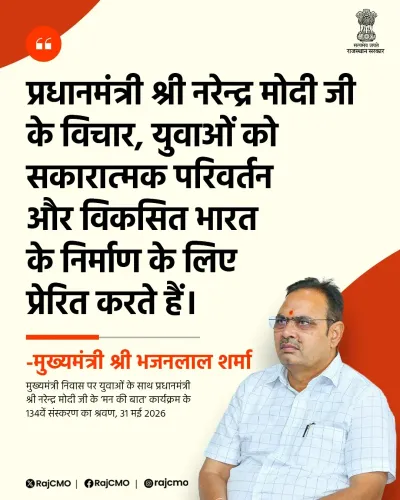
Rajasthan CMO links disciplined youth to Viksit Bharat vision
Synopsis
The Chief Minister's Office of Rajasthan, quoting CM Bhajanlal Sharma, declared on 28 July 2026 that thoughtful, disciplined, and values-driven youth are the foundation of both Viksit Bharat and Viksit Rajasthan, aligning state messaging with the BJP's national 2047 development vision.
Key Takeaways
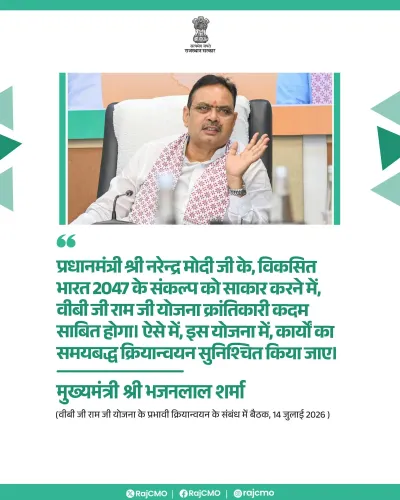
The Rajasthan CMO posted on 28 July 2026 , quoting Chief Minister Bhajanlal Sharma on the role of youth in national and state development.
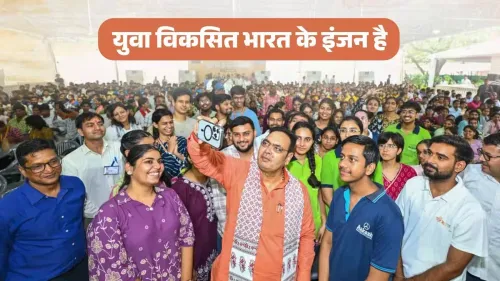
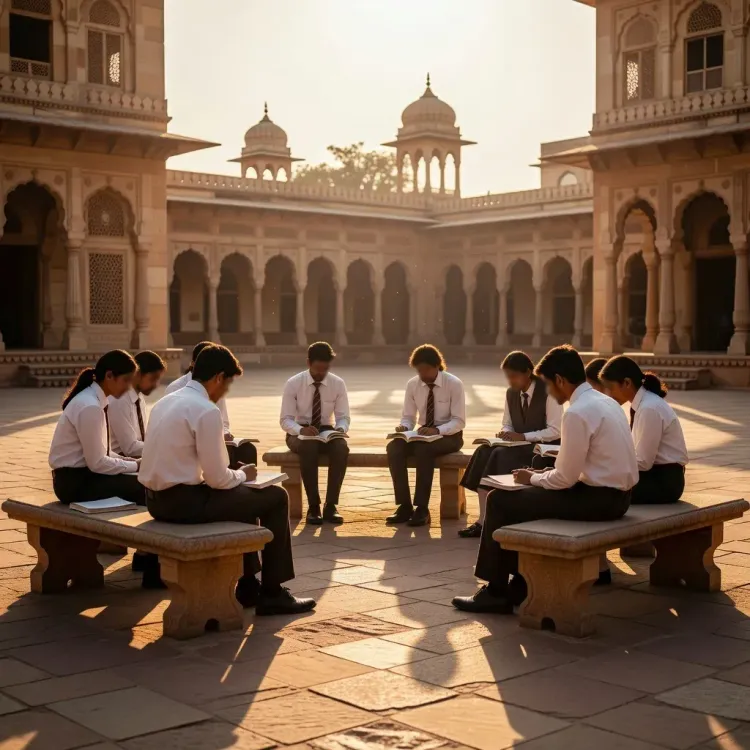
The post frames 'thoughtful, disciplined, and cultured youth' as the foundation of Viksit Bharat and Viksit Rajasthan .
The hashtag #AapnoAgraniRajasthan ties the message to the state government's 'frontrunner' branding campaign.
Bhajanlal Sharma has led the BJP government in Rajasthan since December 2023 .
The National Education Policy 2020 provides the policy spine for linking youth values to national development outcomes.
BJP-governed states have consistently aligned such messaging with the central government's 2047 Viksit Bharat goal.
Thoughtful, disciplined, and values-driven youth are not just an aspiration — they are the foundation on which a developed India and a developed Rajasthan will be built. That is the message the Chief Minister's Office of Rajasthan placed on record on Tuesday, 28 July 2026, in a post attributed to Chief Minister Bhajanlal Sharma.
The post, shared in Hindi, reads: 'Vicharsheel, anushashit evam sanskarvan yuva, Viksit Bharat-Viksit Rajasthan ke aadhar hain' — 'Thoughtful, disciplined, and cultured youth are the foundation of a developed India and a developed Rajasthan.' The hashtag #AapnoAgrani Rajasthan ('Our Rajasthan, the Frontrunner') anchors it within the state government's broader branding push.
The Viksit Bharat thread running through state messaging
Bhajanlal Sharma has led the BJP government in Rajasthan since December 2023, following the party's victory in the state assembly elections. His administration has consistently aligned its public communications with the central government's Viksit Bharat vision — the national goal of transforming India into a fully developed nation by 2047. Tuesday's post is squarely in that tradition, tying the state's progress to the character of its young population rather than to any single scheme or budget line.
This framing is deliberate. Across BJP-governed states, official social media has repeatedly linked youth values — discipline, cultural grounding, civic awareness — to development outcomes, creating a rhetorical bridge between ground-level character-building and the 2047 target. Rajasthan's post follows that playbook precisely.
NEP 2020 and the policy spine behind the rhetoric
The sentiment is not without policy backing. The National Education Policy 2020 explicitly placed values, discipline, and holistic development at the centre of India's educational architecture, arguing that national progress depends as much on the moral formation of students as on skill acquisition. State governments have since used that framework to justify a range of youth-oriented programmes, from cultural camps to mentorship initiatives. Whether Rajasthan is preparing a specific announcement in this space remains to be seen.
For now, the CMO's post functions as a statement of governing philosophy — one that positions youth not as beneficiaries of development, but as its architects. That is a subtle but meaningful shift in framing, and one worth watching as the state heads deeper into its term.
Point of View
The messaging is aspirational and difficult to contest, but equally difficult to hold accountable. The reference to NEP 2020's philosophy gives it a policy veneer. Watch for whether this signals a coming announcement on youth welfare or education, or whether it remains an exercise in ideological alignment ahead of the state's mid-term cycle.
NationPress
27 Oct 2026
Frequently Asked Questions
What did the Rajasthan CMO post on 28 July 2026?
The Rajasthan CMO posted a statement quoting Chief Minister Bhajanlal Sharma, saying that thoughtful, disciplined, and values-driven youth are the foundation of a developed India and a developed Rajasthan, under the hashtag #AapnoAgraniRajasthan.
Who is Bhajanlal Sharma?
Bhajanlal Sharma is the Chief Minister of Rajasthan, leading the BJP government formed after the state assembly elections of December 2023.
What is Viksit Bharat?
Viksit Bharat is the central government's national vision to make India a fully developed nation by 2047, frequently referenced in state-level governance communications across BJP-ruled states.
What does #AapnoAgraniRajasthan mean?
'Aapno Agrani Rajasthan' translates to 'Our Rajasthan, the Frontrunner' — a branding hashtag used by the Rajasthan government to position the state as a leader in development.
How does NEP 2020 relate to this statement?
The National Education Policy 2020 placed values, discipline, and holistic development at the core of India's education framework, providing the policy foundation for linking youth character-building to national development goals like Viksit Bharat.