Rajasthan farmer arrested for sharing OTP to activate Indian SIM used in Pakistan

Synopsis
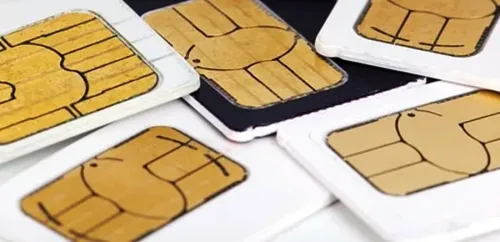
A Bikaner farmer allegedly handed a Pakistan-based gang operative the OTP to activate an Indian SIM — and investigators now suspect the card was used for illegal cross-border activity. With the Shahzad Bhatti gang's reported links to terrorist organisations, what looked like a routine SIM activation has become a national security probe.
Key Takeaways
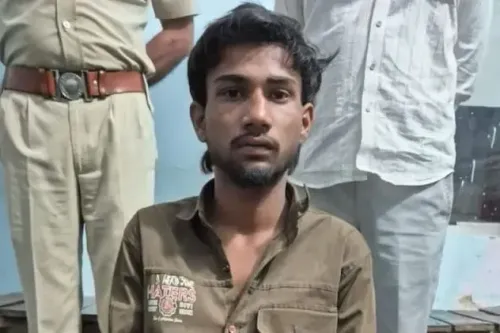
Anil Kumar Bishnoi , a farmer from Gaudu village, Bikaner , was arrested on 28 July for allegedly sharing an OTP to activate an Indian SIM card.
The SIM was allegedly activated and used in Pakistan by an operative named Ujjer , linked to the Shahzad Bhatti gang .
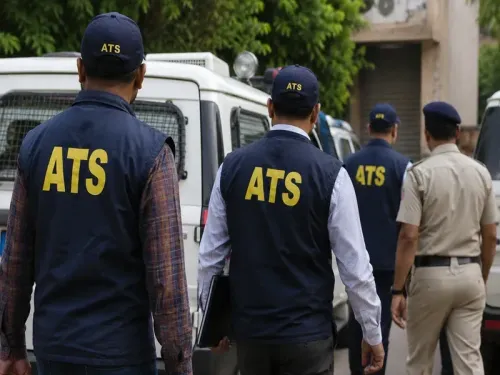
The OTP was allegedly shared on 17 July ; the arrest followed intelligence inputs to the Jaipur ATS .
Preliminary findings indicate the Shahzad Bhatti gang has links to organisations involved in terrorist activities .
Police are probing whether the accused had earlier shared other Indian SIM cards or sensitive information with Pakistan-based individuals.
The operation was led by Bikaner SP Mridul Kachhawa in coordination with the Jaipur ATS.
A farmer from Rajasthan's Bikaner district has been arrested for allegedly sharing a One-Time Password (OTP) to activate an Indian mobile SIM card that was subsequently used in Pakistan by an operative allegedly linked to the Shahzad Bhatti gang — a Pakistan-based criminal network with suspected ties to terrorist organisations. The arrest, made on 28 July, followed intelligence inputs shared by central security agencies with the Jaipur Anti-Terrorism Squad (ATS).
How the Arrest Unfolded
The accused, Anil Kumar Bishnoi, a farmer from Gaudu village under the Bajju police station limits in Bikaner, allegedly shared the OTP on 17 July to facilitate the activation of an Indian SIM card. According to Bajju Station House Officer (SHO) Chandravir Singh, the SIM was subsequently activated and used in Pakistan.
'The investigation revealed that the SIM was subsequently activated and used in Pakistan. Based on the evidence collected so far, a case has been registered against the accused under relevant legal provisions,' SHO Chandravir Singh said.
The operation was conducted by a Bajju police team acting under the direction of Bikaner Superintendent of Police Mridul Kachhawa, after the Jaipur ATS shared actionable intelligence with the Bikaner Police.
The Shahzad Bhatti Gang Connection
According to investigators, Anil Kumar Bishnoi was allegedly contacted by an operative identified as Ujjer, who is associated with the Pakistan-based Shahzad Bhatti gang. Police claim Ujjer persuaded the farmer to procure an Indian SIM card and share the OTP required for its activation.
Preliminary findings indicate that the Shahzad Bhatti gang has links with organisations involved in terrorist activities, elevating the case to a matter of national security, according to investigators. Investigators suspect the SIM may have been used for illegal activities across the border.
Scope of the Investigation
Police are now probing whether Bishnoi had previously shared Indian SIM cards, OTPs, or any other sensitive information with individuals based in Pakistan. The accused is currently under interrogation, and investigators are working to determine whether this case is part of a larger cross-border network.
Notably, the use of Indian SIM cards activated through unwitting or complicit civilians has emerged as a documented tactic by cross-border networks to evade Pakistani telecom surveillance and exploit Indian mobile infrastructure for covert communications.
What Happens Next
A formal case has been registered against Bishnoi under relevant legal provisions. Investigators are expected to widen the probe to trace the full chain of contacts between the accused and Pakistan-based operatives. The Jaipur ATS is likely to remain involved given the national security dimensions of the case.
Point of View
Knowingly or otherwise, becoming the activation layer for SIM cards that end up in adversarial hands. The Shahzad Bhatti gang's alleged terror links mean this is not merely a fraud case; it is a potential signals-intelligence breach. What is missing from the current narrative is how many such SIM activations may have gone undetected, and whether India's telecom KYC framework — which relies on OTP-based verification — is structurally exploitable by cross-border networks at scale. The arrest of one farmer is a data point; the systemic question remains unanswered.
NationPress
28 Jul 2026
Frequently Asked Questions
Why was Anil Kumar Bishnoi arrested in Rajasthan?
Anil Kumar Bishnoi, a farmer from Gaudu village in Bikaner district, was arrested for allegedly sharing an OTP on 17 July to activate an Indian SIM card that was subsequently used in Pakistan by an operative linked to the Shahzad Bhatti gang. A case has been registered against him under relevant legal provisions.
Who is the Shahzad Bhatti gang?
The Shahzad Bhatti gang is a Pakistan-based criminal network. Preliminary findings by Indian investigators indicate it has links with organisations involved in terrorist activities, making cases connected to it a matter of national security, according to police.
How did the Jaipur ATS get involved in a Bikaner case?
Central security agencies shared intelligence with the Jaipur Anti-Terrorism Squad (ATS), which then passed the inputs to Bikaner Police. The Bajju police team carried out the arrest under the direction of Bikaner SP Mridul Kachhawa.
What is investigators probing now?
Police are investigating whether Bishnoi had previously shared other Indian SIM cards, OTPs, or sensitive information with Pakistan-based individuals. They are also determining whether the case is part of a larger cross-border network.
Why is sharing an OTP for SIM activation a national security concern?
Indian SIM cards activated through OTP sharing can be used in Pakistan to conduct covert communications while appearing to originate from Indian numbers, potentially evading Pakistani telecom surveillance. When the end-users are linked to terror-affiliated networks, the breach carries national security implications.