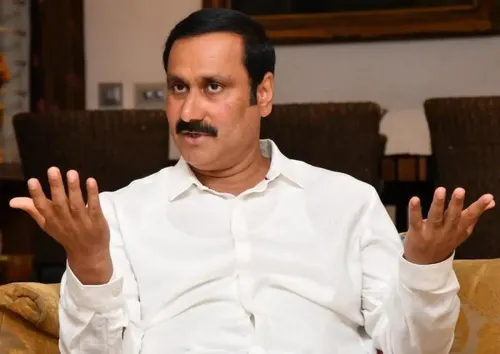
PMK's Anbumani Ramadoss backs TN mineral transport ban, demands permanent curbs
Synopsis
PMK president Anbumani Ramadoss has welcomed Tamil Nadu's three-month ban on transporting black stone, gravel, and M-sand to other states — but says it is not enough. He is demanding a permanent prohibition, alleging that mineral smuggling from Tirunelveli, Tenkasi, and Coimbatore to Kerala reached alarming levels under the previous DMK government and has continued despite enforcement drives.
Key Takeaways
Tamil Nadu has imposed a three-month temporary ban on inter-state transport of black stone, gravel, M-sand, and related minerals.
Anbumani Ramadoss welcomed the order but demanded it be made permanent .
Anbumani alleged large-scale illegal mineral transport from Tirunelveli , Tenkasi , and Coimbatore to Kerala .
He claimed illegal mining and smuggling escalated during the previous DMK regime, allegedly with political backing.
Smugglers reportedly shifted to alternative routes after restrictions on the Tamil Nadu–Kerala National Highway due to road-widening works.
Anbumani had first demanded a comprehensive mineral export ban on 22 July , ahead of the government's order.
Pattali Makkal Katchi (PMK) president Dr. Anbumani Ramadoss has welcomed the Tamil Nadu government's decision to impose a three-month temporary ban on the transport of black stone, gravel, M-sand, and other mineral-based construction materials to neighbouring states, while pressing for the restriction to be made permanent to combat illegal mining and safeguard the state's natural resources.
What the Tamil Nadu Government Ordered
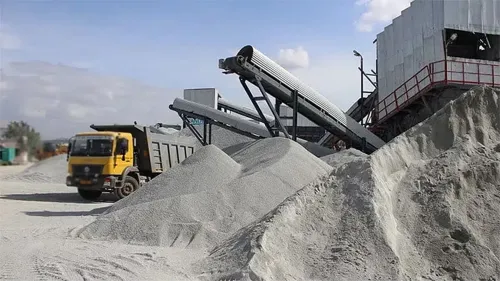
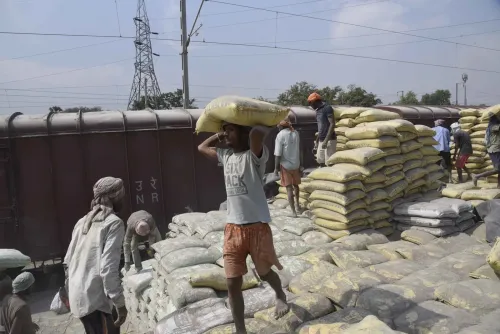
The Tamil Nadu government recently announced a three-month prohibition on the inter-state transport of key construction minerals, including black stone, gravel, and M-sand. The Geology and Mining Department stated the move was designed to ensure adequate domestic availability of construction materials for infrastructure and housing projects within the state, while also curbing excessive exploitation of mineral reserves.
PMK's Stand: Temporary Ban Not Enough
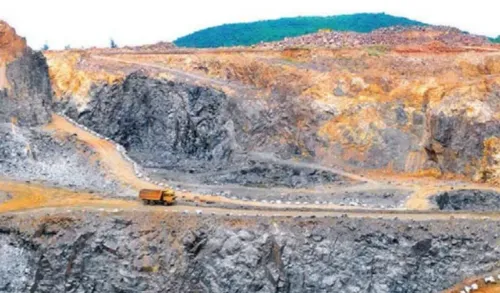
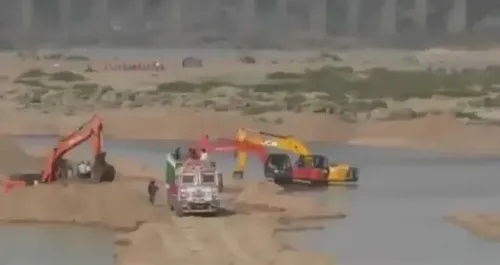
Welcoming the order as 'timely and necessary', Anbumani nonetheless argued that a short-term restriction falls far short of addressing the deeper problem of illegal mining and cross-border smuggling. He alleged that large quantities of minerals were being transported illicitly from Tirunelveli, Tenkasi, and Coimbatore districts to Kerala, and that the illegal trade had reached 'alarming levels' during the previous Dravida Munnetra Kazhagam (DMK) regime, allegedly with the backing of influential political figures.
Enforcement Gaps and Smugglers' Shifting Routes
Anbumani pointed out that even after the current TVK government took office, and despite the state's Mines Minister personally inspecting several quarries and ordering enforcement action, illegal extraction and transportation reportedly continued. He further noted that when restrictions were imposed on the National Highway connecting Tamil Nadu and Kerala — owing to ongoing road-widening works — smugglers allegedly shifted to alternative routes, allowing the illegal trade to persist unabated.
Anbumani's Earlier Demand and Current Position
Recalling a statement he had issued on 22 July, the PMK leader said he had already called for an immediate and comprehensive ban on mineral exports out of Tamil Nadu, particularly given that the state itself was facing shortages of construction materials. He acknowledged that the government's latest order partially addressed those concerns but insisted that only a permanent ban, backed by strict enforcement against illegal quarrying and transportation, could effectively protect Tamil Nadu's mineral wealth and prevent ongoing environmental degradation.
What Comes Next
The three-month temporary ban is now in effect, and pressure from the PMK and other stakeholders is likely to shape whether the government moves toward a longer-term policy. Enforcement agencies will be under scrutiny to demonstrate that the order translates into meaningful action on the ground, particularly on alternative smuggling routes flagged by the PMK.
Point of View
Not a structural fix. The PMK's demand for permanence is politically convenient but also points to a real enforcement vacuum — one that reportedly persisted even after the TVK government's own Mines Minister conducted field inspections. The allegation that smugglers simply rerouted when one highway was restricted exposes the limits of order-based crackdowns without sustained ground-level enforcement. The deeper question is whether Tamil Nadu has the administrative will to enforce a permanent ban equitably, or whether politically connected quarry operators will continue to find workarounds regardless of what the gazette notification says.
NationPress
28 Jul 2026
Frequently Asked Questions
What is Tamil Nadu's mineral transport ban?
Tamil Nadu has imposed a three-month temporary prohibition on transporting black stone, gravel, M-sand, and other mineral-based construction materials to neighbouring states. The Geology and Mining Department said the move aims to ensure adequate domestic supply for infrastructure projects and curb excessive mineral exploitation.
Why is PMK's Anbumani Ramadoss demanding a permanent ban?
Anbumani argues that a temporary restriction is insufficient to stop deep-rooted illegal mining and cross-border smuggling. He alleges that large quantities of minerals have been illegally transported from Tirunelveli, Tenkasi, and Coimbatore districts to Kerala, and that enforcement gaps allowed the trade to continue even after earlier crackdowns.
Which districts are most affected by illegal mineral smuggling, according to PMK?
According to Anbumani, the districts of Tirunelveli, Tenkasi, and Coimbatore in Tamil Nadu have been the primary sources of illegally transported minerals being smuggled into Kerala.
What happened when the National Highway between Tamil Nadu and Kerala was restricted?
Anbumani alleged that when restrictions were placed on the National Highway linking Tamil Nadu and Kerala — due to ongoing road-widening works — smugglers shifted to alternative routes, allowing illegal mineral transport to continue uninterrupted.
When did Anbumani first raise the issue of mineral smuggling?
Anbumani issued a statement on 22 July demanding an immediate and comprehensive ban on mineral exports from Tamil Nadu, citing the state's own construction material shortages. The government's subsequent three-month ban partially addressed those concerns, but he says only a permanent order will suffice.