Tamil Nadu cracks down on M-Sand units without valid PWD registration
Synopsis
Nearly 200 of Tamil Nadu's 506 registered M-Sand factories have been operating without valid PWD registrations — some for over three years. With Chief Minister Vijay chairing a high-level review and enforcement action imminent, the state's construction supply chain faces fresh regulatory pressure at a time when river sand is already heavily restricted.
Key Takeaways
Tamil Nadu has 506 registered M-Sand manufacturing units , of which nearly 40 per cent (around 200 factories) have not renewed their mandatory PWD registrations .
Many of these units have continued production for more than three years without obtaining the required renewal.
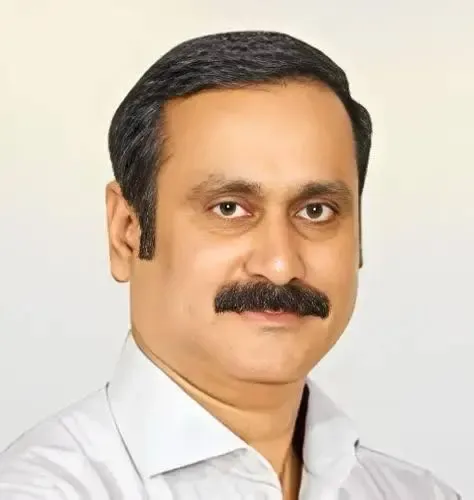
Minister for Mines and Minerals, Prabhu , has been conducting surprise inspections and has ordered quarries in violation to be sealed.
A proposed M-Sand price hike triggered by the crackdown was withdrawn after the minister met industry associations and warned against exploitation.
The issue was reportedly reviewed at a high-level meeting chaired by Chief Minister Vijay ; enforcement action against non-compliant units is expected shortly.
The Tamil Nadu government has launched a sweeping enforcement drive against unregistered and non-compliant manufactured sand (M-Sand) manufacturing units, with a recent verification revealing that nearly 40 per cent of the state's 506 registered M-Sand units — approximately 200 factories — have failed to renew their mandatory registrations with the Public Works Department (PWD). The crackdown forms part of a broader push to restore accountability in the state's mineral resources sector following the change in administration.
Scale of the Violations
According to senior officials from the Department of Geology and Mining, all M-Sand manufacturing units in Tamil Nadu are required to register with the PWD and renew that registration every three to five years to remain compliant with quality and operational standards. Authorities have found that many of the flagged units have continued production for more than three years without obtaining the mandatory renewal.
Officials say the lapse raises serious concerns over the quality of M-Sand being supplied to the construction sector. Since these units are operating without updated registrations, the government is examining what legal and administrative action should be taken against them.
Surprise Inspections and Official Transfers
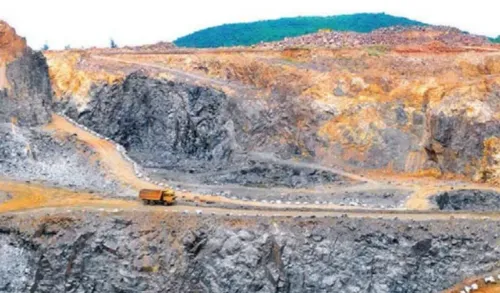
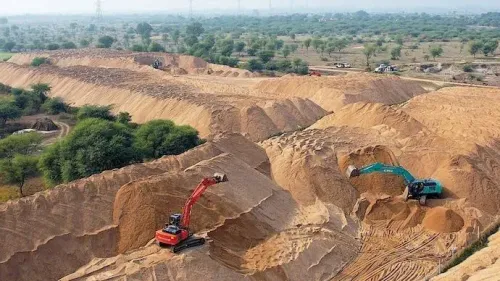
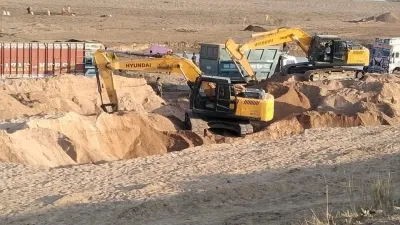
State Minister for Mines and Minerals, Prabhu, has been conducting unannounced inspections across several districts, directing officials to seal quarries found operating in violation of mining regulations. The government has also ordered the mass transfer of mineral resources department officials suspected of failing to prevent or act against illegal mining activities — a signal that accountability is being enforced up the chain of command.
Price Hike Attempt and Government Response
The enforcement drive initially triggered a sharp increase in the price of M-Sand, as producers cited disruptions caused by stricter action against black granite quarries. However, the proposed price hike was withdrawn after Minister Prabhu convened a meeting with industry associations and warned them against exploiting the situation. The episode underscored the market sensitivity of any regulatory tightening in the sand supply chain.
What Is M-Sand and Why It Matters
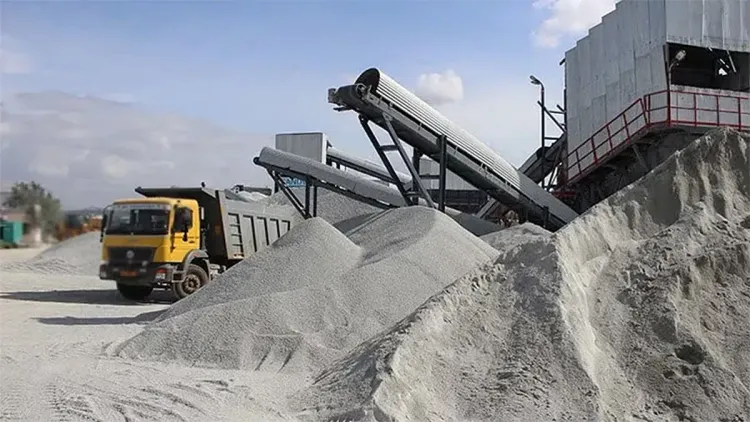
M-Sand is produced by crushing and processing hard black stone as an alternative to river sand, which is increasingly restricted across India due to environmental concerns. The Tamil Nadu government has long promoted M-Sand as a sustainable substitute for natural river sand in construction. With the construction sector heavily dependent on a steady supply, any disruption — or quality failure from unregulated units — has direct downstream consequences for builders and home buyers alike.
High-Level Review and Next Steps
The issue was reportedly discussed at a recent high-level review meeting on the functioning of the Department of Geology and Mining, chaired by Chief Minister Vijay. Officials indicated that enforcement action against M-Sand manufacturers operating without valid registrations is expected to begin shortly, as the state moves to tighten compliance across the minerals sector.
Point of View
Which is presumably why the government has also ordered mass transfers of department officials. The real test now is whether enforcement is applied uniformly or selectively. A crackdown that targets smaller units while leaving well-connected operators untouched will not fix the sector's structural accountability gap. The construction industry's dependence on M-Sand — itself a policy-driven substitute for restricted river sand — means that any prolonged disruption carries a real cost for housing projects and infrastructure timelines, so the government will need to balance speed of enforcement with supply continuity.
NationPress
25 Oct 2026
Frequently Asked Questions
Why is Tamil Nadu cracking down on M-Sand manufacturing units?
Tamil Nadu authorities found that nearly 200 of the state's 506 registered M-Sand units have not renewed their mandatory PWD registrations, some for over three years. The government is concerned about regulatory non-compliance and potential quality issues in M-Sand supplied to the construction sector.
What is M-Sand and why is it used in Tamil Nadu?
M-Sand, or manufactured sand, is produced by crushing hard black stone and is used as an alternative to river sand in construction. Tamil Nadu has promoted it as a sustainable substitute because river sand extraction is increasingly restricted due to environmental concerns.
What action has the Tamil Nadu government taken so far?
Mines Minister Prabhu has conducted surprise inspections across several districts, ordered the sealing of non-compliant quarries, and directed the mass transfer of department officials suspected of inaction. A proposed M-Sand price hike was also rolled back after the minister warned industry associations against exploiting the situation.
Who is overseeing the enforcement drive?
The enforcement drive is being led by State Minister for Mines and Minerals, Prabhu , with oversight at the highest level — the issue was reportedly reviewed at a meeting chaired by Chief Minister Vijay on the functioning of the Department of Geology and Mining.
When will action against unregistered M-Sand units begin?
Officials have indicated that enforcement action against M-Sand manufacturers operating without valid registrations is expected to begin shortly, though a specific date has not been announced publicly.