Tamil Nadu empowers mining director to ban construction material exports to other states
Synopsis
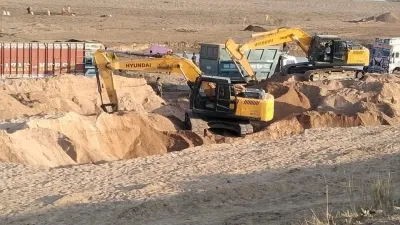
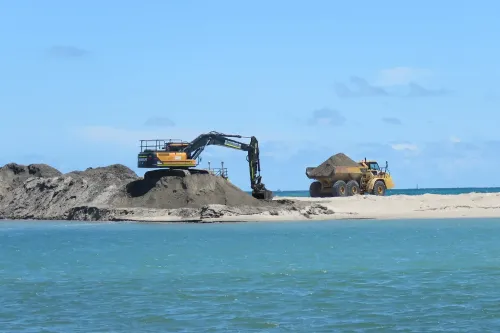
Tamil Nadu has quietly handed its mining director a new lever: the power to temporarily ban exports of rough stone, M-Sand, and blue metal to other states. Framed as a supply stabilisation tool, the move signals that the TVK government is prepared to restrict interstate trade to protect the state's own construction pipeline — a step that could draw scrutiny under constitutional free-trade provisions.
Key Takeaways
The Tamil Nadu government notified a mining rule amendment via Government Order on 9 July 2025 .
New Rule 3-A empowers the Director of Geology and Mining to temporarily ban interstate transport of rough stone, M-Sand, metal jelly, ballast, and blue metal .
The move is aimed at preventing supply shortages and price volatility in the state's real estate and infrastructure sectors .
Industry stakeholders had reportedly flagged supply disruptions and price fluctuations in recent months.
The TVK government has been intensifying enforcement against illegal mining and mineral transport since taking office.
The Tamil Nadu government has amended its mining regulations to authorise the Director of Geology and Mining to regulate — and, if necessary, temporarily halt — the interstate transport of rough stone and related construction materials. The amendment, notified by the Natural Resources Department via a Government Order dated 9 July 2025, introduces a new Rule 3-A into the Tamil Nadu Prevention of Illegal Mining, Transportation and Storage of Minerals and Mineral Dealers Rules, 2011, framed under the Mines and Minerals (Development and Regulation) Act, 1957.
What the Amendment Covers
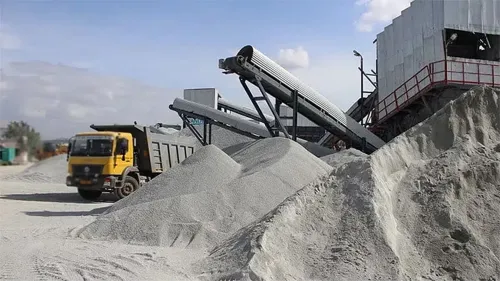
The newly inserted Rule 3-A empowers the Director to regulate the interstate movement of rough stone, including khandas and boulders, as well as a range of processed construction materials. These include manufactured sand (M-Sand), metal jelly, ballast, millstones, hand chakais, and stones used for building and road construction.
Under the revised rules, the Director may impose a temporary ban on transporting these materials out of Tamil Nadu whenever such a step is deemed necessary to maintain adequate supplies for domestic consumption.
Why the Government Acted
The amendment comes against the backdrop of growing concerns over the availability and pricing of construction materials, particularly M-Sand and blue metal — both critical inputs for the real estate and infrastructure sectors. Industry stakeholders reportedly flagged supply disruptions and price fluctuations in recent months, prompting a review of the regulatory framework governing mineral transportation.
Notably, this is not an outright or permanent ban — it is a conditional, discretionary power that can be activated during periods of shortage or abnormal market conditions. The government has framed it as a supply-chain stabilisation tool rather than a protectionist measure.
Enforcement Context
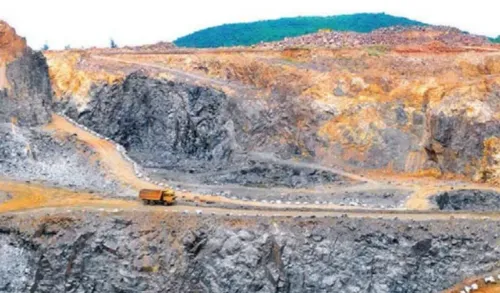
Since assuming office, the TVK government has intensified its drive to streamline the mining sector and crack down on illegal extraction and transportation of minerals. Enforcement agencies have stepped up inspections across quarrying regions, and officials have launched operations against unauthorised mining and illegal mineral transport.
According to government sources, the latest amendment is designed to give authorities greater flexibility to respond swiftly when supply conditions deteriorate — ensuring that Tamil Nadu's public infrastructure projects and private construction activity are not disrupted by outflows to neighbouring states.
Impact on the Construction Sector
Officials indicated that the revised rules are expected to strengthen oversight of mineral transportation while prioritising the state's developmental and infrastructure requirements during periods of constrained supply. The real estate industry and infrastructure contractors — who depend heavily on a steady flow of M-Sand, blue metal, and rough stone — stand to benefit if the measure succeeds in stabilising local supply chains.
How neighbouring states respond to potential export restrictions, and whether the Centre raises constitutional objections under the freedom of interstate trade provisions, will be closely watched in the weeks ahead.
Point of View
And state-level restrictions on interstate movement of goods have historically faced legal challenge. The government has framed this as a temporary, demand-driven safeguard — but the discretionary nature of the power, vested in a single official, raises questions about transparency and potential misuse. More fundamentally, restricting outflows treats a symptom rather than the cause: if M-Sand and blue metal are in short supply, the answer may lie in faster quarry approvals and anti-hoarding enforcement, not export controls that could strain relations with neighbouring states and invite Centre intervention.
NationPress
10 Oct 2026
Frequently Asked Questions
What has Tamil Nadu changed in its mining rules?
Tamil Nadu has inserted a new Rule 3-A into its mineral transportation rules, authorising the Director of Geology and Mining to temporarily ban the export of rough stone, M-Sand, metal jelly, ballast, blue metal, and related construction materials to other states. The Government Order was issued on 9 July 2025.
Why has Tamil Nadu introduced this amendment?
The amendment was prompted by reported supply disruptions and price volatility in construction materials — particularly M-Sand and blue metal — that are critical for real estate and infrastructure projects. The government says the power will be used during periods of shortage to protect domestic supply.
Which materials are covered under the new rule?
The rule covers rough stone (including khandas and boulders), manufactured sand (M-Sand), metal jelly, ballast, millstones, hand chakais, and stones used for building and road construction.
Is this a permanent ban on exporting construction materials?
No. The amendment grants a discretionary, temporary power to the Director of Geology and Mining. A ban can be imposed only when deemed necessary to maintain adequate supplies within Tamil Nadu, and it is not a blanket or permanent restriction.
What is the TVK government's broader approach to mining regulation?
Since assuming office, the TVK government has stepped up enforcement against illegal mining and unauthorised mineral transport, with inspections and crackdowns across quarrying regions. This amendment is part of a wider effort to streamline the sector and stabilise supply chains.