Rajasthan, Haryana to Jointly Pipe Water to Shekhawati
Synopsis
The Rajasthan Chief Minister's Office announced on 5 July 2026 that Rajasthan and Haryana will jointly deliver water to the chronically water-scarce Shekhawati region covering Sikar, Jhunjhunu and Churu districts, tagging PM Modi in a post framed under the Viksit Rajasthan development agenda.
Key Takeaways
The Chief Minister's Office of Rajasthan announced on 5 July 2026 that Rajasthan and Haryana will jointly supply water to Shekhawati .
Shekhawati covers the semi-arid districts of Sikar , Jhunjhunu , and Churu in northern Rajasthan, which face chronic water scarcity.
Prime Minister Narendra Modi was tagged in the post, signalling possible central-level coordination or support.
The initiative aligns with India's Jal Jeevan Mission (launched 2019 ) and the National Perspective Plan for river interlinking ( 2002 ).
Primary beneficiaries would be farmers and rural households across the three Shekhawati districts.
Specific project timelines, financial outlay, and technical parameters have not yet been disclosed.
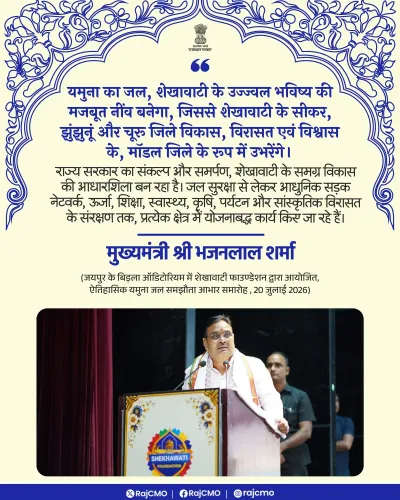
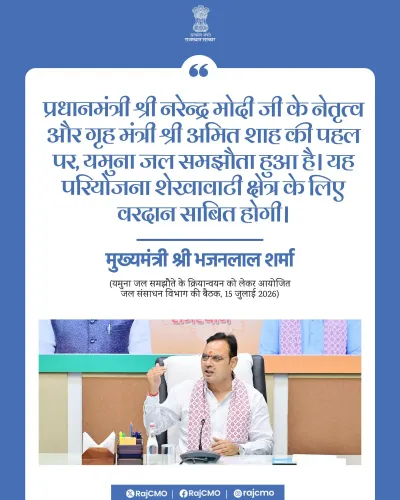
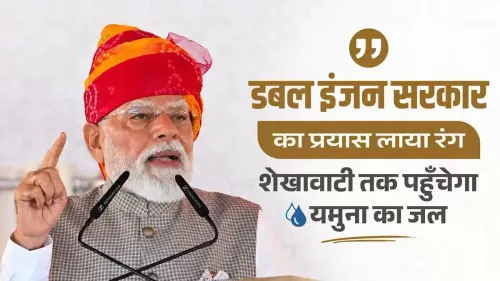
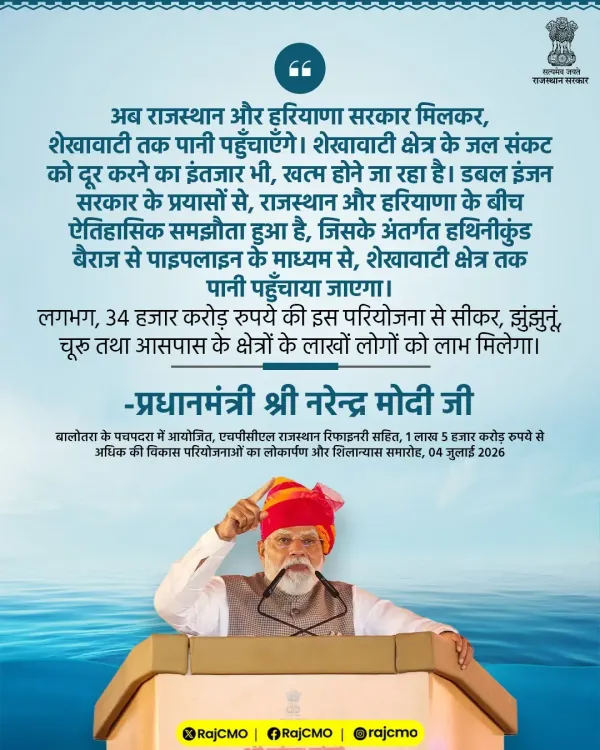
The Chief Minister's Office of Rajasthan announced on Sunday, 5 July 2026 that the governments of Rajasthan and Haryana will jointly work to deliver water to the Shekhawati region, tagging Prime Minister Narendra Modi in the post and framing the initiative under the hashtag #PMModi4ViksitRajasthan (PM Modi for a Developed Rajasthan).
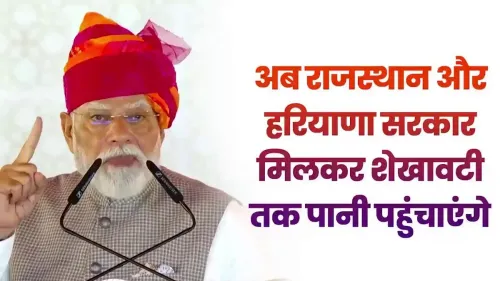
The post, shared on the official @RajCMO handle, states in Hindi: 'Ab Rajasthan aur Haryana sarkar milkar, Shekhawati tak paani pahunchaenge' — 'Now the governments of Rajasthan and Haryana will together bring water to Shekhawati.' The announcement signals a bilateral commitment between two neighbouring states to address one of northern Rajasthan's most persistent infrastructure deficits.
Context
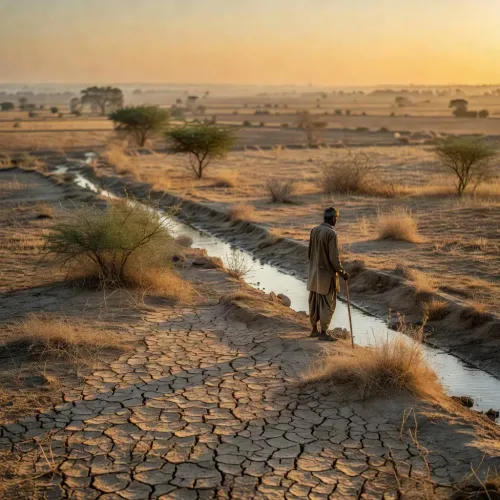
Shekhawati — comprising the districts of Sikar, Jhunjhunu, and Churu — is a semi-arid belt that has historically struggled with acute water scarcity. The region depends heavily on groundwater, which has been declining for decades due to agricultural demand and limited recharge. Farmers and rural households across the three districts have long sought a durable surface-water solution. The announcement comes as both states sit within the broader Yamuna and Indus river basin network, where inter-state water transfers have been a recurring subject of negotiation and central coordination. Tagging PM Modi in the post suggests the Rajasthan government is seeking or acknowledging central-level backing for the initiative.Policy Backdrop
India's National Perspective Plan for river interlinking, approved in 2002, envisaged moving surplus water from water-rich basins to deficit regions — a category that includes much of Rajasthan. More recently, the Jal Jeevan Mission, launched in 2019, has pushed states to augment rural water supply infrastructure with central co-funding. Bilateral water-sharing arrangements between Indian states — typically involving canal extensions, pipeline networks, or storage augmentation — have historically required joint technical committees, environmental clearances, and, in many cases, central arbitration or funding. The Rajasthan–Haryana pairing for Shekhawati water delivery fits within this established pattern of cooperative federalism on water infrastructure.Stakeholders and Impact
The primary beneficiaries of any operational water delivery project would be farmers in Shekhawati, who rely on erratic monsoon rains and depleting aquifers, and rural households across Sikar, Jhunjhunu, and Churu that lack reliable piped water access. A successful inter-state pipeline or canal link could reduce dependence on tanker supply and groundwater extraction in the region. Haryana's participation is significant because any westward water transfer toward Shekhawati would likely draw from river systems or canals that pass through or originate in Haryana's territory. The political framing — invoking PM Modi's development agenda — also positions the project within the national Viksit Bharat (Developed India) narrative ahead of future electoral cycles.What's Next
The announcement from the Chief Minister's Office does not specify project timelines, financial outlay, or the technical route for water delivery. Key milestones to watch include the formation of a joint technical committee between the two state governments, environmental and regulatory clearances, and any central government funding announcement that would indicate how deeply the Union is involved. If the initiative advances to a formal agreement and project sanction, it would represent a meaningful step toward resolving a water deficit that has persisted in Shekhawati for generations — and could serve as a model for other arid sub-regions of Rajasthan seeking inter-state water solutions.Point of View
The state government is deliberately threading a local water project into the national development narrative — a pattern that has become common in BJP-governed states seeking to align state delivery with central electoral messaging. The choice of Shekhawati is also notable: the region has historically been a politically contested belt, and a credible water promise could shift sentiment among farming communities ahead of future elections. The real test, however, lies in the institutional follow-through — joint technical committees, environmental clearances, and central funding — that has stalled similar inter-state water initiatives in the past.
NationPress
5 Oct 2026
Frequently Asked Questions
What is the Rajasthan-Haryana water project for Shekhawati?
The Chief Minister's Office of Rajasthan announced on 5 July 2026 that the governments of Rajasthan and Haryana will jointly work to deliver water to the Shekhawati region, which covers the semi-arid districts of Sikar, Jhunjhunu and Churu. Specific technical and financial details have not yet been disclosed.
Why is Shekhawati facing a water crisis?
Shekhawati is a semi-arid region in northern Rajasthan where groundwater levels have been declining for decades due to heavy agricultural use and limited natural recharge. The area lacks reliable surface-water infrastructure, forcing communities to depend on tankers and depleting aquifers.
What role does Haryana play in supplying water to Rajasthan?
Any westward water transfer toward Shekhawati would likely draw from river systems or canal networks that pass through or originate in Haryana's territory. Bilateral arrangements between the two states are therefore necessary to route water to Rajasthan's northern districts.
Is the central government involved in the Shekhawati water initiative?
The Rajasthan CMO tagged Prime Minister Narendra Modi in the announcement, suggesting the state is seeking or acknowledging central support. India's Jal Jeevan Mission and the National Perspective Plan for river interlinking both provide frameworks under which central co-funding could be mobilised, but no formal central commitment has been announced.
Who will benefit from the Rajasthan-Haryana water project?
The primary beneficiaries are expected to be farmers and rural households across Sikar, Jhunjhunu and Churu districts in the Shekhawati region, who currently face acute water shortages and rely heavily on groundwater.