CM Bhajan Lal: Rajasthan-Haryana to jointly supply water to Shekhawati
Synopsis
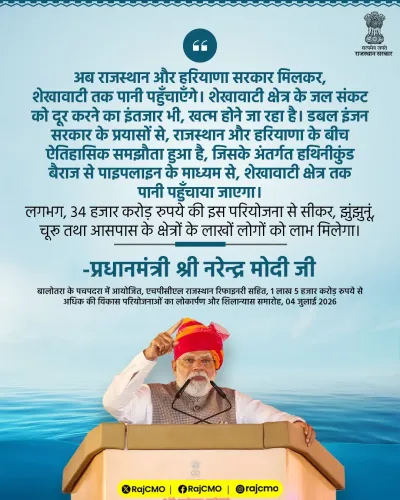
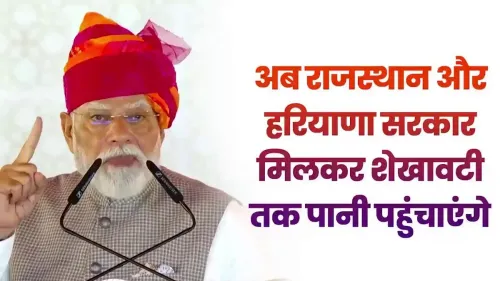
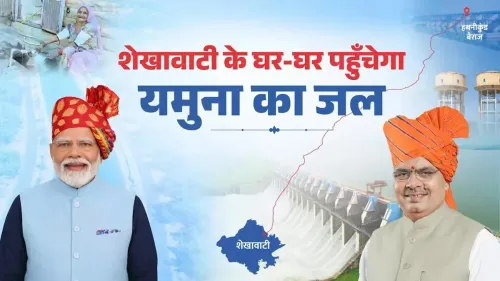
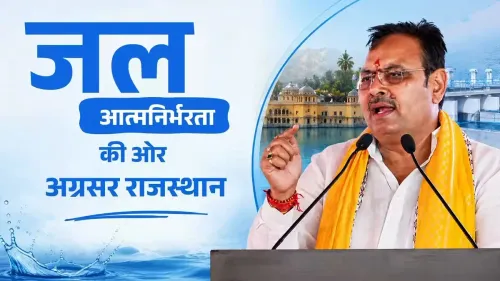
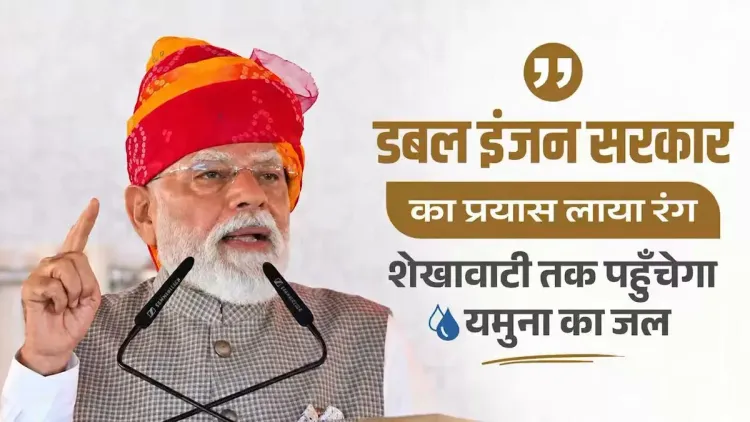
Rajasthan Chief Minister Bhajan Lal Sharma announced on 4 July 2026 that Rajasthan and Haryana have reached their first mutual agreement to jointly supply water to the chronically water-scarce Shekhawati region, crediting Prime Minister Modi for enabling the interstate breakthrough under BJP's aligned governance in both states.
Key Takeaways
Bhajan Lal Sharma announced on 4 July 2026 that Rajasthan and Haryana have reached a mutual agreement to jointly supply water to Shekhawati .
The Chief Minister stated this is the first time an interstate consensus on water sharing has been achieved between the two states through mutual consent.
Sharma credited Prime Minister Narendra Modi for enabling the breakthrough, tagging the announcement with #PMModi4ViksitRajasthan .
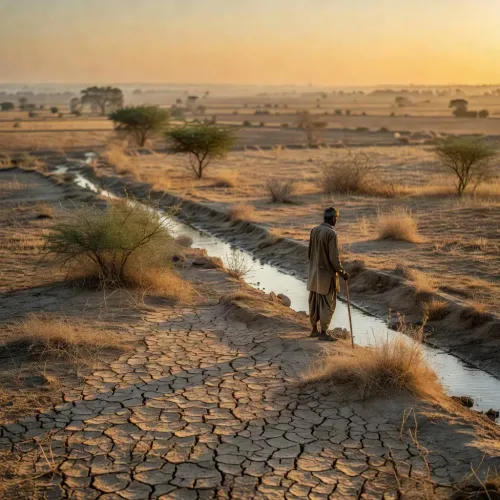
Shekhawati — covering districts including Sikar , Jhunjhunu , and Churu — is a semi-arid region with chronic water scarcity affecting farmers and rural households.
Both Rajasthan and Haryana are currently governed by the BJP , which the announcement frames as the key political enabler of the agreement.
Next steps include formal sanction orders, funding from the Ministry of Jal Shakti , and timelines for canal or pipeline works.
Rajasthan Chief Minister Bhajan Lal Sharma announced on Saturday, 4 July 2026 that the governments of Rajasthan and Haryana have reached a mutual agreement to jointly supply water to the Shekhawati region, crediting Prime Minister Narendra Modi for enabling the breakthrough. The Chief Minister stated that with BJP governments in power in both states, an interstate consensus on water sharing has been achieved for the first time.
Context
Posting on X, Sharma wrote: 'Ab jab Rajasthan aur Haryana, dono rajyon mein BJP sarkar hai, toh pehli baar aapsi sehmati se samadhan nikale gaye' ['Now that both Rajasthan and Haryana have BJP governments, for the first time a solution has been arrived at through mutual consent']. He added that the two state governments will together ensure water reaches Shekhawati, attributing the development to Prime Minister Modi under the hashtag #PMModi4ViksitRajasthan.
Shekhawati — covering districts such as Sikar, Jhunjhunu, and Churu in northern Rajasthan — is a chronically water-scarce semi-arid belt where farmers and rural households have long depended on erratic groundwater and seasonal rainfall. Reliable surface water supply has been a persistent demand in the region for decades.
Policy Backdrop
Interstate water-sharing arrangements between Rajasthan and Haryana date to the 1950s and 1960s, when post-independence accords were drawn up under central mediation. Subsequent decades saw repeated disputes over allocation and infrastructure, with major projects such as the Sutlej-Yamuna Link canal — agreed in principle in the 1980s — remaining mired in legal and political deadlock.
Water infrastructure projects across northwestern India have historically advanced most when central facilitation has aligned with bilateral state-level political will. The current announcement follows a pattern of cooperative federalism visible in power, irrigation, and transport corridors where BJP-governed states have coordinated on shared resource challenges.
Stakeholders and Impact
The primary beneficiaries of the proposed water supply project would be farmers in Shekhawati who face acute irrigation deficits, as well as rural households dependent on drinking water from depleting aquifers. A reliable surface water channel to the region could reduce agricultural distress and support groundwater recharge across the semi-arid belt.
The announcement also carries political significance: Sharma explicitly frames the breakthrough as a product of aligned party governance, positioning BJP's simultaneous control of both states as the enabling condition for a resolution that eluded previous administrations.
What's Next
Concrete progress will be tracked through formal project sanction orders, funding releases from the central Ministry of Jal Shakti, and the announcement of timelines for canal or pipeline works reaching Shekhawati. Observers will watch whether the political consensus translates into engineering surveys, budget allocations, and ground-level construction within the current term of both state governments.
If the agreement moves from announcement to implementation, it could serve as a template for resolving other long-pending interstate water disputes across India's northwestern river basins, reinforcing the cooperative federalism model that the BJP has promoted as a governance dividend of single-party alignment across state boundaries.
Point of View
Time-bound infrastructure will determine whether it marks a genuine policy inflection or remains a political signal.
NationPress
3 Oct 2026
Frequently Asked Questions
What is the Rajasthan-Haryana water agreement announced by CM Bhajan Lal Sharma?
Rajasthan Chief Minister Bhajan Lal Sharma announced on 4 July 2026 that the governments of Rajasthan and Haryana have mutually agreed, for the first time, to jointly supply water to the Shekhawati region of northern Rajasthan. The agreement is described as a product of both states being governed by the BJP simultaneously.
Which areas in Rajasthan will benefit from the Shekhawati water supply project?
The Shekhawati region, which includes the semi-arid districts of Sikar, Jhunjhunu, and Churu in northern Rajasthan, is the primary beneficiary. The area faces chronic water scarcity affecting both agricultural irrigation and rural drinking water supply.
Why was a Rajasthan-Haryana water sharing agreement difficult to reach before?
Post-independence water-sharing accords between Rajasthan and Haryana date to the 1950s and 1960s, but subsequent disputes over allocation and infrastructure repeatedly stalled progress. Major projects such as the Sutlej-Yamuna Link canal, agreed in principle in the 1980s, remained unresolved for decades due to legal and political disagreements between the two states.
What role did PM Modi play in the Rajasthan-Haryana water deal?
Chief Minister Bhajan Lal Sharma credited Prime Minister Narendra Modi for enabling the interstate consensus, tagging him directly in the post and using the hashtag #PMModi4ViksitRajasthan. The specific nature of the Prime Minister's facilitation was not detailed in the announcement.
What are the next steps after the Rajasthan-Haryana water agreement?
Concrete progress will depend on formal project sanction orders, funding releases from the central Ministry of Jal Shakti, and the announcement of engineering and construction timelines for the canal or pipeline works needed to carry water to Shekhawati.