CM Bhajanlal Sharma: Water is Rajasthan's First Need
Synopsis
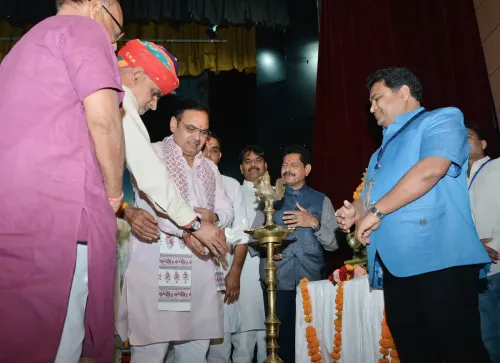
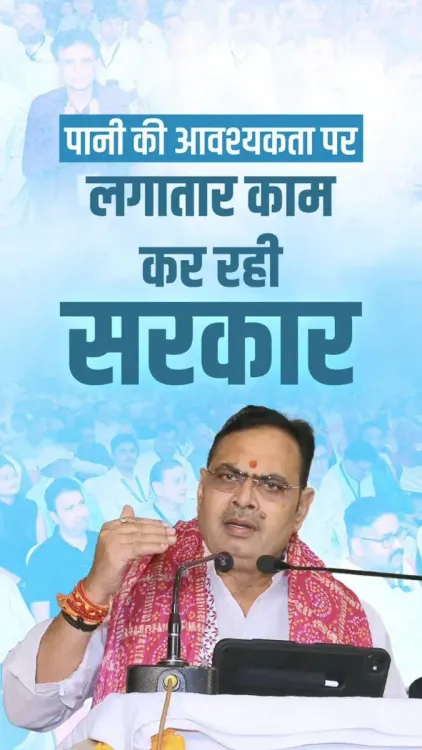
Chief Minister Bhajanlal Sharma, speaking at the Shekhawati Heritage and Development Summit in Jaipur on 25 October 2026, declared water Rajasthan's top priority and said his government has worked continuously to address the state's chronic water scarcity.
Key Takeaways
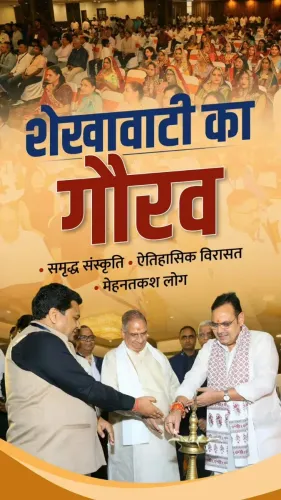
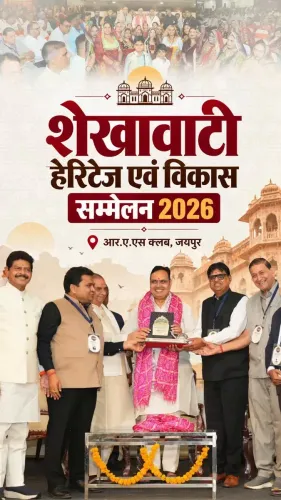
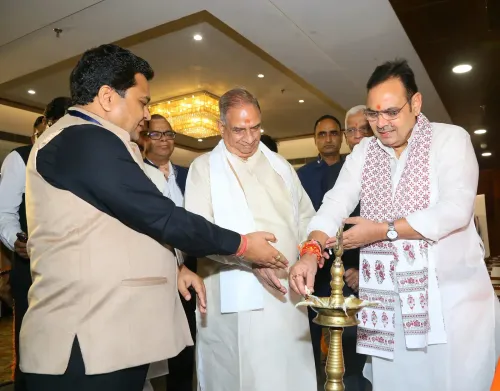
CM Bhajanlal Sharma addressed the Shekhawati Heritage and Development Summit in Jaipur on 25 October 2026 .
He declared water as Rajasthan's foremost requirement and said his government has worked on it continuously.
Shekhawati — covering Sikar, Jhunjhunu, and Churu — is a semi-arid heritage belt severely affected by water scarcity.
The Indira Gandhi Canal system , launched in the 1970s , remains the backbone of Rajasthan's inter-basin water transfer network.
CM Sharma has been in office since December 2023 , representing the BJP .
The summit linked cultural heritage conservation with infrastructure development priorities for the Shekhawati region.
In a region where the earth runs dry for months and every drop is contested, Chief Minister Bhajanlal Sharma stood before the Shekhawati Heritage and Development Summit in Jaipur on Sunday, 25 October 2026 and named water as the state's single most urgent priority — and his government's defining mission.
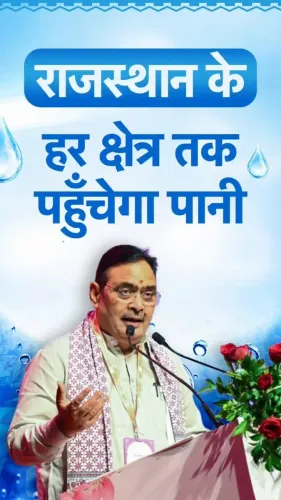
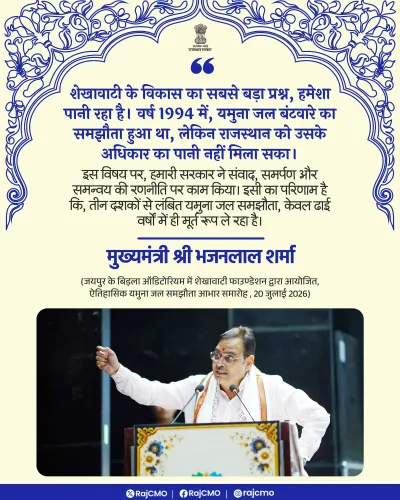
Addressing the summit, CM Sharma declared, 'राजस्थान के लिए सबसे पहले पानी की आवश्यकता है' — 'For Rajasthan, the first requirement is water' — adding that his administration has worked continuously on the issue since taking office. The hashtag #आपणो_अग्रणी_राजस्थान ('Our Frontrunner Rajasthan') framing the post signals the government's pitch to position the state as a development leader, not merely a heritage destination.
Why Shekhawati is at the heart of Rajasthan's water crisis
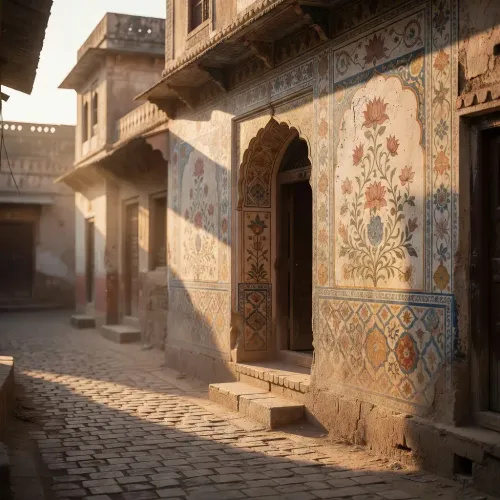
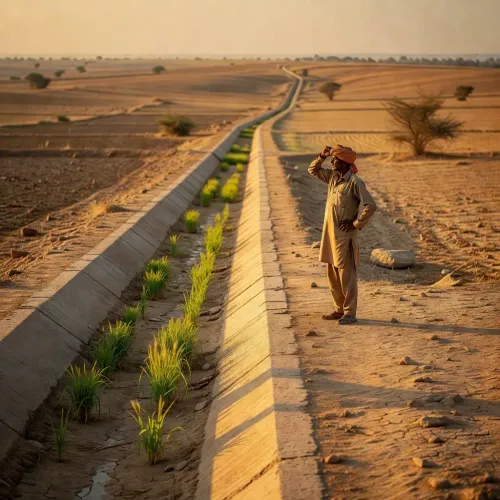
Shekhawati — the semi-arid belt stretching across Sikar, Jhunjhunu, and Churu districts in northern Rajasthan — is one of India's most storied heritage corridors, famous for its intricately painted havelis. It is also one of the hardest-hit zones in a state that receives among the lowest average rainfall in the country. For farmers and rural households here, water scarcity is not a seasonal inconvenience; it is an existential reality that shapes every economic decision.
The choice to hold a 'Heritage and Development Summit' in this landscape is itself a statement: that conservation of culture and provision of basic infrastructure are not competing demands, but parallel obligations. CM Sharma's remarks suggest his government wants the development story told alongside the heritage story — not instead of it.
Decades of canal-building, and what comes next
Rajasthan's water infrastructure has been built painstakingly over decades. The Indira Gandhi Canal system, initiated in the 1970s and expanded through successive phases, remains the spine of the state's inter-basin transfer network, pushing water from the Himalayan rivers deep into desert districts. Local johad systems and community harvesting structures have complemented these large-scale works across administrations of every political stripe.
CM Sharma, who took office in December 2023 as the Bharatiya Janata Party's choice for the state's top post, has repeatedly tied governance credibility to tangible infrastructure delivery. A summit that links Shekhawati's identity as a heritage region to the practical urgency of water supply is a calculated framing — telling voters that the government sees them whole: their past worth preserving, their present needs worth solving.
The districts announced for follow-up and the pace of scheme rollout in the weeks after this summit will be the real measure of whether the promise made in Jaipur reaches the fields of Jhunjhunu.
Point of View
CM Sharma is recasting a cultural event as a governance accountability moment — a shrewd signal ahead of local-body cycles in a region where agrarian distress runs deep. The move fits the BJP's broader national pattern of anchoring identity politics to tangible infrastructure delivery, making 'what have we built' a campaign asset. For Shekhawati, chronically underserved despite its proximity to Jaipur, the summit tests whether rhetorical priority translates to budgetary priority. The weeks after this speech — and whether district-level project announcements follow — will determine if this was vision or theatre.
NationPress
25 Oct 2026
Frequently Asked Questions
What did CM Bhajanlal Sharma say at the Shekhawati Heritage Summit?
CM Bhajanlal Sharma said that water is Rajasthan's foremost need and that his government has continuously worked on water infrastructure since taking office in December 2023.
Where is Shekhawati located in Rajasthan?
Shekhawati is a semi-arid historical region in northern Rajasthan covering the districts of Sikar, Jhunjhunu, and Churu, known for its painted havelis and acute water scarcity.
What is the Indira Gandhi Canal and how does it help Rajasthan?
The Indira Gandhi Canal system, initiated in the 1970s, is Rajasthan's primary inter-basin water transfer network, carrying water from Himalayan rivers into the state's arid western and northern districts.
When did Bhajanlal Sharma become Chief Minister of Rajasthan?
Bhajanlal Sharma became Chief Minister of Rajasthan in December 2023, representing the Bharatiya Janata Party.
What is the significance of the Shekhawati Heritage and Development Summit?
The summit, held in Jaipur, brought together heritage conservation and basic development priorities — particularly water supply and infrastructure — for the Shekhawati region, linking cultural identity with governance delivery.