Rajasthan CM's Office: Shekhawati gets water, roads, haveli push
Synopsis
The Chief Minister's Office of Rajasthan says the BJP's double engine government is ensuring holistic development of Shekhawati through water security, connectivity upgrades, haveli restoration, and tourism promotion across Sikar, Jhunjhunu, and Churu districts.
Key Takeaways
The Chief Minister's Office of Rajasthan posted on 25 October 2026 that the 'double engine' government is driving holistic development in Shekhawati .
Four focus areas named: water crisis relief, connectivity, haveli restoration, and tourism promotion.
Shekhawati covers the arid districts of Sikar , Jhunjhunu , and Churu in northern Rajasthan.
The post tags CM Bhajan Lal Sharma , who has led Rajasthan since December 2023 .
The Centre's Jal Jeevan Mission (2019) is the key policy vehicle behind the water-security claim.
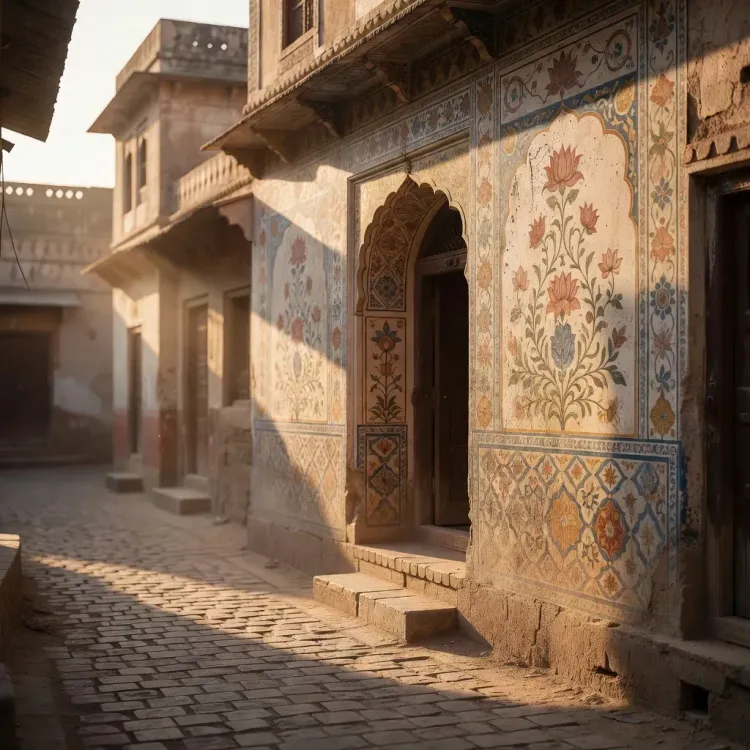
Shekhawati's frescoed havelis represent a significant under-exploited heritage tourism asset that restoration efforts aim to unlock.
Water-scarce villages, crumbling painted havelis, and patchy road links — Shekhawati, the semi-arid cultural heartland of northern Rajasthan, has long punched below its potential. The Chief Minister's Office of Rajasthan declared on Sunday, 25 October 2026 that the 'double engine' government is delivering coordinated action across all four fronts: water security, connectivity, haveli restoration, and tourism promotion.
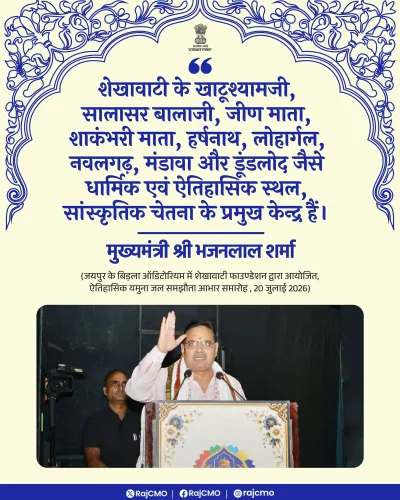
The post, carrying the hashtag #आपणो_अग्रणी_राजस्थान ('Our Leading Rajasthan') and tagging Chief Minister Bhajan Lal Sharma, frames simultaneous BJP governance at the Centre and in the state as the catalyst for samagra vikas — holistic development — in the Shekhawati region covering Sikar, Jhunjhunu, and Churu districts.
Jal Jeevan Mission and the thirst that defined Shekhawati
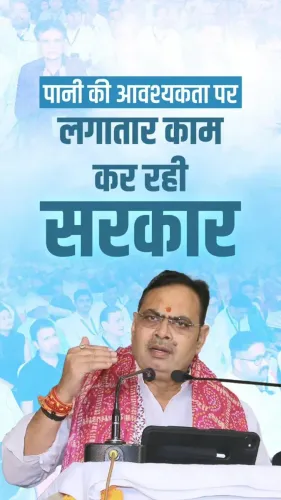
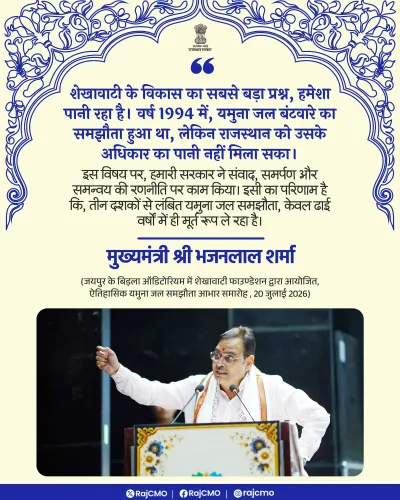
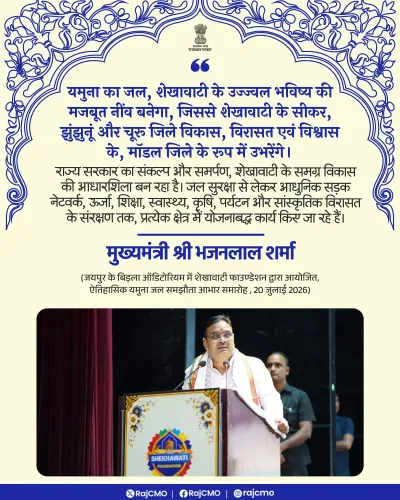
Shekhawati sits in one of Rajasthan's driest belts, where groundwater depletion and erratic rainfall have historically forced residents — particularly women — to walk long distances for drinking water. The Centre's Jal Jeevan Mission, launched in 2019, targets rural tap-water connections in precisely these districts, and the CMO's claim of freeing the region from 'water crisis' signals that state-level execution of that mission is being held up as a tangible deliverable.
Havelis, heritage, and the tourism dividend waiting to be unlocked
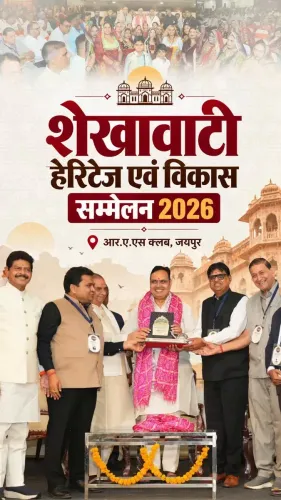
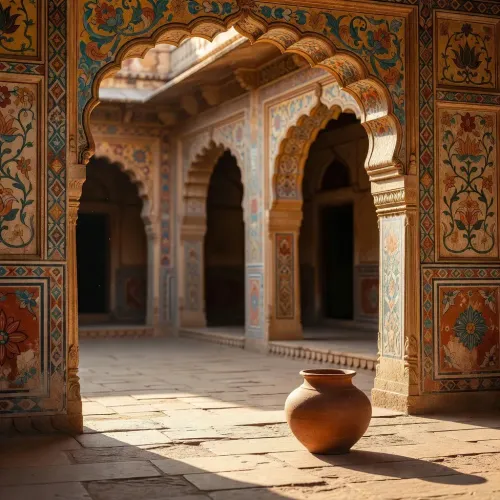
Shekhawati is home to one of the world's largest open-air collections of frescoed havelis — the ornate merchant mansions built by Marwari trading families between the 18th and early 20th centuries. Decades of neglect have left hundreds in disrepair. Restoration of these structures doubles as both cultural preservation and an economic bet: a credibly maintained heritage circuit in Sikar, Jhunjhunu, and Churu has the potential to rival established Rajasthan tourism corridors in Jaipur and Jodhpur.
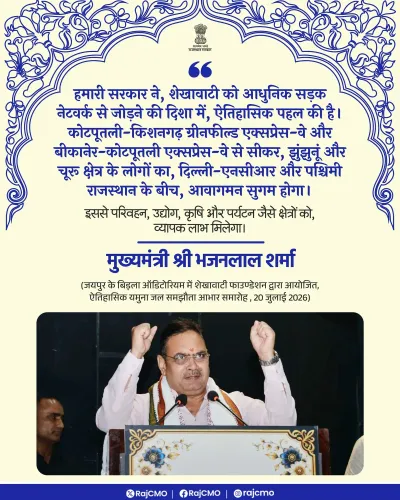
Improved connectivity — road and rail links that cut travel time to Jaipur and Delhi — is the third leg of this strategy, aimed at making Shekhawati accessible enough for weekend tourism and supply-chain integration alike.
The 'double engine' frame and what it asks voters to believe
The BJP has deployed the 'double engine' narrative — the idea that matching party governments at the state and Centre unlock faster fund flows and policy alignment — consistently since CM Bhajan Lal Sharma took office in December 2023. Shekhawati, with its strong Jat and Marwari voter base and historical grievances around under-investment, is a region where that argument has specific electoral resonance. The CMO's messaging is as much a governance update as it is a political stake in the ground: credit for Central schemes, branded as a state achievement.
The proof of that claim will arrive in the details — budget line items for haveli restoration, completion rates for Jal Jeevan Mission connections in these three districts, and eventually, tourism department data on visitor footfall. Those specifics are still to come.
Point of View
Making them a high-value target for visible governance signalling. Haveli restoration is the cleverest element: it fuses cultural pride with an economic multiplier through tourism, giving the government a story that resonates beyond infrastructure statistics. The real test is whether project timelines and fund releases follow the messaging — Shekhawati has heard development promises before.
NationPress
25 Oct 2026
Frequently Asked Questions
What is the double engine government in Rajasthan?
The 'double engine' government refers to the BJP holding power simultaneously at the Centre and in Rajasthan state, which the party argues enables faster fund flows and coordinated policy delivery. Chief Minister Bhajan Lal Sharma has used this framing since taking office in December 2023.
Which districts does Shekhawati region cover?
Shekhawati covers the districts of Sikar, Jhunjhunu, and Churu in northern Rajasthan. The semi-arid region is known for its frescoed Marwari merchant havelis and has historically faced acute water scarcity.
What is being done to restore havelis in Shekhawati?
The Rajasthan government has signalled haveli restoration as part of its Shekhawati development agenda. The painted havelis are 18th-to-20th-century merchant mansions considered a major heritage tourism asset; specific project names and budgets have not yet been publicly detailed.
How is Rajasthan addressing water scarcity in Shekhawati?
The Central government's Jal Jeevan Mission, launched in 2019, aims to provide rural tap-water connections across Rajasthan including Shekhawati districts. The state government's execution of this mission is the primary vehicle for the water-security commitments cited by the CMO.
What is the Aapno Agrani Rajasthan hashtag?
The hashtag #आपणो_अग्रणी_राजस्थान translates to 'Our Leading Rajasthan' and is used by the Rajasthan government and BJP to brand the state's development messaging under CM Bhajan Lal Sharma.