Rajasthan logs ₹11,739 crore investment proposals on Raj Nivesh portal in September 2026
Synopsis
Rajasthan's Raj Nivesh portal logged ₹11,739.27 crore in fresh investment proposals in September 2026 alone, with defence and tourism leading the charge. More telling: six months of approvals have already outpaced the entire previous financial year — a sign that the state's deregulation drive is moving from promise to measurable outcome.
Key Takeaways
Rajasthan recorded ₹11,739.27 crore in investment proposals on the Raj Nivesh portal in September 2026 .
Defence (₹4,840 crore), tourism and hospitality (₹3,058 crore), solar equipment manufacturing (₹1,000 crore), and real estate (₹744 crore) accounted for roughly 82% of proposals.
31,892 applications approved between April–September 2026 , exceeding the full-year 2025-26 total of 29,536 .
Land conversion timelines cut from 90 days to 45 days ; electricity connection processing reduced from 10 days to 4 days .
RIICO projects with land allotment proposals worth ₹1,080 crore are expected to create around 2,100 jobs .
Activities under the 'White' environmental category expanded from 104 to 877 under Phase I reforms.
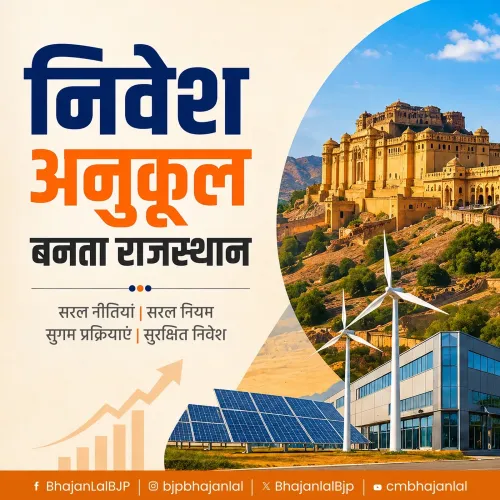
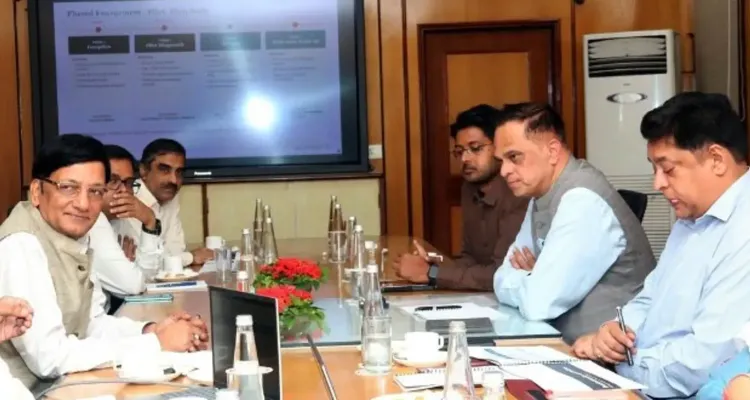
Rajasthan recorded investment proposals worth ₹11,739.27 crore on the state's Raj Nivesh single-window portal in September 2026, according to the monthly impact assessment report released by Chief Secretary V. Srinivas. The figures were shared as part of the first phase of the state's Deregulation and Compliance Reduction initiative, signalling accelerating investor interest in the state.
Sector-wise Investment Breakdown
The largest share of proposed investment came from the defence sector at ₹4,840 crore, followed by tourism and hospitality at ₹3,058 crore, solar equipment manufacturing at ₹1,000 crore, and real estate at ₹744 crore. Together, these four sectors accounted for approximately 82 per cent of total proposed investment for the month. Additionally, investment proposals worth ₹1,080 crore were registered for projects involving land allotment by the Rajasthan State Industrial Development and Investment Corporation (RIICO), expected to generate approximately 2,100 employment opportunities.
Portal Activity and Approval Rates Surge
Between April and September 2026, the Raj Nivesh portal received 60,229 applications — nearly double the 34,704 applications recorded during the entire financial year 2025-26. A total of 31,892 applications were approved in this same six-month period, already surpassing the 29,536 approvals logged across the full previous financial year. The application disposal rate improved from 47 per cent in August to 52 per cent in September. Currently, 190 services are available through the single-window system, and the 10 most frequently used services alone accounted for 51,548 applications, or roughly 86 per cent of the total.
Reforms Cutting Red Tape Across Priority Sectors
Chief Secretary Srinivas confirmed that reforms have been completed across all 23 priority sectors identified under Phase I. Among the most notable changes: the timeline for land conversion has been slashed from 90 days to 45 days, while processing time for permanent electricity connection applications at Jaipur Vidyut Vitran Nigam has been reduced from 10 days to four days. The turnaround for Legal Metrology applications has similarly been cut from 12 days to six days. Under environmental regulatory reforms, the number of activities classified under the 'White' category — the least restrictive tier — has expanded dramatically from 104 to 877. Other measures include time-bound approvals, self-certification, risk-based inspections, flexible labour provisions, and transparent monitoring frameworks.
District-Level Performance
Jaipur recorded the highest number of approvals at 5,501, followed by Jodhpur with 2,577, Ajmer with 1,808, Kota with 1,452, and Hanumangarh with 1,238. Didwana-Kuchaman, Sikar, Bhilwara, Alwar, and Udaipur also featured among the leading districts. The report notes the need to identify district-specific bottlenecks to further sharpen service delivery. A Deregulation Cell under the Chief Secretary's office separately visited industrial units in RIICO's Alwar industrial areas, assessing clean energy use, rainwater harvesting, recycling, employee training, safety drills, and resource utilisation.
What Comes Next
With Phase I reforms now complete across all 23 sectors, attention will likely shift to deepening implementation and addressing district-level gaps flagged in the report. The trajectory — approvals in six months already exceeding a full prior year — suggests Rajasthan's deregulation push is gaining structural momentum heading into the second half of the financial year.
Point of View
But the real question is conversion — how many of these proposals translate into ground-level investment and actual jobs. Approval velocity is a meaningful proxy for reform intent, but it is not the same as capital deployed. Rajasthan's defence sector proposals at ₹4,840 crore are particularly worth watching: defence manufacturing requires central clearances that no state single-window can fully expedite. The gap between registered proposals and disbursed investment will be the true report card of the deregulation initiative.
NationPress
24 Oct 2026
Frequently Asked Questions
What is the Raj Nivesh portal and what was recorded in September 2026?
The Raj Nivesh portal is Rajasthan's single-window investment clearance system, currently hosting 190 services for entrepreneurs. In September 2026, investment proposals worth ₹11,739.27 crore were registered on the portal, spanning sectors including defence, tourism, solar manufacturing, and real estate.
Which sectors attracted the most investment proposals in September 2026?
Defence led with ₹4,840 crore in proposals, followed by tourism and hospitality at ₹3,058 crore, solar equipment manufacturing at ₹1,000 crore, and real estate at ₹744 crore. These four sectors together made up approximately 82% of total proposed investment for the month.
How has Rajasthan's application approval performance changed compared to the previous year?
Between April and September 2026, the Raj Nivesh portal approved 31,892 applications — already exceeding the 29,536 approvals logged during the entire financial year 2025-26. The portal also received 60,229 applications in this six-month period, nearly double the 34,704 received throughout 2025-26.
What specific procedural reforms have been implemented under the deregulation initiative?
Phase I reforms have reduced land conversion timelines from 90 days to 45 days, cut electricity connection processing at Jaipur Vidyut Vitran Nigam from 10 days to four days, and halved Legal Metrology application processing from 12 days to six days. Reforms cover all 23 priority sectors identified under Phase I.
Which districts in Rajasthan are leading in application approvals?
Jaipur topped the list with 5,501 approvals, followed by Jodhpur (2,577), Ajmer (1,808), Kota (1,452), and Hanumangarh (1,238). Didwana-Kuchaman, Sikar, Bhilwara, Alwar, and Udaipur were also among the top-performing districts.