Rajasthan CM Bhajanlal Flags Rs 35 Lakh Cr Investment Pacts
Synopsis
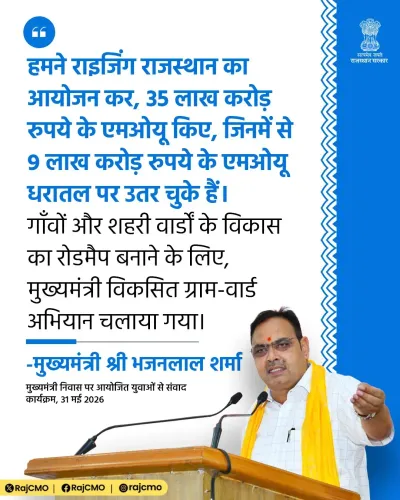
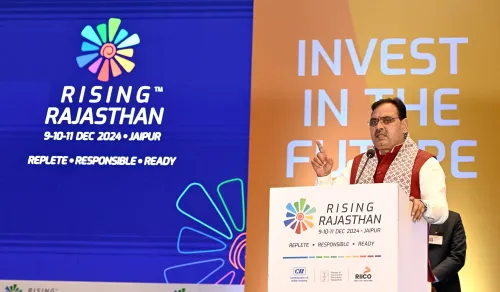
The Chief Minister's Office of Rajasthan announced investment agreements worth Rs 35 lakh crore secured through the Rising Rajasthan Global Investment Summit, highlighting the milestone as a signature achievement of the Bhajanlal Sharma-led BJP government in the state.
Key Takeaways
The Rajasthan CMO announced investment MoUs worth Rs 35 lakh crore signed at the Rising Rajasthan Global Investment Summit .
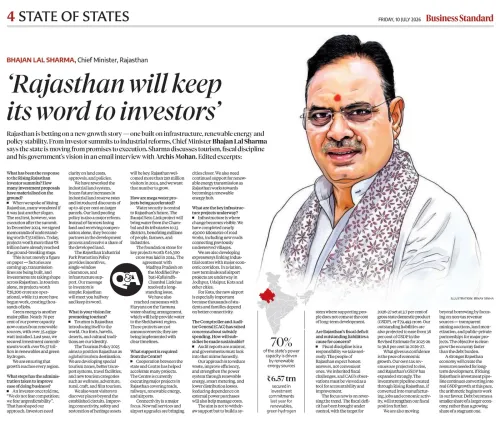
Chief Minister Bhajanlal Sharma , in office since December 2023 , has positioned large-scale investment attraction as a core government priority.
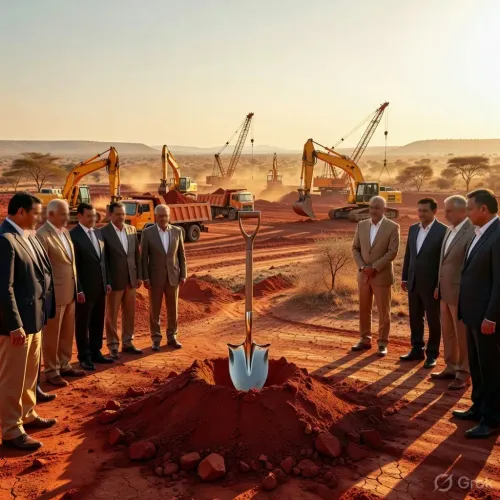
The summit is a state-organised event targeting domestic and foreign capital in sectors such as manufacturing, renewables, tourism, and infrastructure.
MoU figures at such summits represent intended or proposed investments; actual deployment is tracked through subsequent project commencement and employment data.
Conversion of MoUs into ground-level projects will be the key metric to watch in upcoming state budget sessions and industrial policy updates.
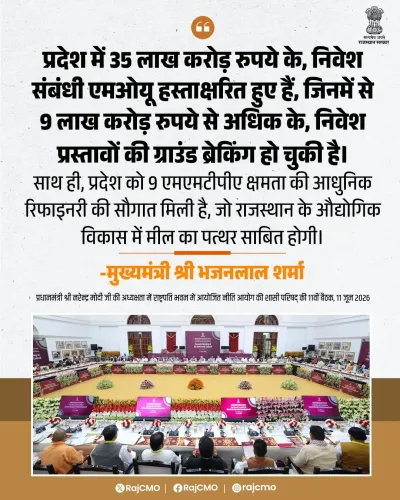
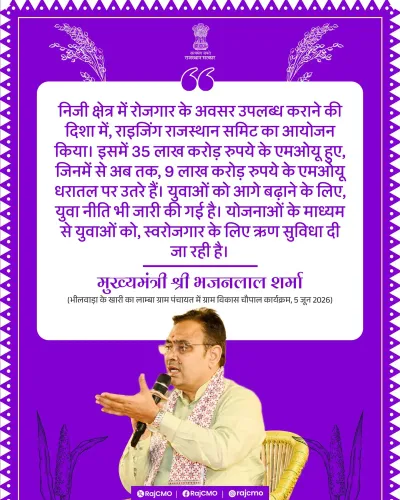
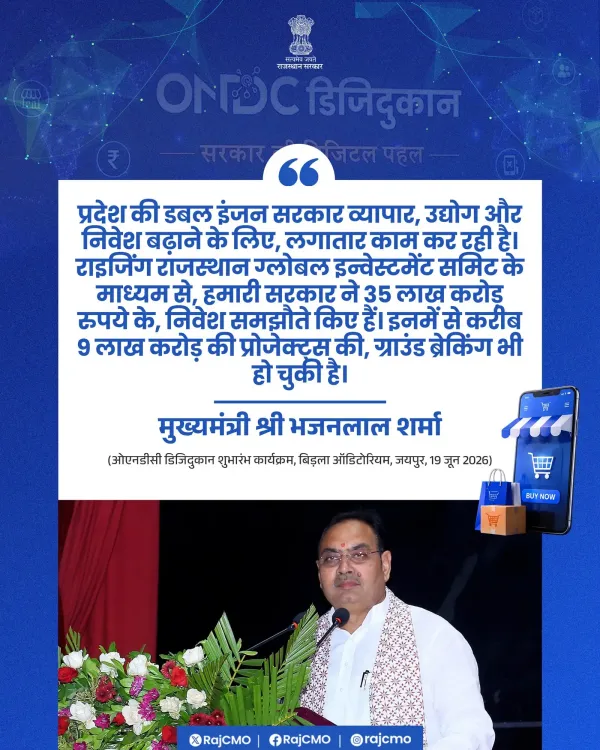
The Chief Minister's Office of Rajasthan announced on Saturday, 20 June 2026 that the state government has signed investment agreements worth Rs 35 lakh crore through the Rising Rajasthan Global Investment Summit, citing the milestone as a landmark achievement under Chief Minister Bhajanlal Sharma.
Context
The post, shared on the official Rajasthan CMO account and tagging @BhajanlalBjp, states: 'Rising Rajasthan Global Investment Summit ke madhyam se, hamari sarkar ne 35 lakh crore rupaye ke, nivesh samjhaute kiye hain' — ('Through the Rising Rajasthan Global Investment Summit, our government has signed investment agreements worth Rs 35 lakh crore.'). The announcement was accompanied by the hashtag #AapnoAgrani_Rajasthan ('Our Leading Rajasthan'), a campaign phrase used by the state government to highlight development credentials.
Bhajanlal Sharma took charge as Chief Minister of Rajasthan in December 2023 after the Bharatiya Janata Party won the state assembly elections, ending the Congress government's five-year term. Attracting large-scale investment has been a stated priority of his administration since taking office.
Policy Backdrop
The Rising Rajasthan Global Investment Summit is a state-organised event designed to attract domestic and foreign capital across sectors including manufacturing, renewable energy, tourism, and infrastructure. Investment summits of this kind have been a fixture of Indian state governance since the early 2010s, forming part of competitive federalism and Ease of Doing Business reform efforts championed at both the central and state levels.
Rajasthan, with its large land mass, solar energy potential, and mineral resources, has long been positioned as a destination for renewable energy and mining investment. The state has also sought to diversify into electronics manufacturing and logistics under successive governments. Signing Memoranda of Understanding (MoUs) at such summits is standard practice; the figures announced typically represent intended or proposed investments rather than capital already deployed on the ground.
Stakeholders and Impact
The primary beneficiaries of realised investment, if MoUs translate into operational projects, would be Rajasthan's industrial workforce, small and medium enterprises in ancillary supply chains, and communities in districts earmarked for new industrial zones. Large domestic conglomerates and international investors who signed agreements at the summit would be the key private-sector stakeholders responsible for executing the committed capital.
Analysts and industry bodies typically monitor the conversion rate of MoUs into actual ground-level projects as the true measure of a summit's success. Employment generation numbers and project commencement timelines are usually disclosed in subsequent state budget documents or industrial policy reviews.
What's Next
The government is expected to publish sector-wise breakdowns of the investment commitments and timelines for project implementation. Progress on MoU conversions is likely to feature in upcoming state budget sessions and industrial policy updates, which will serve as the real test of whether the Rs 35 lakh crore figure translates into tangible economic activity and job creation across Rajasthan.
Point of View
One of the largest claimed by any Indian state, will invite scrutiny over MoU-to-project conversion rates, which have historically lagged announced figures across states. For the BJP administration, translating these commitments into visible employment and industrial output before the next electoral cycle will be critical. The broader pattern suggests that follow-up industrial policy and land-allocation decisions will be the real determinants of whether this summit delivers lasting economic transformation.
NationPress
19 Sept 2026
Frequently Asked Questions
What is the Rising Rajasthan Global Investment Summit?
The Rising Rajasthan Global Investment Summit is a state government-organised event to attract domestic and foreign investment into Rajasthan across sectors like manufacturing, renewable energy, tourism, and infrastructure.
How much investment did Rajasthan secure at the Rising Rajasthan summit?
The Rajasthan CMO announced that investment agreements worth Rs 35 lakh crore were signed through the Rising Rajasthan Global Investment Summit.
Who is the Chief Minister of Rajasthan in 2026?
Bhajanlal Sharma of the Bharatiya Janata Party is the Chief Minister of Rajasthan, having taken office in December 2023.
Do MoUs signed at investment summits guarantee actual investment?
No — MoUs represent intended or proposed investments. Actual capital deployment depends on project approvals, land allocation, and investor follow-through, which are tracked separately through state budget and industrial policy updates.
What sectors are targeted by Rajasthan's investment summit?
Rajasthan's investment push targets sectors including renewable energy, manufacturing, mining, tourism, logistics, and infrastructure, leveraging the state's land resources and solar energy potential.