CM Bhajanlal: Rs 35 Lakh Cr MoUs Signed, Rs 9 Lakh Cr Grounded
Synopsis
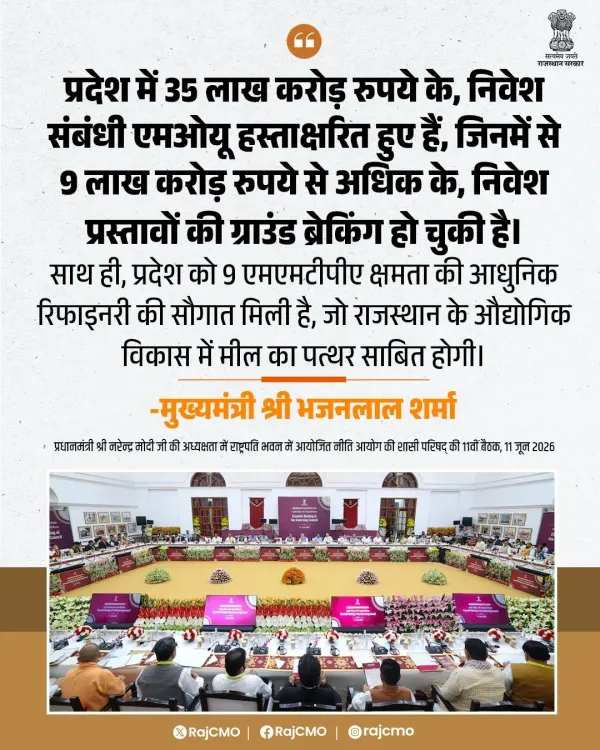
The Chief Minister's Office of Rajasthan announced on 11 June 2026 that MoUs worth Rs 35 lakh crore have been signed in the state, with ground-breaking completed for over Rs 9 lakh crore in investment proposals, underscoring CM Bhajan Lal Sharma's push to convert commitments into on-ground industrial activity.
Key Takeaways
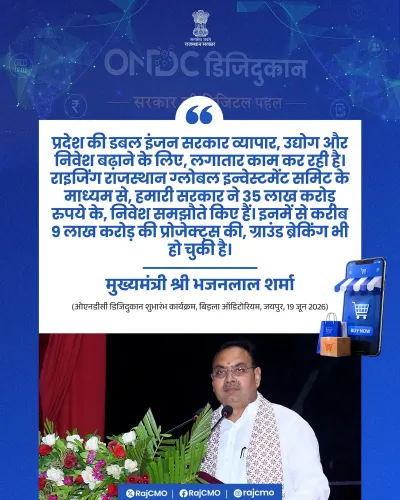
The Rajasthan CMO announced MoUs worth Rs 35 lakh crore have been signed in the state.
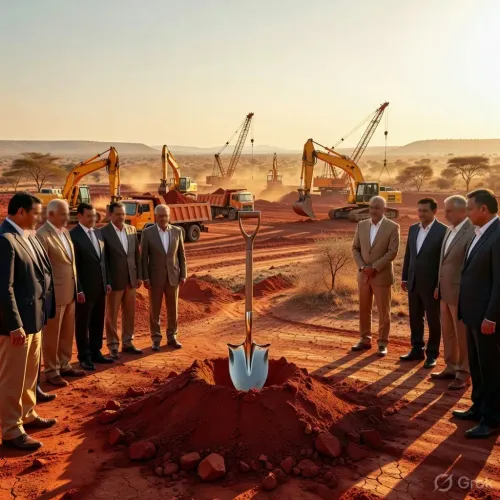
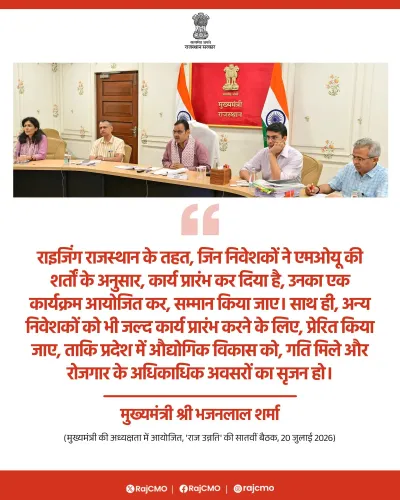
Ground-breaking ceremonies for investment proposals exceeding Rs 9 lakh crore have already been completed.
Chief Minister Bhajan Lal Sharma has been in office since December 2023 , following the BJP's win in state assembly elections.
The announcement was made under the hashtag #आपणो_अग्रणी_राजस्थान ('Our Leading Rajasthan'), part of the state's investment branding effort.
Rajasthan's investment push focuses on renewable energy , logistics , and tourism corridors as key differentiators.
The Rajasthan Investment Promotion Scheme (RIPS) provides subsidies and single-window clearance to anchor these investments.
The Chief Minister's Office of Rajasthan announced on Thursday, 11 June 2026 that the state has signed memoranda of understanding worth Rs 35 lakh crore in investment, with ground-breaking ceremonies completed for proposals exceeding Rs 9 lakh crore. The post, attributed to Chief Minister Bhajan Lal Sharma, was shared under the hashtag #आपणो_अग्रणी_राजस्थान ('Our Leading Rajasthan'), signalling the government's push to project the state as a premier investment destination.
Context
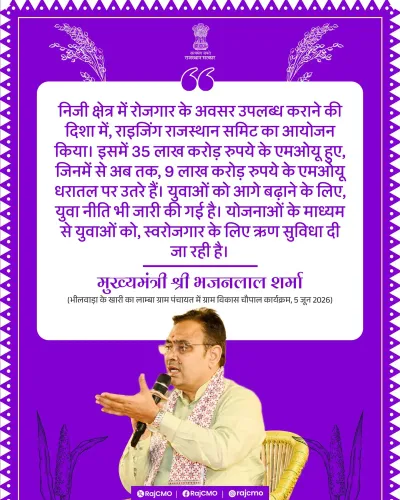
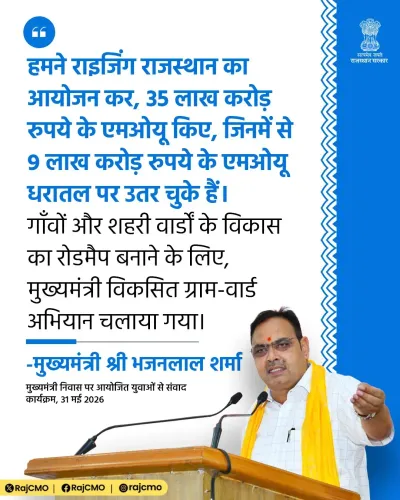
The official post states: 'प्रदेश में 35 लाख करोड़ रुपये के निवेश संबंधी एमओयू हस्ताक्षरित हुए हैं, जिनमें से 9 लाख करोड़ रुपये से अधिक के निवेश प्रस्तावों की ग्राउंड ब्रेकिंग हो चुकी है।' — translated: 'MoUs worth Rs 35 lakh crore have been signed in the state, of which ground-breaking for investment proposals worth more than Rs 9 lakh crore has already taken place.' The announcement positions Rajasthan as having converted a significant share of its headline commitment into on-ground activity, a metric that state governments increasingly use to demonstrate execution credibility beyond mere intent.
Policy Backdrop
Rajasthan has operated successive investment promotion frameworks to attract domestic and foreign capital. The Rajasthan Investment Promotion Scheme (RIPS) provides capital and interest subsidies, single-window clearance, and land allocation to eligible manufacturing and services units. Earlier investment meets in the state had generated multi-lakh-crore commitments in renewable energy, textiles, and logistics corridors between 2015 and 2022, establishing a pattern of large-scale outreach that the current BJP government under CM Bhajan Lal Sharma — in office since December 2023 — has sought to build upon.
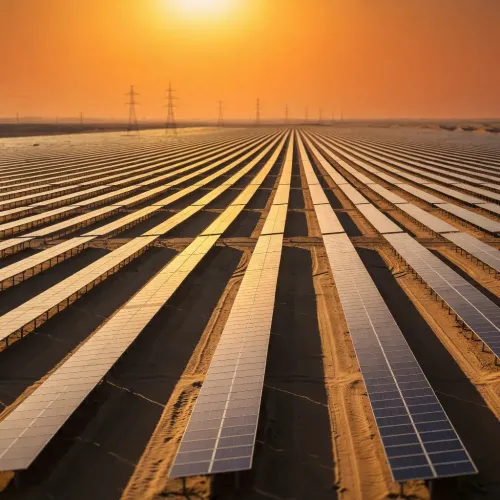
Rajasthan has strategically emphasised renewable energy, logistics parks, and tourism corridors to differentiate its investment pitch from neighbouring states. The state's vast land availability and solar irradiation levels have made it a focal point for green-energy investments in particular.
Stakeholders and Impact
The primary beneficiaries of sustained investment inflows are industrial workers, MSME units in ancillary supply chains, and local communities in districts where ground-breaking has occurred. Large-scale industrial projects typically generate both direct employment and indirect demand for logistics, construction, and services sectors. Investors who have signed MoUs are now at varying stages of land acquisition, environmental clearance, and financial closure — the standard pipeline before capital expenditure begins flowing.
It is standard practice in Indian competitive federalism for state governments to publicise cumulative MoU values as part of ease-of-doing-business positioning. The gap between announced MoU figures and ground-breaking values reflects the multi-stage nature of project execution, including regulatory approvals and financing milestones that can extend timelines.
What's Next
Analysts and investors will watch for quarterly progress reports detailing actual capital expenditure deployed and jobs created against the ground-broken projects. Any mid-term review of RIPS incentives or a follow-up global investment summit could provide the next formal checkpoint for the government's investment narrative. The pace at which the remaining pipeline — the difference between the Rs 35 lakh crore in MoUs and the Rs 9 lakh crore grounded — moves toward execution will be the defining test of Rajasthan's industrial ambitions under the current administration.
Point of View
A metric that addresses the long-standing criticism that Indian investment summits generate paper commitments rather than real capital flows. For CM Bhajan Lal Sharma, who inherited a large investment pipeline from predecessor governments and has hosted his own outreach events, translating over a quarter of signed MoUs into ground-breaking activity is a meaningful political signal ahead of any mid-term assessment. The framing also fits the broader BJP pattern of competitive federalism, where states race to demonstrate ease-of-doing-business credentials. However, the true test — actual capital expenditure, job creation numbers, and revenue generation — remains to be validated through independent quarterly disclosures.
NationPress
25 Sept 2026
Frequently Asked Questions
How much investment has Rajasthan attracted through MoUs?
The Rajasthan CMO announced that MoUs worth Rs 35 lakh crore have been signed in the state, representing the total headline investment commitment as of June 2026.
What is the ground-breaking figure for Rajasthan investments?
Ground-breaking ceremonies for investment proposals worth more than Rs 9 lakh crore have been completed, meaning physical project initiation has begun for that portion of the MoU pipeline.
Who is the Chief Minister of Rajasthan in 2026?
Bhajan Lal Sharma of the BJP has been serving as Chief Minister of Rajasthan since December 2023, following the party's victory in the state assembly elections.
What is the Rajasthan Investment Promotion Scheme?
The Rajasthan Investment Promotion Scheme (RIPS) is a state policy framework that offers capital and interest subsidies, single-window clearance, and land allocation to attract domestic and foreign investment into manufacturing and services.
What sectors is Rajasthan targeting for investment?
Rajasthan has prioritised renewable energy, logistics parks, and tourism corridors as key sectors to differentiate its investment pitch, leveraging the state's land availability and high solar irradiation levels.