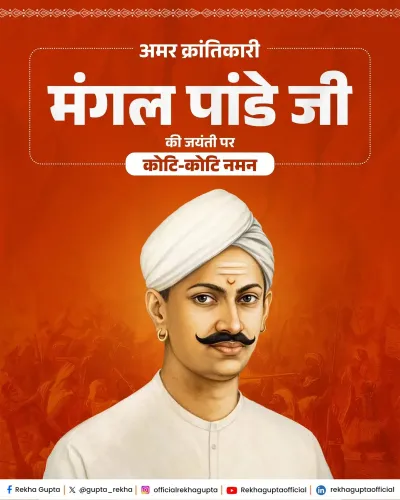
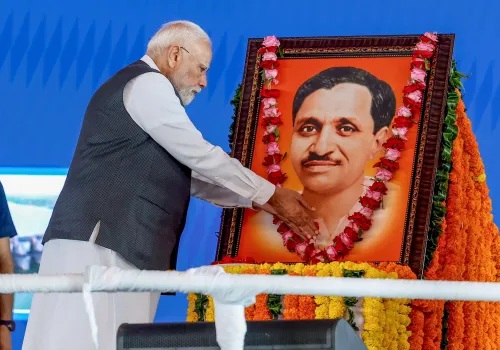
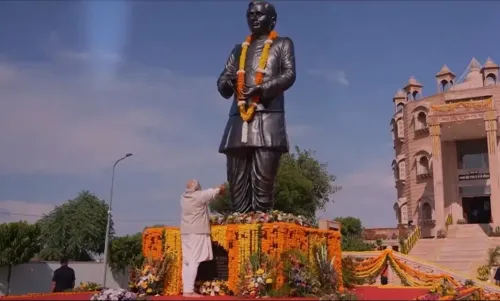
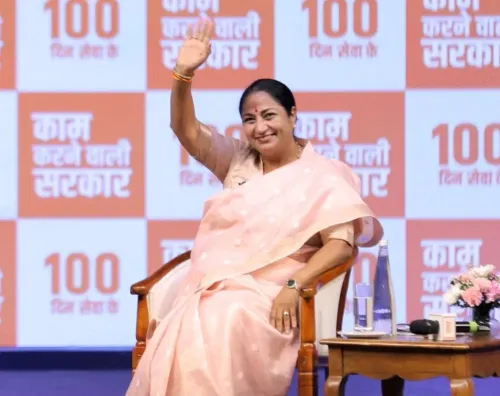
CM Rekha Gupta pays tribute to Deendayal Upadhyay on birth anniversary
Synopsis
Delhi Chief Minister Rekha Gupta marked Pandit Deendayal Upadhyay's birth anniversary on 25 September 2026 with a tribute to his Antyodaya and Integral Humanism philosophy, underscoring the BJP's enduring ideological debt to the Jana Sangh founder.
Key Takeaways
Delhi CM Rekha Gupta posted a tribute to Pandit Deendayal Upadhyay on his birth anniversary on 25 September 2026 .
Upadhyay was a founder member of the Bharatiya Jana Sangh in 1951 , the ideological precursor to today's BJP.
His twin philosophies — Integral Humanism (Ekatm Manavaad) and Antyodaya — remain central to BJP's stated ideology.
The Antyodaya Anna Yojana , launched in 2000 , drew directly from Upadhyay's principle of prioritising the last person in society.
CM Gupta invoked his 'nation first' ethos and purpose-driven life as a guiding light for governance and public welfare.
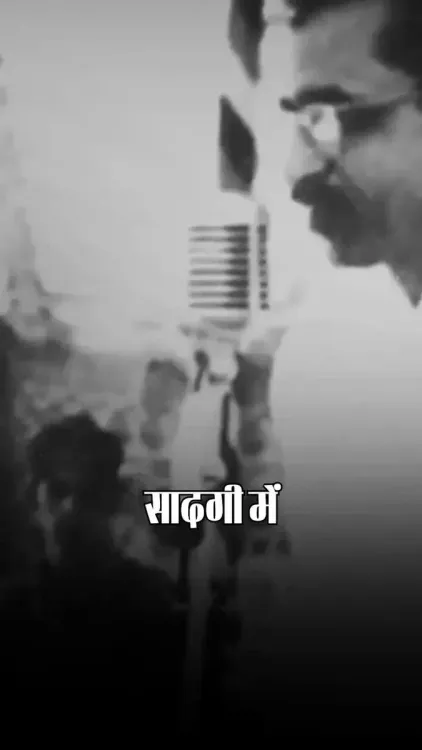
A founding idea that refused to die — on the birth anniversary of Pandit Deendayal Upadhyay, Delhi Chief Minister Rekha Gupta paid homage to the thinker whose philosophy of uplifting the last person in society continues to shape Indian welfare politics more than half a century after his death.
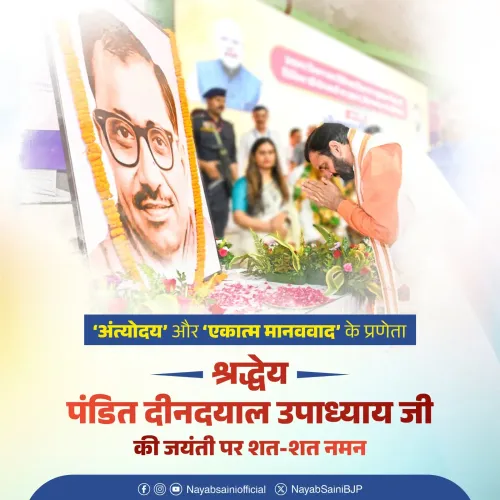
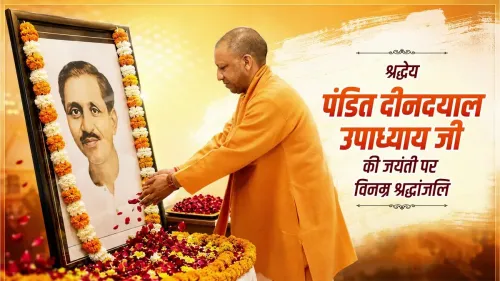
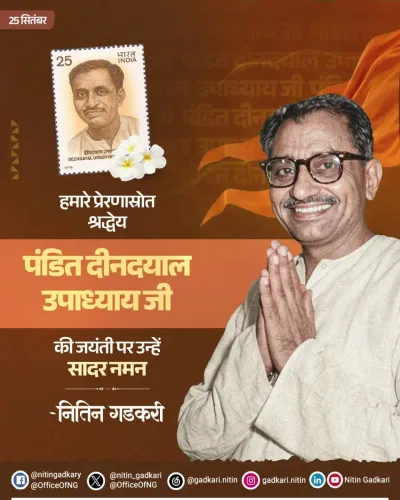
In her post on Friday, 25 September 2026, CM Gupta wrote: 'Bharatiya Jana Sangh ke sansthapak sadasy, Ekatm Manavaad aur Antyodaya ke praneta...' — honouring Upadhyay as the founder member of the Bharatiya Jana Sangh, the originator of Integral Humanism and Antyodaya, and a fierce thinker devoted to the nation. She described his entire life as dedicated to national service and India's cultural consciousness, and said his vision of placing the upliftment of the poorest at the foundation of national progress 'continues to inspire public welfare and nation-building even today.'
The man behind Antyodaya — and why it still matters
Pandit Deendayal Upadhyay co-founded the Bharatiya Jana Sangh in 1951, the party that would eventually evolve into today's Bharatiya Janata Party. His two defining contributions — Integral Humanism (Ekatm Manavaad) and Antyodaya — remain the philosophical twin pillars of BJP's ideological identity. Integral Humanism argued that political and economic development must be rooted in India's own cultural ethos, not borrowed wholesale from Western capitalism or Soviet socialism. Antyodaya, literally 'rise of the last,' insisted that the measure of any society's progress is how it treats its most marginalised member.
That idea found concrete policy expression in the year 2000, when the Antyodaya Anna Yojana was launched to provide subsidised food grain specifically to the poorest families — a direct institutional nod to Upadhyay's core principle. The scheme's very name is a tribute, a reminder that the philosophy outlived the philosopher.
A ritual of remembrance with real ideological weight
For the BJP, Upadhyay's birth anniversary is not a routine calendar observance. Senior leaders across the party use it to publicly reaffirm their ideological lineage — tracing a direct line from the Jana Sangh's founding mission through to present-day welfare schemes. CM Gupta's post fits squarely in that tradition, invoking his 'dhyeyanishtha jeevan' (purpose-driven life), his work in building the organisation, and his 'nation first' ethos as a guiding light for current governance.
The gesture carries particular resonance coming from the Chief Minister of Delhi, a city where organisational politics and ideological symbolism intersect acutely. By anchoring her tribute explicitly in Antyodaya — the last person in the queue — Gupta signals a policy register, not just a ceremonial one.
Point of View
Signalling continuity between the Jana Sangh's founding mission and the party's current welfare agenda. CM Gupta's explicit invocation of Antyodaya, the 'last person' principle, is a deliberate policy reference as much as a philosophical one, connecting street-level welfare schemes to a deeper cultural nationalist tradition. In the competitive terrain of Delhi politics, where opposition parties consistently challenge the BJP's pro-poor credentials, anchoring governance language in Upadhyay's philosophy is also a subtle electoral move. The pattern suggests the party sees its ideological heritage not as museum-piece nostalgia but as live political capital.
NationPress
25 Sept 2026
Frequently Asked Questions
Who was Pandit Deendayal Upadhyay?
Pandit Deendayal Upadhyay was a founder member of the Bharatiya Jana Sangh, established in 1951, and the originator of the philosophies of Integral Humanism and Antyodaya. He believed national progress must be measured by the upliftment of society's most marginalised members.
What is the Antyodaya philosophy?
Antyodaya, literally meaning 'rise of the last,' is Upadhyay's principle that the welfare of the poorest and most marginalised person must be the foundation of any society's progress. It directly inspired the Antyodaya Anna Yojana food scheme launched in 2000.
What is Integral Humanism (Ekatm Manavaad)?
Integral Humanism is Deendayal Upadhyay's political-economic philosophy arguing that India's development must be rooted in its own cultural ethos rather than transplanted Western capitalism or Soviet socialism. It remains a cornerstone of the BJP's ideological framework.
Why do BJP leaders pay tribute to Deendayal Upadhyay every year?
BJP leaders mark Upadhyay's birth anniversary to reaffirm the party's ideological lineage from the Bharatiya Jana Sangh tradition. The tributes serve as a public assertion of continuity between the party's founding philosophy and its present-day governance agenda.
What did Delhi CM Rekha Gupta say about Deendayal Upadhyay?
CM Rekha Gupta described Upadhyay as the founder member of the Bharatiya Jana Sangh and the originator of Integral Humanism and Antyodaya, saying his vision of prioritising the upliftment of the last person continues to inspire public welfare and nation-building today.