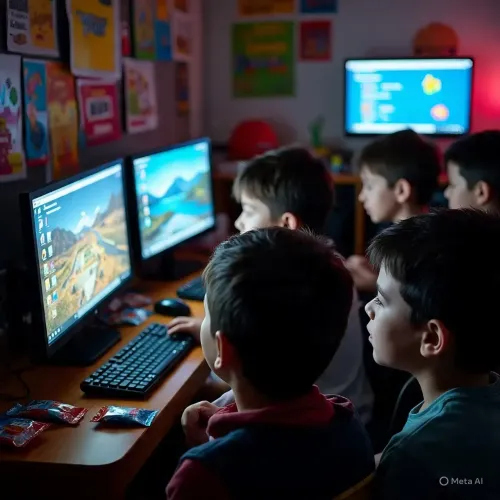
Should We Address the Detrimental Effects of Mobile Gaming on Children?

Synopsis
As concerns grow over mobile gaming's impact on youth, Rajasthan MLA Balmukund Acharya calls for urgent action. Discover how modern technology is reshaping childhood and what steps can be taken to protect our children’s future.
Key Takeaways
Mobile games can have detrimental effects on children's mental health.
Excessive gaming may lead to addiction and academic challenges.
There is a need for proactive monitoring of children's digital activities.
Parents and educators should promote healthier alternatives.
Violent content in games poses a serious risk to youth development.
Jaipur, Feb 21 (NationPress) Hawa Mahal MLA Balmukund Acharya has raised significant alarms regarding the escalating adverse impact of mobile games on children, advocating for immediate actions to mitigate these harmful effects.
During a media briefing at the Assembly premises amid the fifth session of the 16th Rajasthan Legislative Assembly, Acharya emphasized that while technology has simplified daily life, it has also introduced various negative consequences, particularly for the younger demographic.
“In this contemporary age, technology enhances convenience, yet it simultaneously presents serious challenges. There is a growing attraction among children towards violent mobile games and television content, which is profoundly alarming,” he stated.
He further pointed out that in the past, children honed their personalities and creativity through comics, uplifting narratives, and educational literature, but the surge in digital entertainment has transformed these habits.
“Mobile games have supplanted books and traditional educational tools. Regrettably, numerous games glorify violence, adversely impacting the mental development of children,” he added.
The MLA noted that excessive gaming is detrimental to both children’s education and mental well-being.
He recounted instances where children become so engrossed in these games that they begin to view themselves as the virtual characters.
“Such addictions not only jeopardize their academic performance but also expose them to threats like online scams, financial dealings, and other perilous situations,” he cautioned.
Describing this trend as a significant psychological risk, Acharya warned that unchecked exposure to violent digital content could serve as a “mental virus” for younger generations.
“This trend has the potential to impair children’s cognitive abilities, judgment, and overall educational progress in the long term,” he remarked.
He urged parents, educators, and policymakers to adopt proactive strategies to monitor children’s digital engagement and advocate for healthier alternatives such as reading, sports, and creative education.
Point of View
It is imperative to recognize the valid concerns raised regarding mobile gaming. The balance between embracing technology and protecting our youth is crucial. Addressing the adverse effects on mental health and education should be a priority for parents and policymakers alike.
NationPress
29 Sept 2026
Frequently Asked Questions
What is the primary concern regarding mobile games?
The primary concern is their negative impact on children's mental health and education, as highlighted by MLA Balmukund Acharya.
How do mobile games affect children's development?
Mobile games can replace traditional learning and promote violence, negatively influencing children's cognitive and emotional development.
What steps can parents take?
Parents are encouraged to monitor their children's gaming habits and promote healthier alternatives like reading and sports.
Why is this issue being raised now?
With the increasing popularity of mobile games, concerns have escalated regarding their effects on children's behavior and academic performance.
What are the potential risks of excessive gaming?
Excessive gaming can lead to academic decline, addiction, and exposure to online dangers such as scams.