MP CM Yadav: State exits power cuts era, eyes 50% green energy
Synopsis
Madhya Pradesh Chief Minister Dr. Mohan Yadav announced on Independence Day 2026 that the state has set a new power supply record of over 21,000 MW, with 30% green energy in its mix and a 50% target ahead, backed by new manufacturing zones in Narmadapuram, Maksi, and Morena.
Key Takeaways
Madhya Pradesh recorded peak electricity demand supply of over 21,000 MW in the current Rabi season, a new state record.
The previous Rabi season saw the state supply nearly 20,000 MW , marking a consistent upward trajectory.
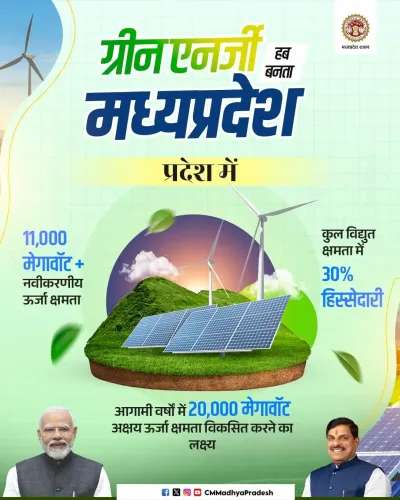
30% of the state's electricity capacity currently comes from renewable sources; the government has set a target of 50% .
Narmadapuram is being developed as India's first renewable energy equipment manufacturing zone; Maksi will host a solar manufacturing unit and Morena a green hydrogen plant.
More than 550 electric buses are operational across major cities, and metro projects are underway in Bhopal and Indore .
Mohan Yadav made the announcements on Independence Day, 15 August 2026 .
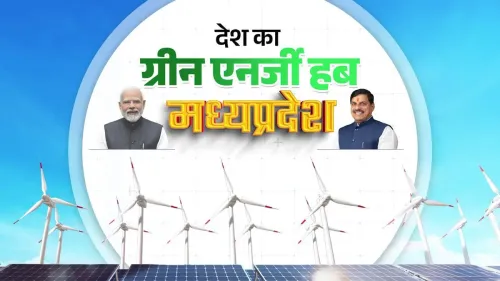
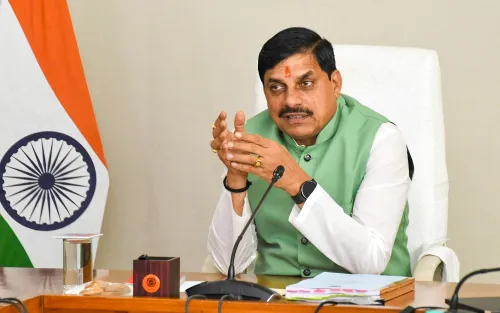
From a state once synonymous with grinding power cuts, Madhya Pradesh has flipped the script — and on Independence Day, 15 August 2026, Chief Minister Dr. Mohan Yadav made sure the country knew it. Speaking via the Chief Minister's Office of Madhya Pradesh on X, he declared the state had entered what he called the 'bijli full' (full power) era, after recording peak electricity supply of over 21,000 megawatts this Rabi season — a new state record.
The headline number tells only part of the story. Last Rabi season, the state had already met demand of nearly 20,000 MW; this year it pushed past 21,000 MW. That upward curve, in a state that spent years rationing power to farmers and households alike, is the structural shift CM Yadav is pointing to.Green energy now holds 30% of MP's power mix — and the target is 50%
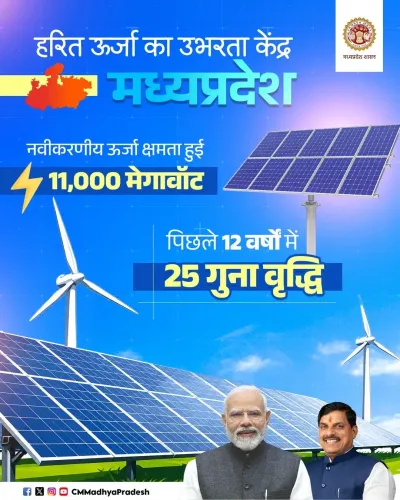
Of Madhya Pradesh's current installed electricity capacity, 30 percent already comes from renewable sources. The state has now set a target of scaling that share to 50 percent in the coming years — a commitment that aligns with India's broader national net-zero trajectory. The ambition is not just about generation; it is about building the industrial backbone to sustain it.
Three specific projects anchor that manufacturing push. Narmadapuram is being developed as the country's first dedicated renewable energy equipment manufacturing zone — a first-of-its-kind designation that positions the district as a potential hub for solar and wind component production. In Maksi, a solar manufacturing unit is under development, while Morena has been earmarked for a green hydrogen plant. Together, these sites sketch a geography of industrial transition across central India.
550+ electric buses and metro lines reshaping how MP's cities move
The energy story does not stop at the grid. CM Yadav highlighted that more than 550 electric buses are now operating across major cities in the state — a fleet that directly connects surplus clean power to urban mobility. In Bhopal and Indore, metro connectivity is being built out, promising a further shift away from fossil-fuel-dependent commuting in the state's two largest urban centres.
The logic is integrated: generate more renewable power, manufacture the equipment domestically, and then put that power to work in the transport systems citizens use every day. It is a loop that states across India are attempting to close, but Madhya Pradesh is among the few with concrete manufacturing anchors to point to.
On a day when the national mood runs high on ambition, the state's power trajectory offers a rare, measurable benchmark. The next test is delivery — commissioning dates for Narmadapuram, Morena, and the metro corridors will determine whether the 'bijli full' declaration holds up beyond the headline.
Point of View
Paired with domestic manufacturing anchors in Narmadapuram and Morena, positions the state within the national 'Make in India' clean-energy narrative ahead of what are likely to be competitive electoral cycles. The integrated approach — linking generation, manufacturing, and urban mobility — reflects a broader pattern among large Indian states trying to attract industrial investment by demonstrating energy reliability. The credibility of this narrative will rest entirely on commissioning timelines for the cited projects, which remain unverified.
NationPress
15 Aug 2026
Frequently Asked Questions
What is Madhya Pradesh's new electricity record in 2026?
Madhya Pradesh supplied over 21,000 megawatts of electricity during the current Rabi season, surpassing the previous season's record of nearly 20,000 MW and marking a new high for the state.
What is the renewable energy target for Madhya Pradesh?
The state currently has 30% of its electricity capacity from green energy sources and has set a target to raise that share to 50% in the coming years.
What is being built in Narmadapuram for renewable energy?
Narmadapuram is being developed as India's first dedicated renewable energy equipment manufacturing zone, intended to produce components for solar and other clean-energy technologies.
Where is Madhya Pradesh's green hydrogen plant being set up?
A green hydrogen plant is being developed in Morena district of Madhya Pradesh as part of the state's clean energy industrial push.
How many electric buses are running in Madhya Pradesh cities?
More than 550 electric buses are currently operating across major cities in Madhya Pradesh, complementing metro projects underway in Bhopal and Indore .