Rajasthan mother to get NITI Aayog honour for cerebral palsy chair design
Synopsis
A Rajasthan mother was told her son with cerebral palsy couldn't sit — so she spent nine months building a chair that could change that for thousands of children. On 31 July, President Droupadi Murmu will honour Neha Solanki with NITI Aayog's Grassroots Innovator Recognition 2026, in one of the year's most compelling stories of personal adversity turned national-level innovation.
Key Takeaways
Neha Solanki of Pali, Rajasthan will receive the Grassroots Innovator Recognition 2026 from President Droupadi Murmu on 31 July 2026 in New Delhi.
She designed an indigenous adaptive chair for children aged 3 to 12 years with cerebral palsy after her son Duranjay was denied school admission.
Duranjay was born prematurely at 27 weeks , weighing 900 grams , and was later diagnosed with cerebral palsy.
The chair provides full-body postural support, enabling children to study, eat, and write without constant adult assistance.
Neha is among 26 grassroots innovators selected by NITI Aayog's Atal Innovation Mission from across India.
She holds a Master's degree in Rehabilitation Psychology , pursued after years of schools rejecting her son.
A Rajasthan mother and rehabilitation psychologist, Neha Solanki, will be recognised by President Droupadi Murmu on 31 July 2026 for designing an indigenous adaptive seating system for children with cerebral palsy — an innovation born out of her own son's repeated rejection from schools. NITI Aayog's Atal Innovation Mission has selected her among 26 grassroots innovators nationwide for the Grassroots Innovator Recognition 2026, to be conferred at a ceremony in New Delhi.
A School Rejection That Sparked an Innovation
The story begins in 2023, when Neha attempted to enrol her son Duranjay — who was born prematurely at 27 weeks, weighing just 900 grams, and later diagnosed with cerebral palsy — in a local school. A principal told her the child would need to learn to sit independently before he could be admitted, citing the absence of disability-friendly seating. Rather than accepting the refusal, Neha resolved to engineer the solution herself.
A resident of Pali and daughter-in-law of the Hemliawas family in Marwar Junction, Neha had already pursued a Master's degree in Rehabilitation Psychology in response to years of schools turning Duranjay away for lacking infrastructure to support children with disabilities. Her academic training gave her the framework; her son's daily reality gave her the urgency.
Nine Months of Research and Development
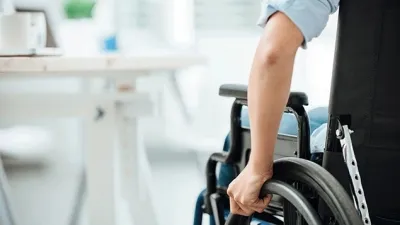
Working in close collaboration with physiotherapists and occupational therapists, Neha spent nine months researching and developing an adaptive chair designed for children aged 3 to 12 years with cerebral palsy. The chair provides full-body postural support, allowing children to sit safely and comfortably while studying, eating, writing, or participating in classroom activities — without the constant risk of falling or needing adult assistance at every moment.
The innovation has already changed Duranjay's daily life, enabling him to perform routine tasks and engage in learning with considerably greater independence, according to the family.
National Recognition by NITI Aayog
Recognising the broader social impact of the design, NITI Aayog's Atal Innovation Mission shortlisted Neha from applicants across the country, naming her among 26 grassroots innovators to receive the Grassroots Innovator Recognition 2026. The award ceremony will be held in New Delhi on 31 July 2026, where President Droupadi Murmu will personally confer the honour.
This is a significant milestone for grassroots disability-tech innovation in India, where adaptive equipment for children with special needs has historically been imported or prohibitively expensive, leaving most families without viable options.
Wider Impact and What Comes Next
Neha's chair is designed as an indigenous, potentially scalable solution — one that could benefit thousands of children with cerebral palsy who are currently excluded from mainstream schooling due to a lack of appropriate seating infrastructure. Notably, India has an estimated 15 to 20 lakh children living with cerebral palsy, many of whom face structural barriers to classroom participation.
Whether the innovation moves toward wider production or institutional adoption — through government school schemes or disability welfare programmes — will be the critical next step in translating a personal breakthrough into systemic change.
Point of View
And the burden of bridging that gap has fallen on individual families rather than the state. The fact that an award-winning innovation emerged from a mother's personal desperation — not from a government R&D programme or a university lab — raises a pointed question about where disability-assistive tech sits in India's public education priorities. NITI Aayog's recognition is welcome, but the harder test is whether the chair moves from an individual innovation to a procurement standard in government schools.
NationPress
20 Oct 2026
Frequently Asked Questions
Who is Neha Solanki and why is she being honoured?
Neha Solanki is a rehabilitation psychologist and mother from Pali, Rajasthan, who designed an indigenous adaptive chair for children with cerebral palsy. She is being honoured with NITI Aayog's Grassroots Innovator Recognition 2026, to be conferred by President Droupadi Murmu on 31 July 2026 in New Delhi.
What is the adaptive chair Neha Solanki designed?
It is an indigenous seating system for children aged 3 to 12 years with cerebral palsy, developed over nine months in collaboration with physiotherapists and occupational therapists. The chair provides full-body postural support, allowing children to sit safely during classroom activities without requiring constant adult assistance.
What is the Grassroots Innovator Recognition 2026?
It is an award given by NITI Aayog's Atal Innovation Mission to recognise impactful innovations developed at the community level. In 2026, 26 grassroots innovators from across India have been selected, and the honours will be conferred by President Droupadi Murmu on 31 July.
What was the trigger behind Neha Solanki's innovation?
In 2023, her son Duranjay — born prematurely at 27 weeks and weighing 900 grams, and later diagnosed with cerebral palsy — was denied admission to a school because he could not sit independently. The school cited the absence of disability-friendly seating as the reason.
How could this innovation impact other children in India?
India has an estimated 15 to 20 lakh children living with cerebral palsy, many of whom are excluded from mainstream schooling due to inadequate infrastructure. Neha's chair, as an indigenous and potentially scalable design, could address this gap if adopted through government school schemes or disability welfare programmes.