NITI Aayog names Rajasthan's Shala Swasthya Abhiyan a National Best Practice
Synopsis
NITI Aayog has formally recognised two Rajasthan education programmes — a health screening drive covering 75 lakh students and an AI-based learning assessment system — as national best practices. The AI initiative reportedly helped 4 lakh students overcome learning poverty with 8–10% annual gains in outcomes, placing Rajasthan among India's top 10 states in the Parakh Report 2024.
Key Takeaways
NITI Aayog has named Rajasthan's Shala Swasthya Parikshan Abhiyan and AI-based assessment system as 'Good State Practices' in its school education policy report.
The health screening programme covered more than 75 lakh students across 70+ health parameters , supported by a mobile app follow-up system.
The AI and OCR-enabled assessment under Chief Minister Shikshit Rajasthan Abhiyan helped over 4 lakh students overcome learning poverty, with 8–10% annual improvement in outcomes.
Rajasthan ranked among the top 10 states in the Rajasthan Parakh Report 2024 , exceeding the national average.
The Padhai with AI pilot in Tonk district showed notable gains in Mathematics and core subjects.
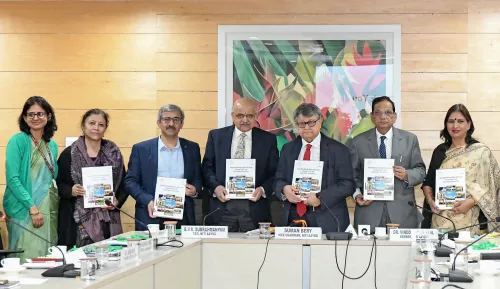
Rajasthan's school education sector has earned national recognition from NITI Aayog, which has formally acknowledged two of the state's flagship programmes as exemplary practices in its latest policy report. The Shala Swasthya Parikshan Abhiyan and the AI-based assessment system under the Chief Minister Shikshit Rajasthan Abhiyan have been cited as 'Good State Practices' in the report titled 'School Education System in India: Temporal Analysis and Policy Roadmap for Quality Enhancement', released on 20 May 2025.
What the Shala Swasthya Parikshan Abhiyan Covers
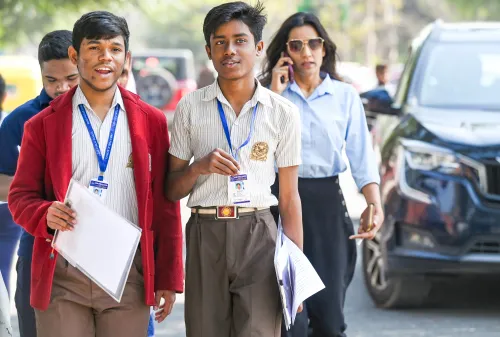
The health screening initiative reached more than 75 lakh students across Rajasthan, evaluating each child on more than 70 health parameters. These included vision, hearing, dental health, nutrition, and physical fitness assessments. A mobile app-based follow-up system was deployed to ensure continuity of care after initial screenings.
NITI Aayog described the model as a significant step toward integrating health and nutrition into the education ecosystem, in alignment with the objectives of the National Education Policy (NEP) 2020.
AI and OCR Technology in Learning Assessments
The second initiative commended in the report involves the use of Optical Character Recognition (OCR) technology and an AI-enabled assessment system introduced under the Chief Minister Shikshit Rajasthan Abhiyan. According to the report's findings, the system helped more than 4 lakh students overcome learning poverty, while delivering an annual improvement of 8–10 per cent in learning outcomes.
Rajasthan also secured a position among the top 10 states in the country in the Rajasthan Parakh Report 2024, outperforming the national average — a metric that further reinforces the state's upward trajectory in school education quality.
Padhai with AI: A District-Level Innovation
NITI Aayog separately appreciated the Padhai with AI initiative being piloted in Tonk district, noting substantial improvements in student performance, particularly in Mathematics and other core subjects. The district-level programme represents an early-stage integration of artificial intelligence into classroom learning, and its recognition at the national level signals potential for wider replication.
Government's Response
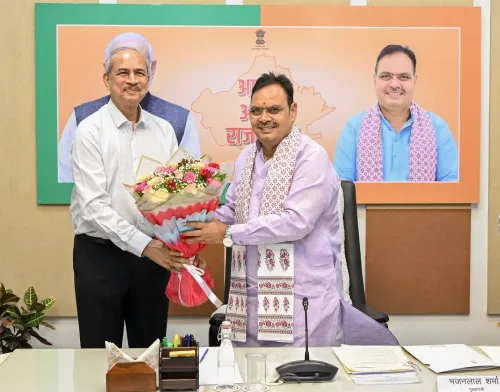
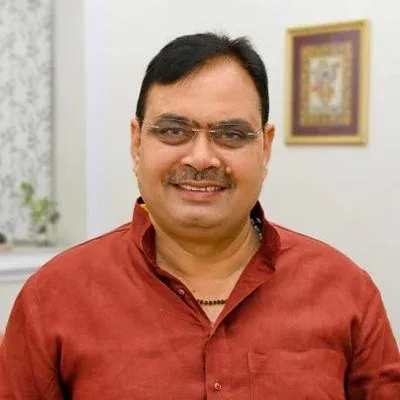
State government officials attributed the recognition to the policy direction set by Chief Minister Bhajan Lal Sharma. 'Under the leadership of Chief Minister Bhajan Lal Sharma, Rajasthan's education sector is rapidly emerging as a national model of innovation, effectively integrating education, healthcare, and technology to enhance student learning and development,' officials said.
This comes amid a broader national push under NEP 2020 to move school education beyond rote learning toward holistic, data-driven development. Rajasthan's dual focus — student health and technology-enabled learning — positions it as one of the more comprehensive state-level implementations of that vision. Whether the model scales effectively beyond pilot districts will be the next test.
Point of View
Not just a certificate. But two questions remain unanswered: how representative are the 75 lakh screenings in terms of follow-through care, and whether the 8–10% learning outcome improvement is independently verified or self-reported by the state. Rajasthan's ranking in the Parakh Report is a harder external benchmark, and that result is encouraging. The real test is replication — moving Padhai with AI from Tonk to every district without diluting fidelity. State-level innovation in India has a long history of strong pilots that never scale.
NationPress
13 Oct 2026
Frequently Asked Questions
What is the Shala Swasthya Parikshan Abhiyan in Rajasthan?
It is a state-wide student health screening programme that assessed more than 75 lakh school students on over 70 health parameters, including vision, hearing, nutrition, dental care, and physical fitness. A mobile app-based system was used for follow-up care after the initial screenings.
Why has NITI Aayog recognised Rajasthan's education initiatives?
NITI Aayog cited the programmes in its report 'School Education System in India: Temporal Analysis and Policy Roadmap for Quality Enhancement', classifying them as 'Good State Practices' for integrating health, technology, and learning in line with NEP 2020 objectives.
How did the AI-based assessment system improve learning outcomes?
According to the NITI Aayog report, the OCR and AI-enabled system under Chief Minister Shikshit Rajasthan Abhiyan helped more than 4 lakh students overcome learning poverty and delivered an annual improvement of 8–10 per cent in learning outcomes.
What is the Padhai with AI initiative?
Padhai with AI is a technology-integrated learning programme being piloted in Tonk district, Rajasthan. NITI Aayog noted substantial improvements in student performance, particularly in Mathematics and other core subjects, as a result of the initiative.
How did Rajasthan perform in the Parakh Report 2024?
Rajasthan secured a position among the top 10 states in the country in the Rajasthan Parakh Report 2024, outperforming the national average in school education quality metrics.