Rajasthan fuel prices rise 4th time in May; petrol hits ₹112.66 in Jaipur
Synopsis
Rajasthan has hiked fuel prices four times in a single month, with Jaipur petrol crossing ₹112 per litre. The cumulative May surge of over ₹7 per litre is now threatening a chain reaction — from grocery freight to farm costs to bus fares — while the BJP government faces mounting pressure to cut VAT.
Key Takeaways
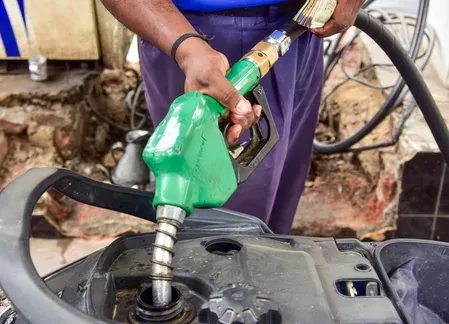
Petrol in Jaipur now costs ₹112.66 per litre after a ₹2.82 hike on 25 May 2025 .
Diesel in Jaipur rose by ₹2.73 to ₹97.78 per litre .
This is the fourth fuel price hike in May ; cumulative rise exceeds ₹7 per litre this month.
Sikar has the highest petrol price among major Rajasthan cities at ₹113.59 per litre .
Congress leader Ashok Gehlot demanded an immediate VAT reduction on fuel from the BJP -led state government.
Experts warn of cascading price rises in food, freight, and public transport.
Petrol and diesel prices in Rajasthan were hiked for the fourth time in May 2025 on 25 May, pushing petrol in Jaipur to ₹112.66 per litre and diesel to ₹97.78 per litre, according to the Rajasthan Petroleum Dealers Association. The back-to-back revisions this month have deepened the burden on consumers, transport operators, and farmers across the state.
Latest Price Revision
In Jaipur, petrol rose by ₹2.82 per litre — from ₹109.84 to ₹112.66 — while diesel climbed ₹2.73 per litre, from ₹95.05 to ₹97.78. Similar upward revisions were recorded across other major cities, with hikes ranging between ₹2.82 and ₹2.83 per litre.
Sikar now holds the highest petrol price among the listed cities at ₹113.59 per litre, up from ₹110.77. Udaipur saw petrol rise from ₹110.66 to ₹113.49, while Kota moved from ₹109.38 to ₹112.21 and Ajmer from ₹109.48 to ₹112.31.
A Month of Relentless Hikes
This is the fourth fuel price increase in May 2025 alone. On 23 May, petrol was hiked by 87 paise and diesel by 91 paise. On 19 May, both fuels saw an average increase of 90 paise per litre. The steepest single revision this month came on 15 May, when prices were raised by ₹3 per litre. Cumulatively, petrol in Jaipur has risen by over ₹7 per litre within a single month.
Political Backlash
The repeated hikes have triggered sharp political reactions. Senior Congress leader Ashok Gehlot on Saturday demanded that the Rajasthan government immediately reduce the Value Added Tax (VAT) on petrol and diesel, along with road cess, to shield citizens from rising inflation. Gehlot accused the Bharatiya Janata Party (BJP)-led government, headed by Chief Minister Bhajanlal Sharma, of profiting from the hardship of ordinary people through elevated fuel levies.
Cascading Economic Impact
Analysts warn that the cumulative hikes risk a broader inflationary spiral. Higher freight costs are expected to push up prices of vegetables, fruits, and groceries transported from other states. Farmers face steeper operational costs on tractors and irrigation pump sets, which could feed into higher food grain prices. Public transport — including buses, autos, and school services — may also raise fares in the coming days, squeezing household budgets further.
Point of View
And that political choice is now impossible to separate from the pump price. Gehlot's demand is politically convenient given he governed the state until recently, but the arithmetic is real: every ₹1 cut in VAT meaningfully reduces the per-litre burden. Chief Minister Bhajanlal Sharma's government has so far stayed silent on any relief, betting perhaps that central excise optics will absorb the blame. That calculus looks increasingly untenable as freight and food prices begin to move.
NationPress
24 Sept 2026
Frequently Asked Questions
What is the current petrol price in Jaipur as of 25 May 2025?
Petrol in Jaipur costs ₹112.66 per litre as of 25 May 2025, following a hike of ₹2.82 per litre. Diesel stands at ₹97.78 per litre after a ₹2.73 increase.
How many times have fuel prices been hiked in Rajasthan in May 2025?
Fuel prices have been hiked four times in Rajasthan during May 2025. The hikes occurred on 15 May (₹3 per litre), 19 May (90 paise), 23 May (87–91 paise), and 25 May (₹2.82–₹2.83 per litre).
Which city in Rajasthan has the highest petrol price currently?
Sikar has the highest petrol price among major Rajasthan cities, at ₹113.59 per litre after a ₹2.82 hike. Udaipur follows at ₹113.49 per litre.
What has Ashok Gehlot demanded over the fuel price hike?
Congress leader Ashok Gehlot has demanded that the BJP-led Rajasthan government immediately reduce VAT and road cess on petrol and diesel. He accused the Bhajanlal Sharma government of benefiting from rising fuel prices at the expense of ordinary citizens.
What is the broader economic impact of repeated fuel hikes in Rajasthan?
Analysts warn that higher fuel costs will raise freight charges, pushing up prices of vegetables, fruits, and groceries. Farmers face higher input costs, and public transport fares — buses, autos, school services — are also expected to rise in the near term.