CM Bhajanlal's Rajasthan Sacks Doctor in Dowry Case
Synopsis
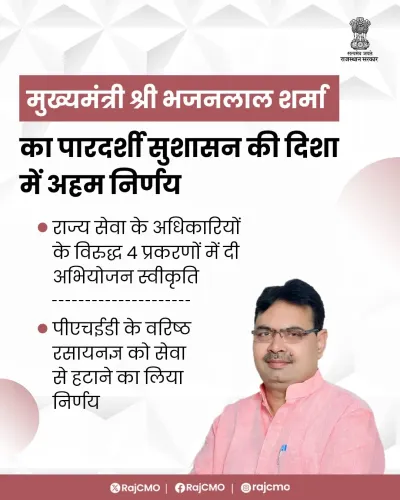
The Rajasthan government under CM Bhajanlal Sharma has dismissed a medical officer convicted of dowry harassment under IPC Sections 498-A and 406, permanently cut a retired veterinary officer's pension by 20 per cent, and withheld increments of two serving officers — all under its declared zero-tolerance policy on corruption and misconduct.
Key Takeaways
The Chief Minister's Office of Rajasthan announced the actions on 15 July 2026 under CM Bhajanlal Sharma .
A medical officer convicted under IPC Sections 498-A and 406 (dowry harassment and criminal breach of trust) has been dismissed from state service.
Annual salary increments of two serving officers have been withheld under Rule 16 of the Rajasthan Civil Services (Classification, Control and Appeal) Rules, 1958 .
A retired veterinary officer's pension has been permanently reduced by 20 per cent .
Prosecution sanctions and further departmental and disciplinary proceedings have been approved in additional cases.
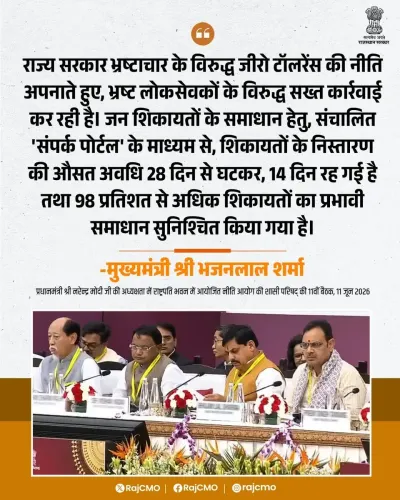
The actions are framed under the Bhajanlal Sharma government's stated zero-tolerance policy on corruption and misconduct in state administration.
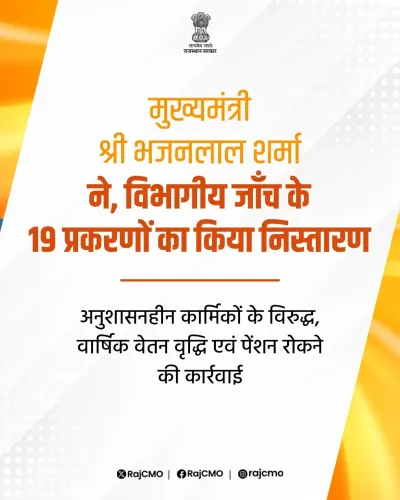
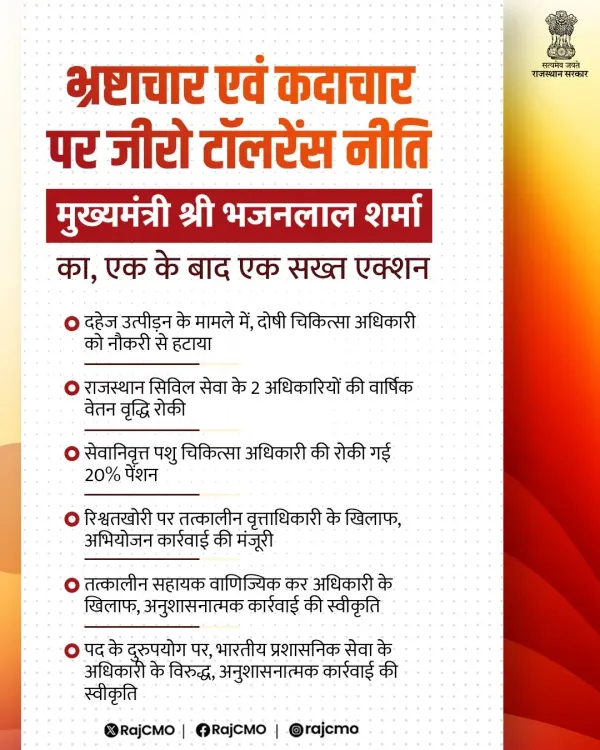
The Chief Minister's Office of Rajasthan announced on Wednesday, 15 July 2026, that the state government under Chief Minister Bhajanlal Sharma has dismissed a medical officer from government service following a criminal conviction in a dowry harassment case, as part of its stated zero-tolerance policy against corruption and misconduct.
The CMO's post stated — 'भ्रष्टाचार एवं कदाचार के खिलाफ जीरो टॉलरेंस की नीति' ('zero-tolerance policy against corruption and misconduct') — that the dismissed medical officer was found guilty under Section 498-A (cruelty by husband or his relatives) and Section 406 (criminal breach of trust) of the Indian Penal Code. Upon conviction, the government ordered the officer's dismissal from state service.
Context
Beyond the dismissal, the CMO announced a series of concurrent disciplinary actions. Under Rule 16 of the Rajasthan Civil Services (Classification, Control and Appeal) Rules, 1958, the Chief Minister approved the withholding of annual salary increments for serving officers in two separate cases. In a third order, the government permanently withheld 20 per cent of the pension of a retired veterinary officer. Sanctions for prosecution and further departmental and disciplinary proceedings were also approved in additional cases.Policy Backdrop
The Bhajanlal Sharma government, which took office in December 2023 after the BJP's victory in the Rajasthan assembly elections, has consistently cited zero-tolerance on corruption as a central administrative commitment. The Rajasthan Civil Services Rules of 1958 provide the statutory backbone for such actions, empowering the government to impose penalties ranging from increment stoppages and pension cuts to outright dismissal — independent of, and in addition to, criminal proceedings in courts. The convergence of a court conviction under IPC sections 498-A and 406 with a simultaneous departmental dismissal reflects a dual-track accountability mechanism that state governments across India have periodically employed. Dowry harassment convictions leading to service termination carry particular symbolic weight, as they signal to public servants that criminal conduct in personal life can also end a government career. The inclusion of a retired officer's pension cut further extends the accountability net beyond active service.Stakeholders and Impact
The immediate impact falls on the dismissed medical officer, the two serving officers facing increment freezes, and the retired veterinary officer whose pension has been permanently reduced by a fifth. More broadly, the orders send a signal to Rajasthan's civil service that departmental consequences will follow criminal convictions without a separate waiting period. Civil society groups working on dowry harassment and women's rights are likely to view the dismissal as a positive precedent, while government employee unions may scrutinise the procedural basis of concurrent penalties.What's Next
The CMO's post references prosecution sanctions and further departmental proceedings that remain pending, suggesting additional orders are expected. Observers will watch whether the Rajasthan vigilance department or the CMO issues follow-up notifications naming further officers or expanding the scope of the current drive. The pattern of announcements — bundling multiple cases into a single communication — indicates the government intends to sustain public visibility of its anti-corruption messaging heading into the second half of its term.Point of View
The CMO signals that accountability does not end at retirement, a message that goes beyond routine disciplinary action. The timing, midway through the BJP government's first term, suggests the zero-tolerance narrative is being actively refreshed as a political differentiator ahead of the second half of the tenure. The inclusion of dowry harassment specifically adds a gender-accountability dimension that broadens the political appeal of the crackdown beyond conventional anti-corruption optics.
NationPress
13 Oct 2026
Frequently Asked Questions
Why was the Rajasthan medical officer dismissed from government service?
The medical officer was dismissed because a court convicted him under IPC Section 498-A (dowry harassment) and Section 406 (criminal breach of trust). The Rajasthan government exercised its power under civil service rules to terminate his employment following the criminal conviction.
What is IPC Section 498-A and why does it apply to government employees?
IPC Section 498-A criminalises cruelty by a husband or his relatives against a woman, commonly invoked in dowry harassment cases. For government employees, a conviction under this section can trigger parallel departmental action — including dismissal — independent of the criminal sentence.
What are the Rajasthan Civil Services (Classification, Control and Appeal) Rules, 1958?
These are statutory rules that govern service conditions, disciplinary authority, and penalties for Rajasthan government employees. Rule 16 , invoked in these cases, allows the government to withhold salary increments and impose other penalties on serving and retired officials.
Can a retired government employee's pension be cut in Rajasthan?
Yes. Under the Rajasthan Civil Services Rules, the government can permanently reduce the pension of a retired official found guilty of misconduct. In this instance, a retired veterinary officer's pension has been cut by 20 per cent permanently .
What is CM Bhajanlal Sharma's zero-tolerance policy on corruption?
Since assuming office in December 2023 , Chief Minister Bhajanlal Sharma has publicly committed his government to a zero-tolerance stance on corruption, bribery, dowry harassment, and abuse of office — backing the policy with dismissals, increment freezes, pension cuts, and prosecution sanctions against errant officials.