CM Bhajanlal Sharma Signs Yamuna Water MoU with Haryana
Synopsis
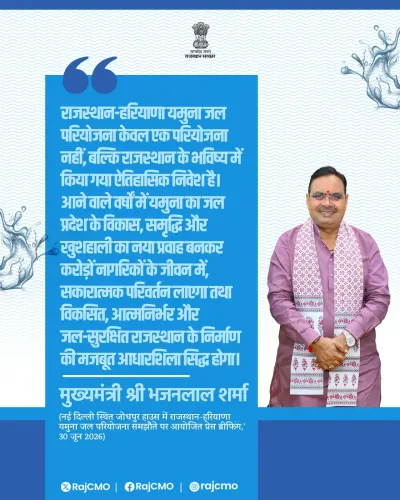
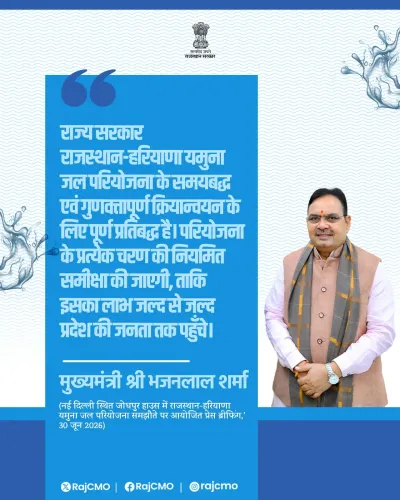
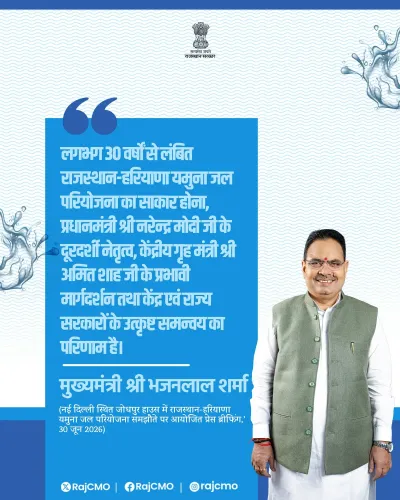
Chief Minister Bhajanlal Sharma announced at the Rajasthan Water Conclave 2026 that Rajasthan has signed an MoU with Haryana for Yamuna river water access — a significant step toward addressing the water-scarce state's long-standing surface water deficit.
Key Takeaways
CM Bhajanlal Sharma announced the Yamuna water MoU at the Rajasthan Water Conclave 2026 on 24 July 2026 .
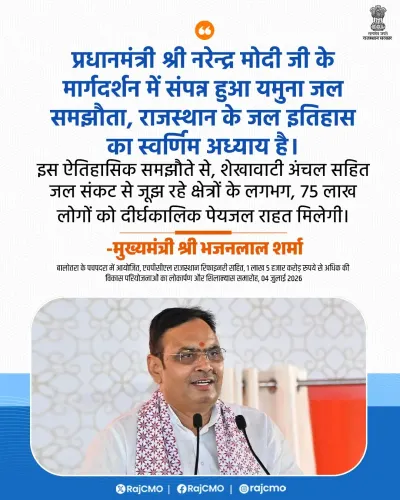
The MoU was signed between Rajasthan and Haryana for sharing Yamuna river water with Rajasthan.
The agreement builds on the foundational 1994 MoU among Yamuna basin states including Rajasthan, Haryana, UP and Delhi.
Eastern and northeastern Rajasthan districts — including Alwar and Bharatpur — are the primary potential beneficiaries.
Specific water allocation volumes, infrastructure timelines and the central government's role remain to be detailed.
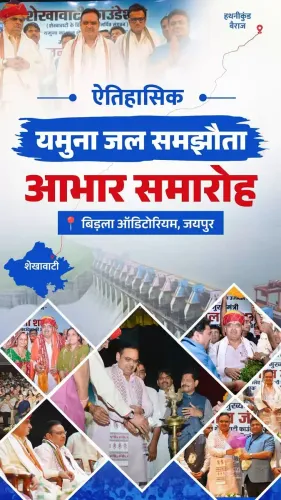
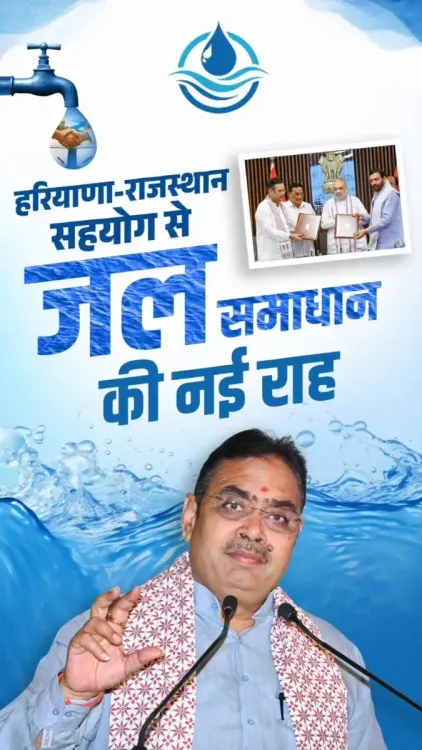
Chief Minister Bhajanlal Sharma of Rajasthan announced on Friday, 24 July 2026 that his government has signed a Memorandum of Understanding with Haryana for sharing Yamuna river water with Rajasthan, a development he disclosed while addressing the inaugural ceremony of the Rajasthan Water Conclave 2026.
What Was Announced
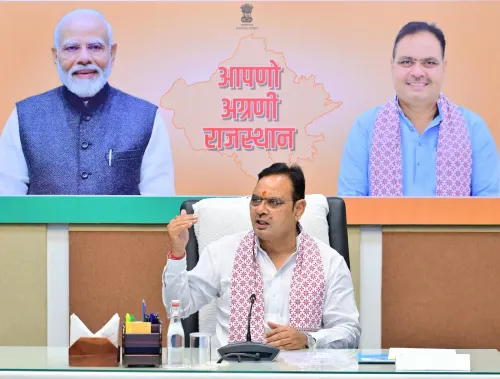
Speaking at the conclave, CM Sharma stated — 'यमुना जल समझौते के लिए एमओयू किया गया' ('an MoU has been signed for a Yamuna water agreement') — with the Chief Minister of Haryana. He described the agreement as a significant initiative in the direction of making Yamuna water available to Rajasthan. The announcement was made under the campaign theme #आपणो_अग्रणी_राजस्थान ('Our Leading Rajasthan').
Context
Rajasthan is one of India's most water-scarce states, heavily dependent on the Indus basin waters through the Indira Gandhi Canal and on groundwater that is rapidly depleting in several districts. Access to Yamuna flows has long been a policy aspiration for the state, given that its eastern districts fall within or adjacent to the Yamuna basin.
The foundational framework for Yamuna water sharing dates to the 1994 MoU signed among basin states — Rajasthan, Haryana, Uttar Pradesh and Delhi — which established initial allocation principles. The 2026 bilateral agreement between Rajasthan and Haryana appears to build on that legacy framework to operationalise actual water transfer.
Policy Backdrop
Inter-state river water negotiations in India operate under the constitutional framework of cooperative federalism, with the central government often playing a facilitative role. The Rajasthan Water Conclave 2026 signals the state government's intent to position water security as a flagship governance priority. Such conclaves typically bring together engineers, administrators, and policymakers to chart medium- and long-term water management strategies.
For Rajasthan, any additional surface water source reduces pressure on over-exploited aquifers, particularly in Jaipur, Alwar, Bharatpur and other eastern districts where Yamuna-linked canals are geographically feasible. Farmers in these regions stand to benefit most directly from expanded irrigation availability.
Stakeholders and Impact
The primary beneficiaries of a functional Yamuna water agreement would be Rajasthan's farming communities in water-stressed eastern and northeastern districts, as well as urban populations dependent on surface water for drinking needs. Haryana, as the upstream riparian state, holds significant leverage over the volume and timing of water releases, making the bilateral relationship central to implementation.
The MoU represents a political commitment; translating it into actual water delivery will require infrastructure investment — including canals, lift schemes, and distribution networks — and a clear operational protocol agreed upon by both state governments.
What's Next
Key details that will determine the agreement's real-world impact include the quantum of water allocated to Rajasthan, the construction timeline for any new conveyance infrastructure, and whether the central government will provide financial or technical support. The Rajasthan Water Conclave 2026 is expected to produce a broader action plan for the state's water future, with the Yamuna MoU serving as a headline deliverable.
Point of View
Which has made water security a central plank of its governance agenda in a state where groundwater depletion is an accelerating crisis. Hosting the Rajasthan Water Conclave 2026 and using it as a platform to unveil a bilateral agreement with a BJP-governed neighbour reflects a deliberate effort to demonstrate inter-state coordination under the ruling party's broader cooperative federalism narrative. However, MoUs in Indian inter-state water politics have a long history of remaining aspirational — the distance between a signed agreement and actual water flowing through canals is measured in years of infrastructure work and negotiation. The real test of this initiative will be the operational details and budget commitments that follow.
NationPress
23 Oct 2026
Frequently Asked Questions
What is the Rajasthan Yamuna water MoU about?
The MoU is a bilateral agreement between Rajasthan and Haryana to facilitate the supply of Yamuna river water to Rajasthan, announced by Chief Minister Bhajanlal Sharma at the Rajasthan Water Conclave 2026 on 24 July 2026.
Who signed the Yamuna water agreement with Rajasthan?
The agreement was signed between Rajasthan, represented by Chief Minister Bhajanlal Sharma, and the state of Haryana. The specific Haryana signatory has not been officially confirmed in available records.
What is the Rajasthan Water Conclave 2026?
The Rajasthan Water Conclave 2026 is a state-level policy event focused on water management and security, where CM Bhajanlal Sharma made the announcement about the Yamuna water MoU with Haryana.
How will the Yamuna water MoU benefit Rajasthan farmers?
Farmers in Rajasthan's eastern and northeastern districts — such as Alwar and Bharatpur — stand to benefit most, as Yamuna-linked canals are geographically feasible there and additional surface water would reduce dependence on depleting groundwater.
Is there a history of Rajasthan seeking Yamuna water?
Yes. A 1994 MoU among Yamuna basin states — Rajasthan, Haryana, Uttar Pradesh and Delhi — established an initial water-sharing framework. The 2026 bilateral MoU with Haryana is a further step toward operationalising Yamuna water access for Rajasthan.