Rajnath Singh, CM Fadnavis Launch Missile Complex & Suryastra in Shirdi
Synopsis
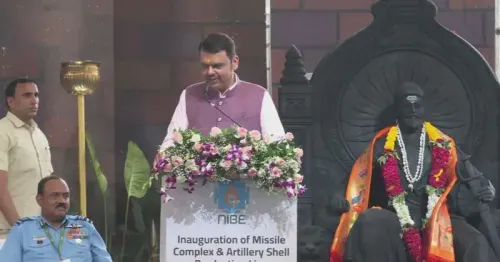
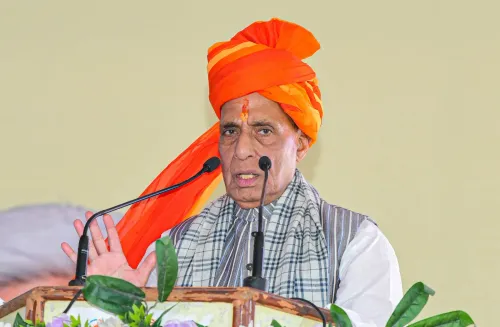
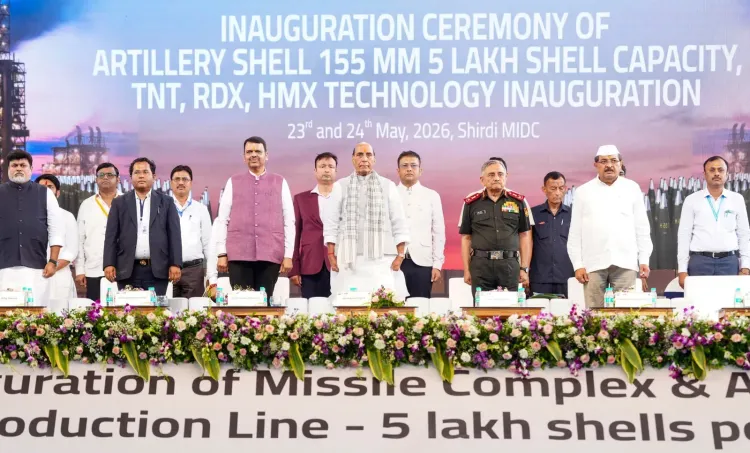
Union Minister Rajnath Singh and Maharashtra CM Devendra Fadnavis inaugurated NIBE Group's Missile Complex and Artillery Shell Production Line in Shirdi on 23 May 2026, flagging off India's first 300-km Universal Rocket Launching System 'Suryastra' and launching domestic military-grade explosive production capacity.
Key Takeaways
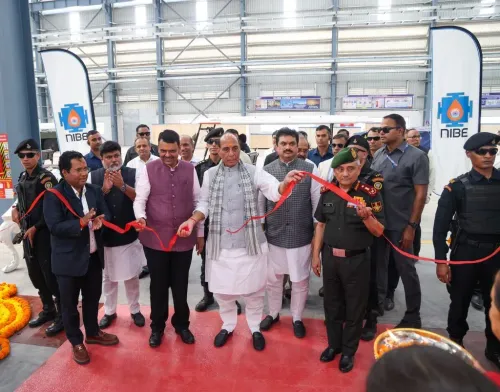
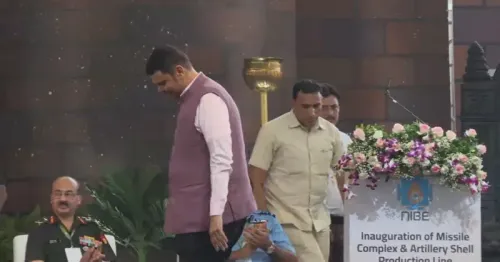
Rajnath Singh and CM Devendra Fadnavis jointly inaugurated the NIBE Group Missile Complex and Artillery Shell Production Line at Shirdi, Ahilyanagar on 23 May 2026 .
India's first 300-km Universal Rocket Launching System 'Suryastra' was flagged off at the ceremony.
Military-grade explosive production — TNT, RDX, and HMX — was inaugurated at the facility, marking a significant private-sector entry into controlled energetic materials.
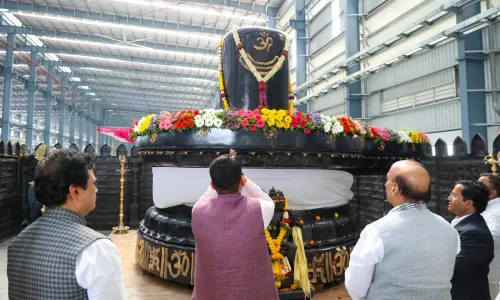
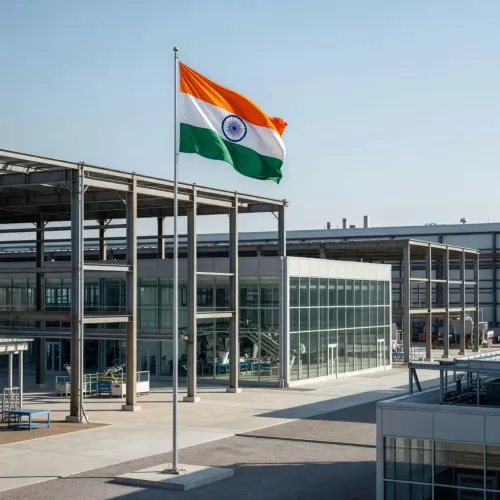
The GFL Shed and the main gate of NIBE Group's Defence Manufacturing Complex were also inaugurated with stone plaque unveilings.
Chief of Defence Staff General Anil Chauhan attended, underscoring the armed forces' direct interest in the new facilities.
The launches align with India's Atmanirbhar Bharat initiative and the Defence Production and Export Promotion Policy 2020 .
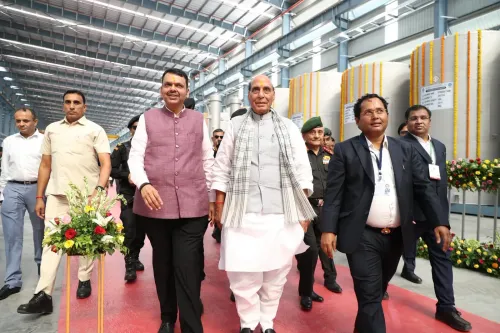
The Chief Minister's Office of Maharashtra announced on 23 May 2026 that Union Minister of Defence Rajnath Singh and Chief Minister Devendra Fadnavis jointly inaugurated a Missile Complex and Artillery Shell Production Line at Shirdi, Ahilyanagar, marking one of the most significant private-sector defence manufacturing launches in the state's history. The ceremony included multiple project inaugurations and flag-off events at the NIBE Group's Defence Manufacturing Complex.
What Was Inaugurated
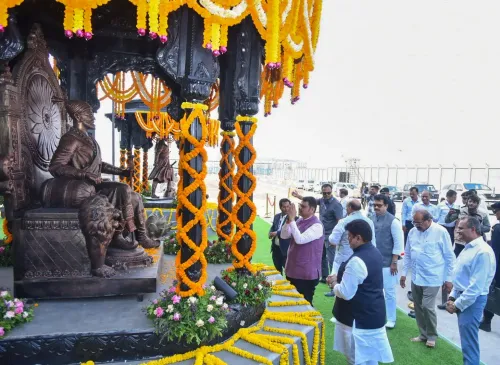
The event saw four major milestones. The main gate of NIBE Group's Defence Manufacturing Complex was inaugurated with a stone plaque unveiling, followed by the inauguration and stone plaque unveiling of the GFL Shed. Most notably, the flag-off ceremony was held for India's first 300-km Universal Rocket Launching System, named 'Suryastra' — a milestone presented as a leap in indigenous long-range strike capability. The event also saw the inauguration of military-grade explosive production capacity, specifically TNT, RDX, and HMX, materials critical to artillery shells, missiles, and demolition munitions.
Context
The inaugurations took place within the framework of India's Atmanirbhar Bharat initiative, launched in 2020, which set out to reduce the country's dependence on defence imports and build a robust domestic manufacturing ecosystem. The Defence Production and Export Promotion Policy (DPEPP) 2020 complemented this by setting ambitious targets for domestic defence output and encouraging private-sector firms to enter segments historically dominated by public-sector undertakings.
Maharashtra has positioned itself as a key node in this ecosystem, developing dedicated defence manufacturing clusters. The NIBE Group's complex at Shirdi represents one of the more advanced private-sector investments in this space, spanning missiles, artillery shells, and high-energy explosives — segments that were, until recently, the near-exclusive domain of government-owned ordnance factories.
Policy Backdrop
India's shift toward public-private partnerships in defence has accelerated over the past several years. The government has progressively opened categories such as missiles, ammunition, and explosives to licensed private manufacturers, with the Ministry of Defence issuing production licences and setting indigenisation targets. The presence of Chief of Defence Staff General Anil Chauhan at the Shirdi event signals the armed forces' direct stake in ensuring that new private facilities meet operational requirements and quality standards.
The production of military-grade TNT, RDX, and HMX by a private entity is particularly significant: these are controlled energetic materials that form the warhead and propellant basis of much of India's artillery and missile inventory. Domestic production capacity reduces both import bills and supply-chain vulnerabilities in conflict scenarios.
Stakeholders and Impact
Legislative Council Chairman Prof Ram Shinde, Ministers Radhakrishna Vikhe Patil and Uday Samant, CDS General Anil Chauhan, and NIBE Group Chairman and MD Ganesh Nibe were among the dignitaries present. For Maharashtra, the complex promises industrial employment and positions Ahilyanagar district as a hub for high-technology defence production. For the armed forces, it offers a domestic, proximate source for critical munitions components. For the broader defence industry, it sets a precedent for private firms entering the energetic-materials segment.
What's Next
Attention will now turn to the production ramp-up timelines at the new TNT, RDX, and HMX lines and the operational induction pathway for the Suryastra rocket launching system. Any follow-on orders from the Ministry of Defence or export clearances under India's expanding defence export programme will be closely watched. The Shirdi complex could serve as a template for similar private-sector defence manufacturing investments in other states competing to attract this segment of industry.
Point of View
Directly relevant to current strategic requirements. The presence of the Chief of Defence Staff alongside a Union Cabinet minister and a Chief Minister signals an unusually high level of political and military alignment behind this particular investment. For Maharashtra, the event reinforces the state's bid to become a leading destination for high-technology defence clusters, intensifying competition with Uttar Pradesh's defence corridor for future private investment.
NationPress
6 Oct 2026
Frequently Asked Questions
What is Suryastra and why is it significant?
Suryastra is described as India's first 300-km Universal Rocket Launching System, flagged off at the NIBE Group complex in Shirdi on 23 May 2026. A domestically produced system of this range would significantly extend India's stand-off strike capability using indigenously manufactured hardware.
What is the NIBE Group's Defence Manufacturing Complex?
The NIBE Group's Defence Manufacturing Complex at Shirdi, Ahilyanagar is a private-sector facility producing missiles, artillery shells, and military-grade explosives. It was inaugurated by Union Minister Rajnath Singh and Maharashtra CM Devendra Fadnavis on 23 May 2026.
What military-grade explosives will be produced at the Shirdi complex?
The facility has inaugurated the capability to produce military-grade TNT, RDX, and HMX — energetic materials used in artillery shells, missile warheads, and demolition munitions. This marks a significant expansion of private-sector involvement in India's controlled explosives supply chain.
Who attended the NIBE Group defence complex inauguration in Shirdi?
The event was attended by Union Minister Rajnath Singh, CM Devendra Fadnavis, Legislative Council Chairman Prof Ram Shinde, Ministers Radhakrishna Vikhe Patil and Uday Samant, Chief of Defence Staff General Anil Chauhan, and NIBE Group Chairman and MD Ganesh Nibe.
How does this event relate to Atmanirbhar Bharat?
The Atmanirbhar Bharat initiative, launched in 2020, aims to reduce India's defence import dependence by building domestic manufacturing capacity. The NIBE Group complex at Shirdi is a direct outcome of policies under this initiative that opened missiles, ammunition, and explosives production to licensed private firms.