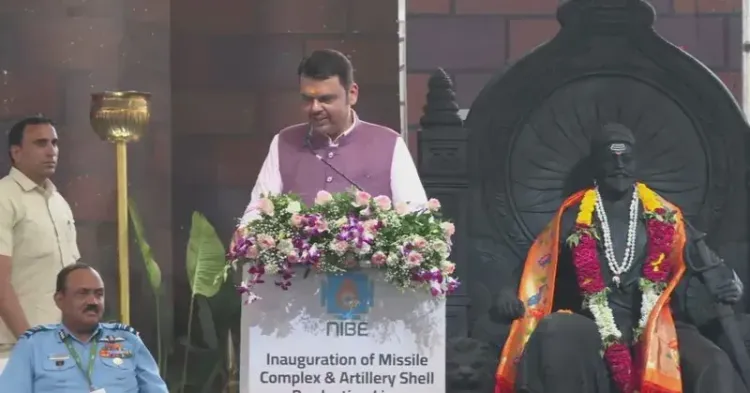
Rajnath Singh, CM Fadnavis inaugurate missile complex & shell line at Shirdi
Synopsis
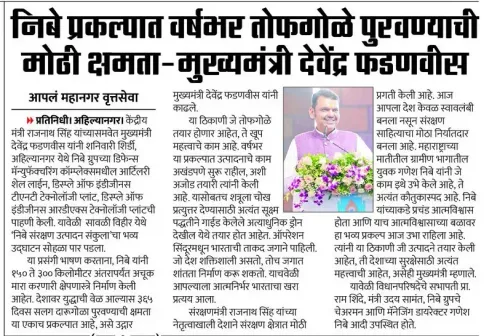
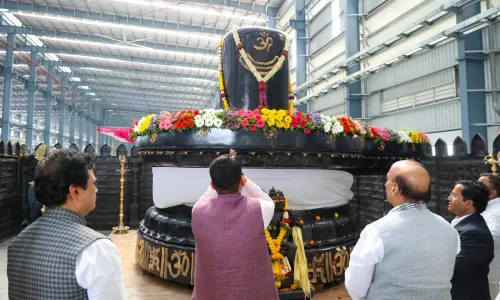
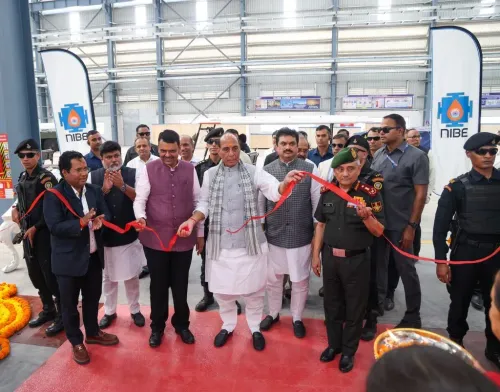
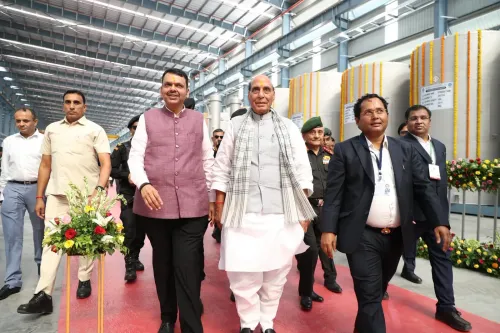
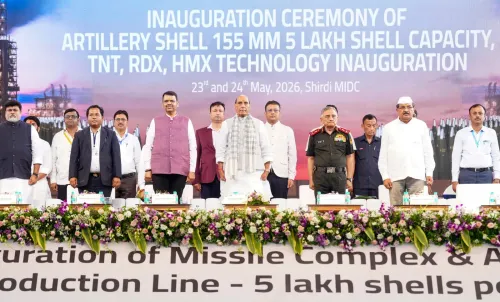
Union Defence Minister Rajnath Singh and Maharashtra Chief Minister Devendra Fadnavis on 23 May 2026 inaugurated a Missile Complex and Artillery Shell Production Line at Nibe Group's Shirdi facility, adding domestic capacity of 5 lakh shells annually under India's Atmanirbhar Bharat defence push.
Key Takeaways
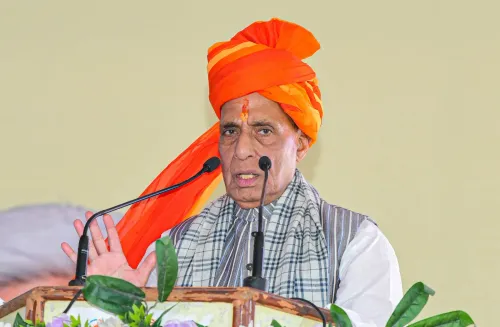
Union Defence Minister Rajnath Singh and Maharashtra CM Devendra Fadnavis jointly inaugurated the complex on 23 May 2026 .
The new Artillery Shell Production Line at Shirdi is designed to produce 5 lakh shells per annum .
A Missile Complex was also inaugurated alongside the shell production facility at the Nibe Group plant.
The project aligns with India's Atmanirbhar Bharat Abhiyan and the Defence Production and Export Promotion Policy 2020 .
Maharashtra's state-level defence incentive framework has been instrumental in attracting private-sector defence manufacturing investments.
The facility reduces Indian Armed Forces' dependence on imported artillery ammunition, a strategic vulnerability exposed by recent global supply disruptions.
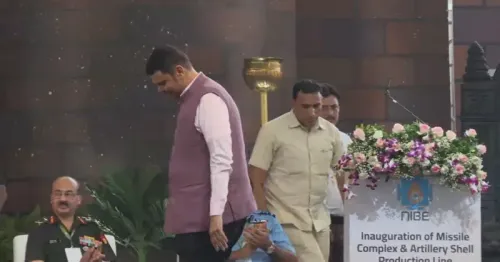
The Chief Minister's Office of Maharashtra announced on Saturday, 23 May 2026 that Union Defence Minister Rajnath Singh and Chief Minister Devendra Fadnavis jointly inaugurated a Missile Complex and an Artillery Shell Production Line at a facility of the Nibe Group in Shirdi, Maharashtra, with the production line designed to manufacture 5 lakh artillery shells per annum.
Context
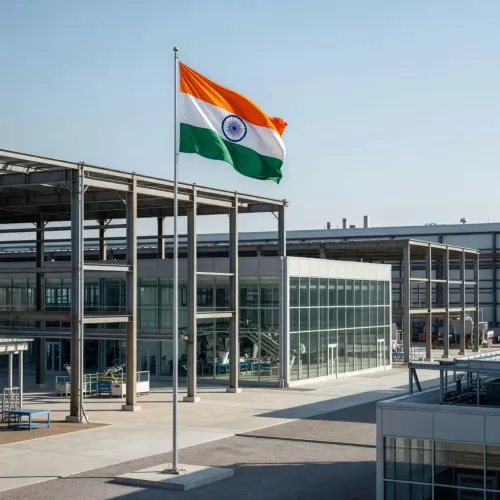
The inauguration marks a significant milestone in India's push to build domestic capacity for critical ammunition and missile systems. Shirdi, located in Ahmednagar district, has emerged as a site for private-sector defence infrastructure under Maharashtra's broader industrial policy. The Nibe Group, an Indian company active in defence and aerospace component manufacturing, is the host entity for this new complex.
The event was live-streamed, with the Chief Minister's Office sharing the broadcast directly on social media, signalling the political and strategic importance attached to the inauguration.
Policy Backdrop
The facility is a direct product of India's Atmanirbhar Bharat Abhiyan, launched in 2020, which set out to reduce the country's dependence on imported defence equipment and ammunition. The Defence Production and Export Promotion Policy 2020 established targets for indigenous manufacturing of missiles and artillery shells, while successive Positive Indigenisation Lists issued from 2021 onward banned imports of specified categories of ammunition to compel domestic sourcing.
Maharashtra has positioned itself as a preferred destination for such investments through a state-level defence policy framework dating to 2018, offering incentives to private firms setting up ammunition and missile production units. The Nibe Group's Shirdi complex is among the most visible outcomes of that framework.
The Ministry of Defence, under Rajnath Singh since 2019, has consistently expanded private-sector participation in defence production, viewing it as essential to achieving strategic autonomy. Artillery shell production capacity has been a particular focus after global supply disruptions exposed vulnerabilities in import-dependent munitions pipelines.
Stakeholders and Impact
The Indian Armed Forces stand to benefit most directly, with a domestic source for 5 lakh artillery shells per year reducing reliance on foreign suppliers for a high-consumption category of munitions. For Maharashtra's manufacturing sector, the complex represents an addition to the state's growing defence industrial base, creating skilled employment and supply-chain linkages.
Private defence firms across India are watching the Nibe Group's model closely, as it demonstrates the viability of end-to-end missile and ammunition production outside the traditional public-sector ordnance factory network. The inauguration by two senior political figures — a Union Cabinet minister and a sitting Chief Minister — underscores the centre-state alignment that has made such projects possible.
What's Next
The commissioning of the production line will now move into a ramp-up phase to reach its stated annual capacity. Further state-level memoranda of understanding for defence manufacturing clusters in Maharashtra are expected as the state looks to consolidate its position in the sector. At the national level, updates to indigenisation targets in the annual defence budget and any expansion of the Positive Indigenisation List will determine the pace at which facilities like this one scale their output.
With India's defence export ambitions also growing, a facility producing both missiles and artillery shells at scale could eventually look beyond domestic supply to international markets — a trajectory the government has explicitly encouraged under its export promotion policy.
Point of View
The event reinforces Maharashtra's claim as the leading state for defence industrialisation, a competitive space where Uttar Pradesh's defence corridor has been the dominant narrative. If the 5-lakh-shell annual target is met on schedule, it will strengthen the case for expanding the Positive Indigenisation List further — and for routing more defence capital expenditure toward private-sector facilities.
NationPress
6 Oct 2026
Frequently Asked Questions
What was inaugurated at Shirdi on 23 May 2026?
A Missile Complex and an Artillery Shell Production Line with a capacity of 5 lakh shells per annum were inaugurated at the Nibe Group's facility in Shirdi, Maharashtra, by Union Defence Minister Rajnath Singh and Chief Minister Devendra Fadnavis.
Who is the Nibe Group?
The Nibe Group is an Indian private-sector company engaged in defence and aerospace component manufacturing, with facilities in Maharashtra. Its Shirdi plant now hosts the newly inaugurated missile and artillery shell production infrastructure.
How does this facility relate to Atmanirbhar Bharat?
The facility is a direct outcome of the Atmanirbhar Bharat Abhiyan launched in 2020, which prioritised domestic defence production and private-sector participation to reduce India's dependence on imported ammunition and missile systems.
Why is artillery shell production strategically important for India?
Artillery shells are a high-consumption category of munitions. India's reliance on imports for such ammunition created supply vulnerabilities, particularly highlighted by global disruptions in recent years. A domestic line producing 5 lakh shells annually directly addresses that gap.
What role does Maharashtra play in India's defence manufacturing push?
Maharashtra has offered state-level incentives for private defence firms since 2018 and has attracted multiple ammunition and aerospace manufacturing investments. The Shirdi complex is among the most prominent examples of this policy bearing results.