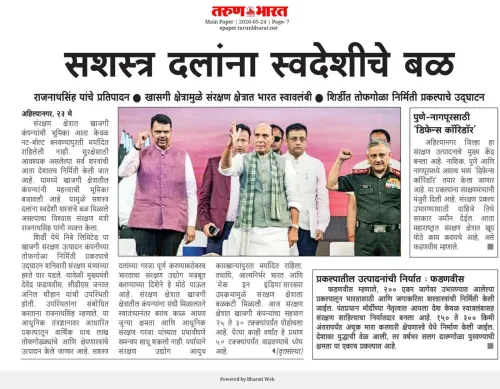
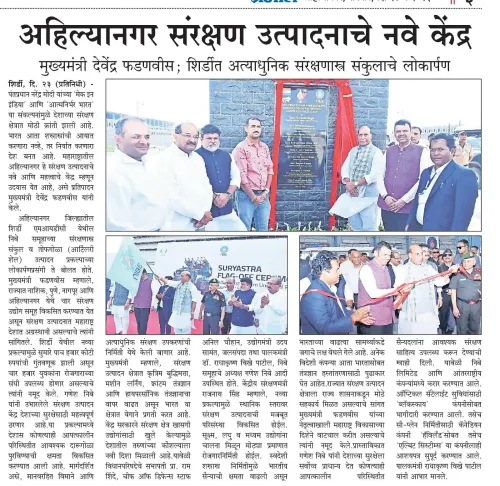
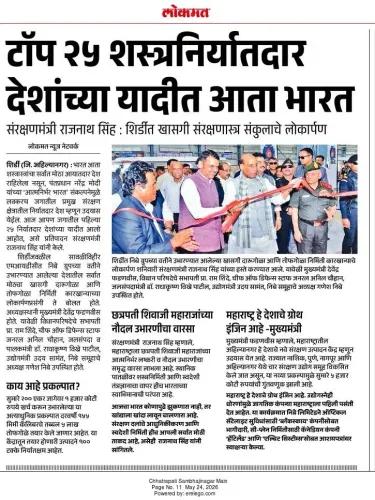
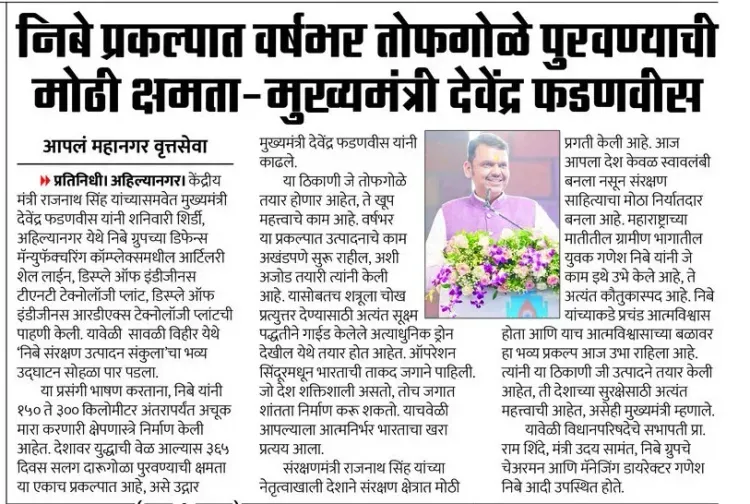
CM Fadnavis: Nibe Project Has Major Artillery Shell Supply Capacity
Synopsis
Chief Minister Devendra Fadnavis has stated that the Nibe Group project in Maharashtra possesses major capacity to supply artillery shells year-round, reflecting the state's alignment with India's Atmanirbhar Bharat defence manufacturing goals and its bid to become a key hub in the domestic ammunition supply chain.
Key Takeaways
CM Devendra Fadnavis publicly stated that the Nibe Group project has significant year-round artillery shell supply capacity.
The statement was shared by the official Chief Minister's Office of Maharashtra on 25 May 2026 .
The project aligns with India's Atmanirbhar Bharat Abhiyan (2020), which targets indigenous defence production to reduce import reliance.
Maharashtra's Defence and Aerospace Policy (updated 2023 ) provides the policy framework attracting private players like Nibe Group into defence manufacturing.
Potential follow-up developments include formal supply contracts with the Ministry of Defence and further capacity announcements in state industrial corridors.
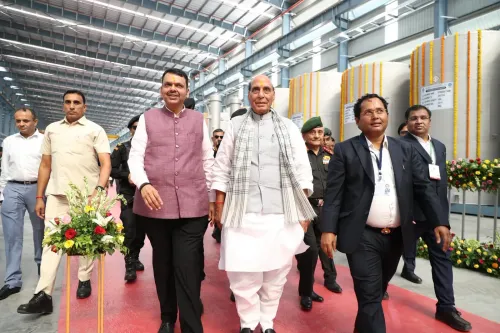
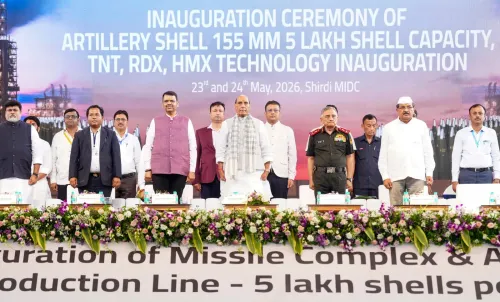
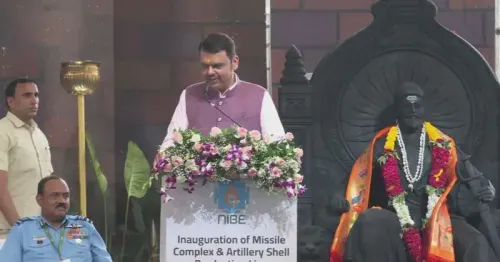
The Chief Minister's Office of Maharashtra on Sunday, 25 May 2026, shared a statement by Chief Minister Devendra Fadnavis highlighting that the Nibe Group project holds significant capacity to supply artillery shells throughout the year, underscoring Maharashtra's growing role in India's domestic defence manufacturing push.
Context
The post, shared by the official CMO Maharashtra handle, quotes CM Devendra Fadnavis as saying — 'निबे प्रकल्पात वर्षभर तोफगोळे पुरवण्याची मोठी क्षमता' — translated as: 'The Nibe project has major capacity to supply artillery shells throughout the year.' The remark signals state-level confidence in a private defence manufacturing facility's output potential for the Indian armed forces.
Artillery ammunition supply has been a persistent operational priority for India's military planners, particularly after sustained demand during regional security operations in the early 2020s exposed gaps in domestic production capacity.
Policy Backdrop
The statement aligns with the Atmanirbhar Bharat Abhiyan, launched in 2020, which set out to reduce India's dependence on imported defence equipment and ammunition by scaling up indigenous manufacturing. Artillery shells — among the highest-consumption munitions in any prolonged conflict scenario — have been a specific focus area for the Ministry of Defence.
Maharashtra's Defence and Aerospace Policy, updated in 2023, created a framework to attract private investment into manufacturing clusters, offering land, infrastructure support, and policy incentives aligned with central production targets. The Nibe Group project appears to be one such private-sector participant operating within this ecosystem.
Stakeholders and Impact
The primary beneficiary of expanded artillery shell production capacity is the Indian Army, which has long sought to build strategic ammunition reserves. Private manufacturers like the Nibe Group entering this space reduce the burden on public-sector ordnance factories and diversify the supply chain.
For Maharashtra, hosting a facility with year-round artillery ammunition output capability positions the state as a serious node in India's emerging defence industrial corridor. Local employment, ancillary industry development, and long-term supply contracts with the central government are among the potential downstream benefits.
What's Next
Analysts and industry observers will watch for formal supply agreements between the Nibe Group and the Ministry of Defence, as well as capacity utilisation disclosures or project commissioning milestones. CM Fadnavis flagging this project publicly may also precede a broader state investment or policy announcement tied to Maharashtra's defence manufacturing corridor.
As India accelerates its push toward self-reliance in critical munitions, statements like this from state leadership suggest that Maharashtra intends to position itself at the centre of that supply chain — not merely as a policy facilitator, but as a proven production hub.
Point of View
The CM is also making an implicit case for Maharashtra over competing states vying for defence corridor investments. The statement fits a broader pattern of BJP-governed states actively branding themselves as execution partners for central defence indigenisation policy, turning industrial announcements into political capital.
NationPress
9 Oct 2026
Frequently Asked Questions
What did CM Devendra Fadnavis say about the Nibe project?
CM Devendra Fadnavis stated that the Nibe Group project has major capacity to supply artillery shells throughout the year, highlighting its significance for India's domestic defence production.
What is the Nibe Group project in Maharashtra?
The Nibe Group project is a private-sector defence manufacturing initiative in Maharashtra focused on producing artillery ammunition, operating within the state's defence and aerospace policy framework.
How does Maharashtra support defence manufacturing?
Maharashtra updated its Defence and Aerospace Policy in 2023 to offer land, infrastructure, and policy incentives to private manufacturers, attracting investment in defence production clusters aligned with central government targets.
What is Atmanirbhar Bharat's role in artillery ammunition production?
Launched in 2020, the Atmanirbhar Bharat Abhiyan aims to reduce India's dependence on imported defence equipment. Artillery ammunition is a key focus, with private manufacturers being encouraged to fill supply gaps previously met through imports.
Will the Nibe Group supply artillery shells to the Indian Army?
CM Fadnavis's statement indicates significant production capacity exists, but formal supply contracts with the Ministry of Defence have not been publicly confirmed as of the date of this announcement.