CM Fadnavis Backs Nibe Group's Push for Indigenous Defence Supply
Synopsis
The Chief Minister's Office of Maharashtra publicly backed Nibe Group, a Pune-based defence electronics firm, with CM Devendra Fadnavis's endorsement spotlighting the state's role in supplying India's armed forces with indigenously produced systems under the Atmanirbhar Bharat framework.
Key Takeaways
The Chief Minister's Office of Maharashtra posted on 24 May 2026 backing Nibe Group 's role in indigenous defence supply to India's armed forces.
CM Devendra Fadnavis was directly tagged, indicating official state-level endorsement of the Pune-based defence electronics firm.
The post's Marathi caption translates to 'Empowering the armed forces with indigenous strength,' aligning with the Atmanirbhar Bharat framework launched in 2020 .
Nibe Group is headquartered in Pune, Maharashtra and produces defence electronics and systems for the Indian military.
Maharashtra has positioned itself as a private-sector defence manufacturing hub, competing with other states for indigenisation-linked investment and contracts.
Upcoming state industrial policy reviews and potential MoUs with defence firms will indicate how far the Fadnavis government plans to advance this agenda.
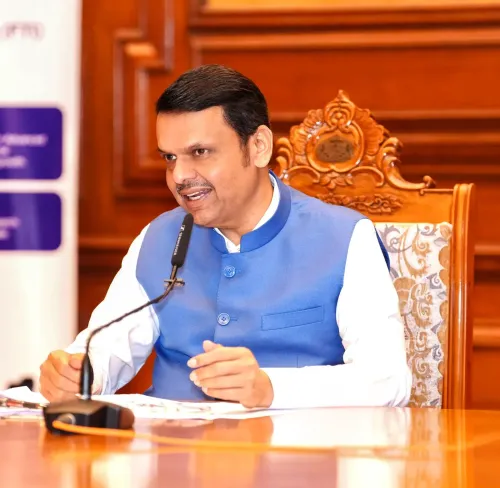
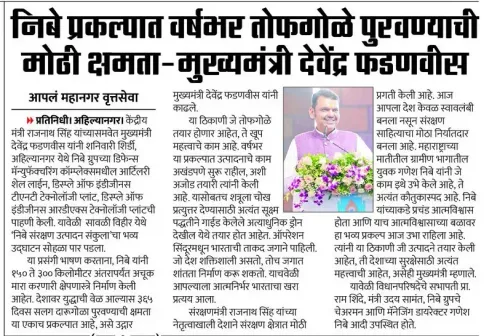
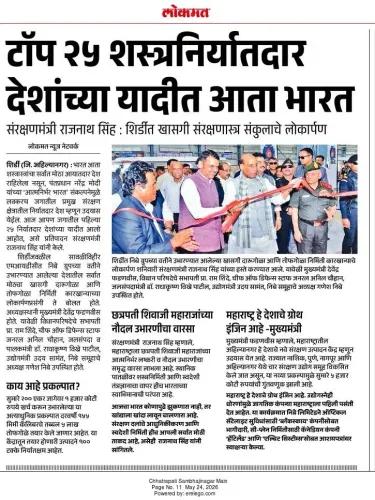
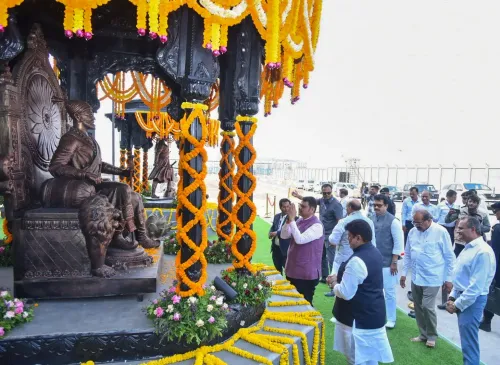
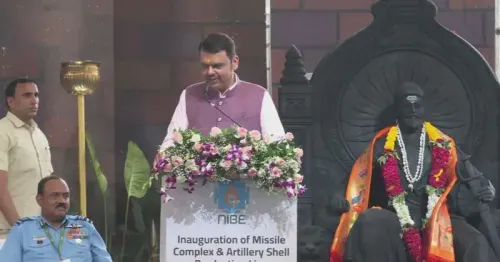
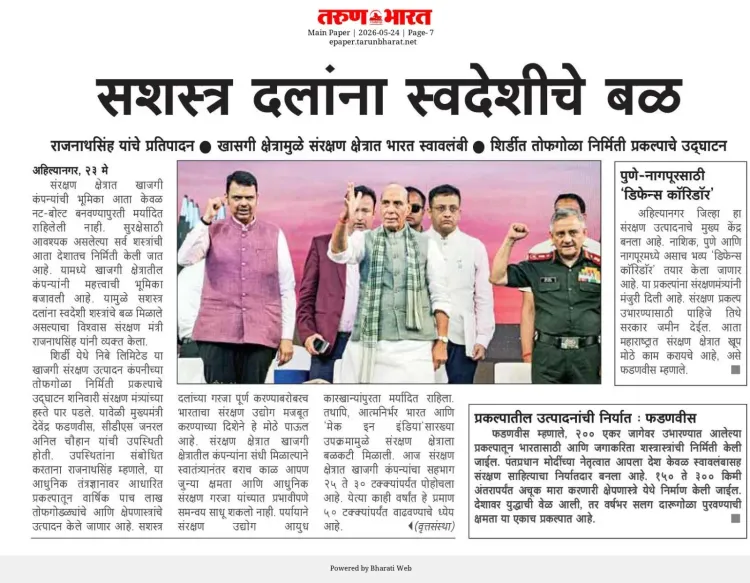
The Chief Minister's Office of Maharashtra on Sunday, 24 May 2026 posted in support of Chief Minister Devendra Fadnavis and Nibe Group, highlighting the Pune-based firm's contribution to equipping India's armed forces with domestically produced defence systems under the broader push for self-reliance.
Context
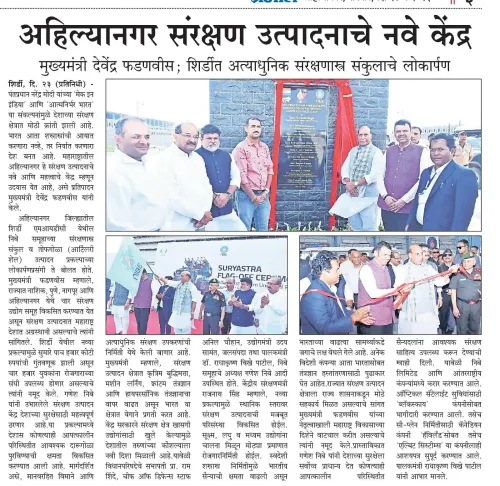
The post, captioned 'सशस्त्र दलांना स्वदेशीचे बळ' ('Empowering the armed forces with indigenous strength'), signals the Maharashtra government's alignment with national efforts to reduce defence import dependence. The message tags Devendra Fadnavis and carries hashtags for both Maharashtra and Nibe Group, indicating official state-level endorsement of the company's work.
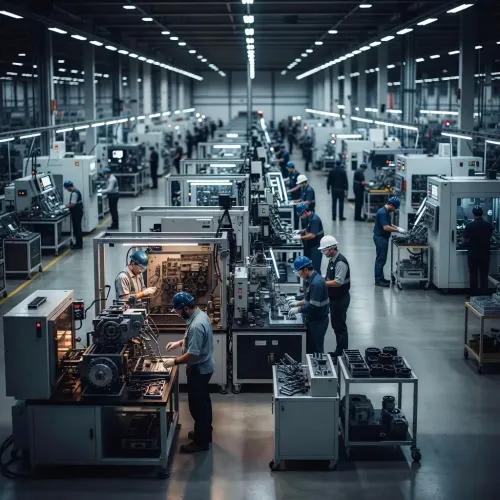
Nibe Group, headquartered in Pune, is engaged in defence electronics and systems manufacturing. Its work is positioned within India's broader indigenisation drive, which seeks to channel procurement spending toward domestic producers rather than foreign suppliers.
Policy Backdrop
The post connects directly to the Atmanirbhar Bharat initiative, announced in 2020, which placed indigenous defence production at the centre of India's strategic and economic policy. Under this framework, the central government has issued successive positive indigenisation lists that restrict or phase out imports of specific defence items, compelling the armed forces to source them domestically.
Maharashtra has actively positioned itself as a manufacturing hub within this ecosystem, encouraging private-sector firms to participate in defence production and developing infrastructure aligned with defence corridor policy. Pune in particular has emerged as a node for defence electronics and systems integration, with companies like Nibe Group representing the private-sector face of this shift.
Stakeholders and Impact
The primary beneficiaries of expanded indigenous defence manufacturing are the Indian Army, Navy, and Air Force, which gain supply-chain resilience and reduced foreign-exchange outflows on equipment procurement. For Maharashtra, such industrial activity translates into employment, technology transfer, and increased share of national defence contracts flowing to the state.
Private defence manufacturers like Nibe Group stand to gain from long-term procurement agreements as the armed forces deepen their reliance on domestic suppliers. The state government's public backing amplifies visibility for such firms at a time when defence ministry procurement decisions increasingly favour indigenously certified products.
What's Next
Attention will now turn to whether this endorsement precedes a formal announcement — such as a new MoU, a state industrial policy update, or a defence procurement order — involving Nibe Group or other Maharashtra-based manufacturers. State-level defence production targets and upcoming industrial policy reviews will be key indicators of how far CM Fadnavis intends to push Maharashtra's role in the national defence manufacturing ecosystem.
As India continues raising the floor on indigenous content requirements in defence contracts, state governments that build credible private-sector clusters early are likely to gain a structural advantage in attracting future investment and orders.
Point of View
The state signals to investors and the defence ministry alike that Maharashtra is an active partner in the indigenisation drive, not merely a bystander. This fits a pattern where state governments compete to host defence manufacturing clusters as the central government tightens positive indigenisation lists. The move also carries electoral utility: association with national security and 'Make in India' is a durable political asset for any ruling dispensation.
NationPress
6 Oct 2026
Frequently Asked Questions
What did Maharashtra's CMO post about Nibe Group?
The Chief Minister's Office of Maharashtra posted on 24 May 2026 endorsing Nibe Group's contribution to supplying India's armed forces with indigenously manufactured defence systems, captioned 'Empowering the armed forces with indigenous strength' in Marathi.
What is Nibe Group and where is it based?
Nibe Group is a Pune-headquartered company engaged in defence electronics and systems production, aligned with India's national self-reliance goals under the Atmanirbhar Bharat initiative.
What is the Atmanirbhar Bharat initiative for defence?
Announced in 2020, Atmanirbhar Bharat promotes indigenous defence manufacturing and reduces India's dependence on foreign arms imports through positive indigenisation lists and offset policies.
How is Maharashtra involved in India's defence manufacturing push?
Maharashtra has developed defence manufacturing infrastructure and encouraged private firms to participate in production, with Pune emerging as a key hub for defence electronics and systems integration.
What could follow CM Fadnavis's endorsement of Nibe Group?
Analysts will watch for formal announcements such as MoUs, state industrial policy updates, or defence procurement orders involving Maharashtra-based manufacturers in upcoming policy reviews.