CM Fadnavis: Nagpur to be key defence production hub

Synopsis
The Maharashtra CMO's 19 June 2026 daily summary spotlights Union Defence Minister Rajnath Singh's call for self-reliance in defence preparedness and CM Devendra Fadnavis's assertion that Nagpur will emerge as a key defence production centre, reinforcing India's indigenisation drive.
Key Takeaways
The Chief Minister's Office of Maharashtra released its daily summary on Friday, 19 June 2026 , centred on defence self-reliance.
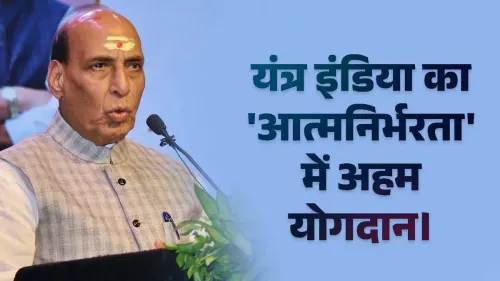
Union Defence Minister Rajnath Singh stated India is advancing towards self-reliance for future defence preparedness.
CM Devendra Fadnavis declared that Nagpur will emerge as an important centre in the defence production sector.
The statements align with India's broader Atmanirbhar Bharat and Make in India defence indigenisation policy frameworks active since 2014 and 2020 .
Nagpur 's central geographic location and expanding logistics infrastructure underpin its candidacy as a defence manufacturing node.
Concrete follow-through — project announcements, land allocation, or investment commitments — will determine whether the political signal converts to industrial action.
The Chief Minister's Office of Maharashtra on Friday, 19 June 2026, released its daily summary highlighting two significant statements on India's defence self-reliance — one from Union Defence Minister Rajnath Singh and another from Chief Minister Devendra Fadnavis — signalling a concerted push to position Nagpur as a major node in the country's indigenous defence manufacturing ecosystem.
Context
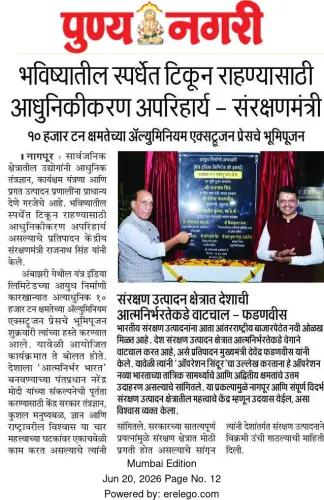
The day's summary, shared by the CMO's official handle, quoted Rajnath Singh as saying that India is 'moving towards self-reliance for the country's future defence preparedness' (भविष्यातील संरक्षण सज्जतेसाठी देशाची आत्मनिर्भरतेकडे वाटचाल). CM Fadnavis added that 'Nagpur will emerge as an important centre in the defence production sector' (नागपूर संरक्षण उत्पादन क्षेत्रातील महत्वाचे केंद्र म्हणून उदयास येईल). The statements were made on the same day, suggesting a coordinated messaging effort between the state government and the Union Ministry of Defence.
Policy Backdrop
India's drive for defence indigenisation has been a central policy thrust since 2014, anchored first by the Make in India programme and later deepened through the Atmanirbhar Bharat initiative launched in 2020. The government has progressively notified Positive Indigenisation Lists — starting in 2020 and expanded since — that prohibit the import of specified defence items, compelling domestic sourcing and production. Two dedicated Defence Industrial Corridors were announced in 2019 in Uttar Pradesh and Tamil Nadu to catalyse private and public sector investment in defence manufacturing.
Maharashtra has so far not hosted a formally designated defence industrial corridor, making the statements by Fadnavis and Singh notable for the attention they draw to Nagpur as a potential regional manufacturing hub. Nagpur, situated at the geographical centre of India, offers logistical advantages including proximity to major rail and road networks, and an expanding international airport, factors that make it attractive for defence supply chains.
Stakeholders and Impact
Domestic defence manufacturers — both public sector undertakings and private firms — stand to benefit if Nagpur receives targeted policy support, land allocation, or investment incentives. The Maharashtra workforce in Nagpur and the broader Vidarbha region, historically seeking industrial employment, could see new opportunities if defence production clusters take root. State industries associations and investors tracking the defence sector will closely watch whether these statements translate into concrete project announcements or budget allocations.
For the Union government, a stronger Maharashtra node would complement existing corridors in Uttar Pradesh and Tamil Nadu, broadening the geographic spread of India's defence industrial base and reducing concentration risk in the supply chain.
What's Next
The immediate focus will be on whether the Maharashtra government follows up with specific project announcements, land parcel designations, or single-window clearance frameworks for defence investors in Nagpur. Observers will also track whether Nagpur features in the next central defence production review or receives a formal mention in upcoming state budget documents. Any investment commitment from a major defence original equipment manufacturer or a memorandum of understanding signed at an industry conclave would mark the next concrete step in converting this political signalling into industrial reality.
Point of View
Championing Nagpur as a defence hub serves a dual purpose: it addresses the long-standing demand for industrial investment in the Vidarbha region and aligns the state government with a high-visibility central policy priority. The absence of a formal defence industrial corridor in Maharashtra, despite the existence of two such corridors since 2019, makes these statements politically significant as a lobbying signal to New Delhi. Whether this translates into budgetary or regulatory action will be the true test of intent.
NationPress
19 Sept 2026
Frequently Asked Questions
Why is Nagpur being considered a defence production hub?
Nagpur sits at the geographical centre of India with strong rail, road, and air connectivity, making it logistically suited for defence supply chains. CM Devendra Fadnavis has publicly stated that Nagpur will emerge as an important centre in the defence production sector, signalling state government intent to attract defence manufacturers to the city.
What is India's Atmanirbhar Bharat defence policy?
Atmanirbhar Bharat, launched in 2020, is India's self-reliance initiative that includes specific targets for domestic defence production. It builds on Make in India (2014) and includes Positive Indigenisation Lists that ban imports of specified defence items to compel domestic sourcing.
What did Rajnath Singh say about defence preparedness on 19 June 2026?
According to the Maharashtra CMO's daily summary dated 19 June 2026, Union Defence Minister Rajnath Singh stated that the country is moving towards self-reliance for future defence preparedness, reinforcing the central government's indigenisation agenda.
Does Maharashtra have a defence industrial corridor?
As of the research available, India's two formally designated Defence Industrial Corridors are in Uttar Pradesh and Tamil Nadu, announced in 2019. Maharashtra does not yet have a formally designated corridor, which makes CM Fadnavis's statements about Nagpur significant as a potential policy push.
What should we watch for after these defence statements from Maharashtra?
Key developments to watch include specific project announcements or land allocation for defence manufacturers in Nagpur, any memoranda of understanding signed at industry events, and references to Nagpur in upcoming state budgets or central defence production reviews.