Rajnath Singh Inaugurates NIBE Defence Complex in Shirdi
Synopsis
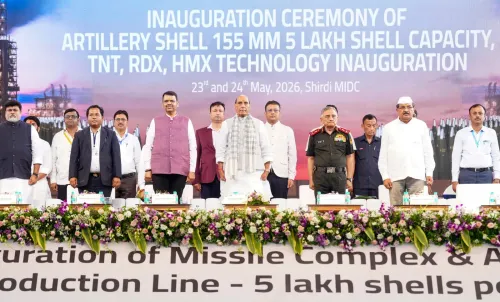
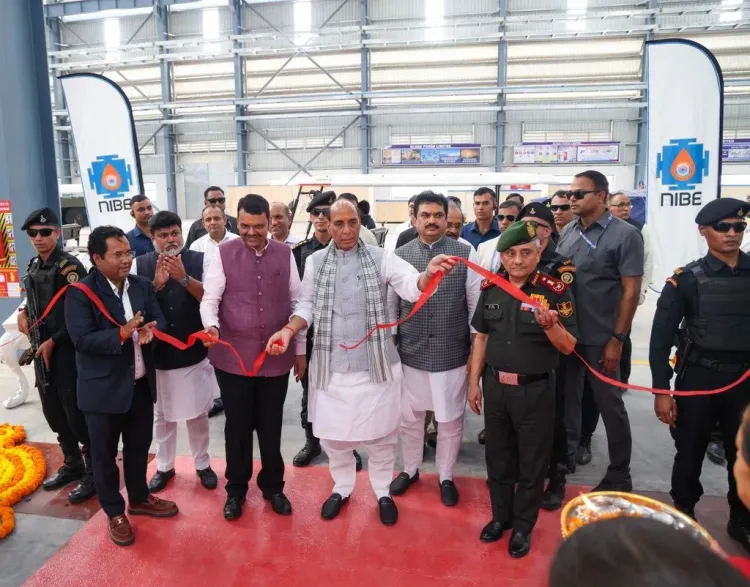
Union Defence Minister Rajnath Singh on 23 May 2026 inaugurated NIBE Group's private-sector defence complex at Shirdi, Maharashtra, set to produce artillery systems, missiles, rocket systems, energetic materials, and autonomous platforms — a milestone in India's push to become a global munitions hub.
Key Takeaways
Rajnath Singh inaugurated the NIBE Group defence manufacturing complex at Shirdi, Maharashtra on 23 May 2026 .
The complex will manufacture advanced artillery systems, missile and space technologies, rocket systems, energetic materials, and autonomous defence platforms.
The facility is a direct outcome of the Make in India initiative (launched 2014 ) and the Atmanirbhar Bharat Abhiyan (launched May 2020 ).
India has established dedicated Defence Industrial Corridors in Uttar Pradesh and Tamil Nadu since 2018–2019 to attract private defence investment.
The Ministry of Defence has issued successive positive indigenisation lists banning imports of identified defence items to drive domestic production.
The Minister called on all stakeholders to transform India into a 'global hub for munitions and automation.'
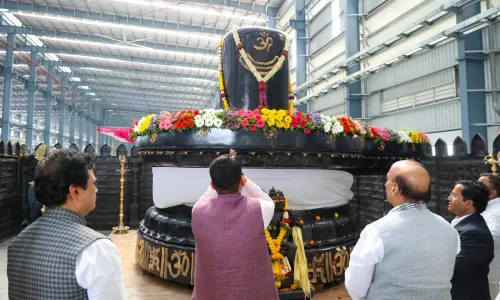
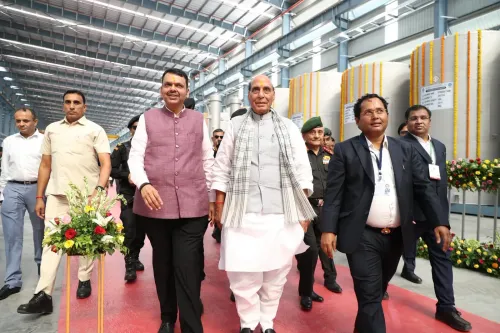
Union Defence Minister Rajnath Singh on Saturday, 23 May 2026, inaugurated a defence manufacturing complex of private-sector firm NIBE Group at Shirdi, Maharashtra, marking a significant addition to India's indigenously driven defence industrial base. The complex is designed to manufacture advanced artillery systems, missile and space technologies, rocket systems, energetic materials, and autonomous defence platforms.
Context
Speaking at the inauguration, Rajnath Singh underscored the growing capability of India's private sector in anticipating the demands of future warfare. He stated that India's private industries 'possess a deep understanding of the dynamics of future warfare and are working relentlessly to equip the country with state-of-the-art systems.' He called on all stakeholders to make 'concerted efforts towards transforming India into a global hub for munitions and automation.'
The NIBE Group complex at Shirdi spans a broad technology spectrum — from conventional artillery and rocket systems to energetic materials (propellants and explosives) and cutting-edge autonomous platforms — reflecting both the operational priorities of the Indian Armed Forces and global trends toward precision-guided and unmanned systems.
Policy Backdrop
The inauguration is firmly anchored in the Make in India initiative, launched in September 2014, which explicitly opened the defence sector to private participation. Successive indigenisation drives followed: dedicated Defence Industrial Corridors were announced for Uttar Pradesh and Tamil Nadu in 2018–2019, and the Atmanirbhar Bharat Abhiyan of May 2020 set firm targets for reducing defence imports.
The Ministry of Defence has since issued multiple positive indigenisation lists, progressively banning the import of identified defence items to compel domestic sourcing. The NIBE complex is a direct product of this policy architecture, representing private capital flowing into high-technology munitions and autonomous systems — segments historically dominated by public-sector ordnance factories.
Rajnath Singh reaffirmed the government's commitment, stating: 'We stand ready to take every necessary step to ensure that India emerges as a frontrunner in munitions and automated systems.'
Stakeholders and Impact
The primary beneficiaries are the Indian Armed Forces — Army, Navy, and Air Force — who require a reliable domestic supply chain for artillery ammunition, missiles, and autonomous platforms, reducing vulnerability to import disruptions. Private defence firms across the ecosystem stand to gain from the demonstration effect: a credible, operational private-sector complex signals to investors and technology partners that India's defence manufacturing ambitions are executable.
For Maharashtra, the Shirdi facility adds an industrial anchor in a region better known for pilgrimage tourism, potentially generating skilled employment in advanced manufacturing. The broader defence-industrial corridor strategy is also nudged forward each time a new private node becomes operational.
What's Next
Attention will now turn to the pace at which the NIBE Group complex moves from inauguration to active production, and whether it secures formal orders from the Ministry of Defence or the armed forces. The government's periodic updates on defence export figures and indigenisation targets — published in Ministry of Defence annual reports — will be the key metrics to watch. Analysts and industry observers will also track whether additional private-sector manufacturing nodes emerge in Maharashtra and other states, building on the momentum generated at Shirdi.
Point of View
Championing a complex that spans artillery, missiles, and autonomous systems in a single campus is a deliberate signal that India's private sector can now compete in high-complexity, multi-domain defence manufacturing. The longer-term test will be whether formal procurement orders follow inauguration at speed, or whether the complex joins a list of facilities that produce at sub-optimal capacity for want of defence contracts.
NationPress
6 Oct 2026
Frequently Asked Questions
What is the NIBE Group defence complex in Shirdi?
The NIBE Group defence complex at Shirdi, Maharashtra is a private-sector manufacturing facility inaugurated on 23 May 2026 by Union Defence Minister Rajnath Singh. It is designed to produce advanced artillery systems, missile and space technologies, rocket systems, energetic materials, and autonomous defence platforms.
Why did Rajnath Singh inaugurate a private defence factory?
Rajnath Singh inaugurated the NIBE Group complex as part of the government's Make in India and Atmanirbhar Bharat policies, which aim to reduce India's dependence on defence imports and build a robust domestic private-sector manufacturing base for critical military technologies.
What is India's Make in India defence policy?
Make in India, launched in September 2014, is a national manufacturing initiative that opened the defence sector to private companies. It has been reinforced by Atmanirbhar Bharat (2020), dedicated Defence Industrial Corridors in Uttar Pradesh and Tamil Nadu, and successive indigenisation lists banning import of identified defence items.
What will the Shirdi defence complex manufacture?
The Shirdi complex will manufacture advanced artillery systems, missile and space technologies, rocket systems, energetic materials such as propellants and explosives, and autonomous defence platforms including unmanned systems.
How does the NIBE complex fit India's defence export ambitions?
The NIBE complex adds capacity in high-value segments — munitions, missiles, and autonomous systems — that are central to India's goal of becoming a global hub for defence manufacturing and exports, a target the government tracks through Ministry of Defence annual reports on indigenisation and export figures.