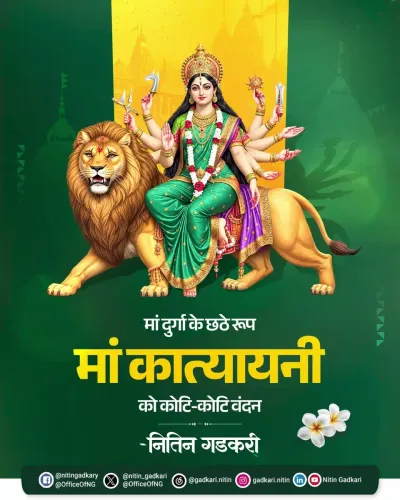
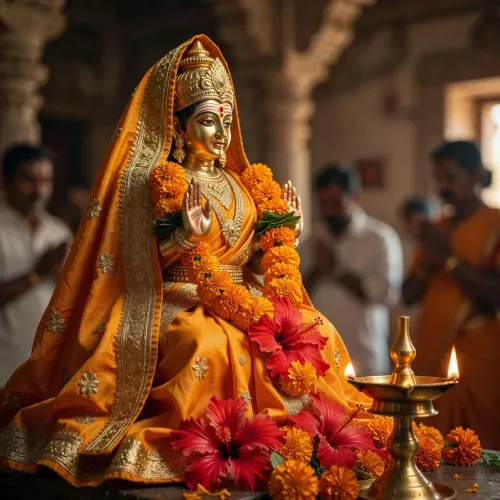
Rajnath Singh greets nation on Maa Katyayani Navratri day
Synopsis
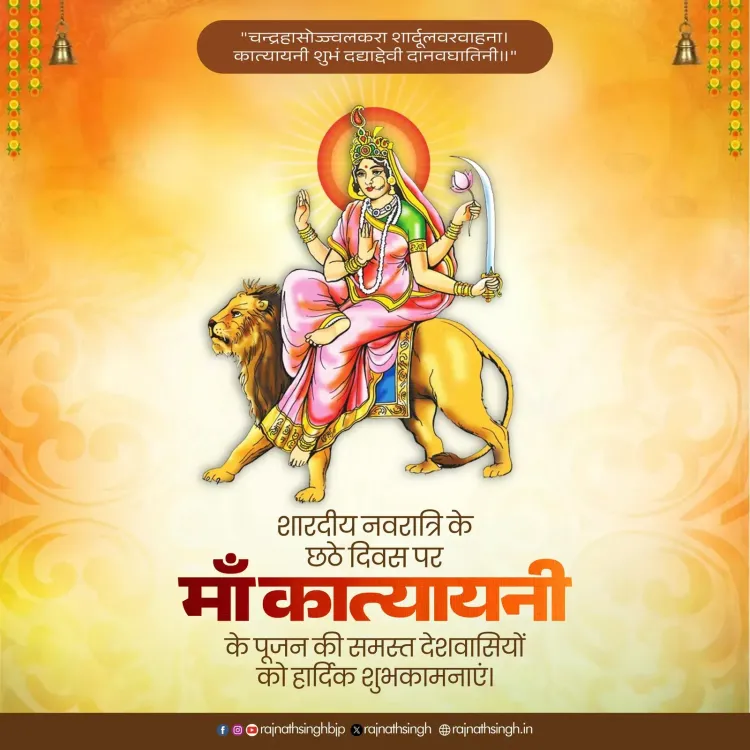
Union Defence Minister Rajnath Singh greeted the nation on Navratri's sixth day with a tribute to Maa Katyayani, the demon-slaying Navadurga form, invoking her as a symbol of courage, truth, and protection of the powerless.
Key Takeaways
Rajnath Singh posted Navratri greetings on Friday, October 16, 2026 , dedicated to Maa Katyayani , the sixth Navadurga form.
He described the goddess's tejasvi svaroop (radiant form) as an inspiration to stand against injustice and protect the weak.
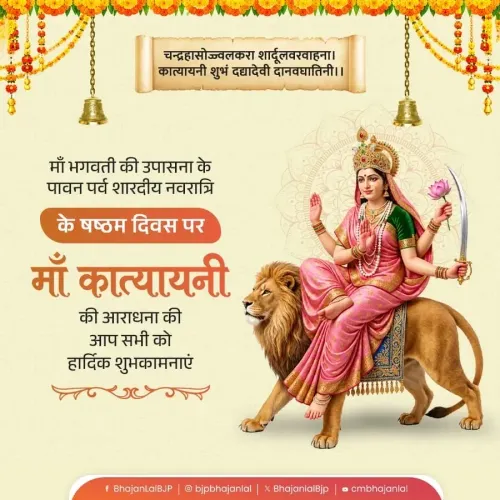
The post included the Sanskrit shloka 'Chandrahasojjvalakarā…' , a classical hymn invoking Katyayani as the slayer of demons.
Maa Katyayani is revered as Mahishasura Mardini and is worshipped on Shashthi , the sixth night of Navratri.
Senior BJP leaders regularly share devotional posts keyed to each day of Navratri as part of a consistent public-cultural tradition.
On the sixth day of Navratri, Union Defence Minister Rajnath Singh invoked the fierce grace of Maa Katyayani — the slayer of Mahishasura — calling her radiant form an eternal inspiration to stand against injustice, uphold truth, and protect the powerless.
Posting on Friday, October 16, 2026, the Defence Minister shared the Sanskrit shloka: 'Chandrahasojjvalakarā shārdūlavaravāhanā, Kātyāyanī shubham dadyād devī dānavghātinī' — meaning, 'She whose hands gleam with the Chandrahasa sword, who rides the finest of tigers, may Goddess Katyayani, the slayer of demons, bestow auspiciousness.' The verse is among the most recited hymns during the Shashthi, or sixth-day, observance of Navratri.
Who is Maa Katyayani and why the sixth day matters
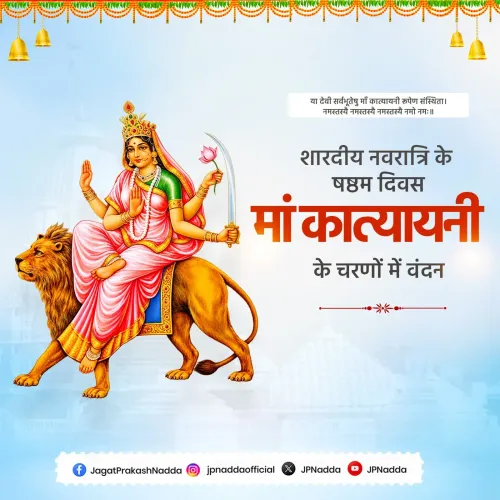
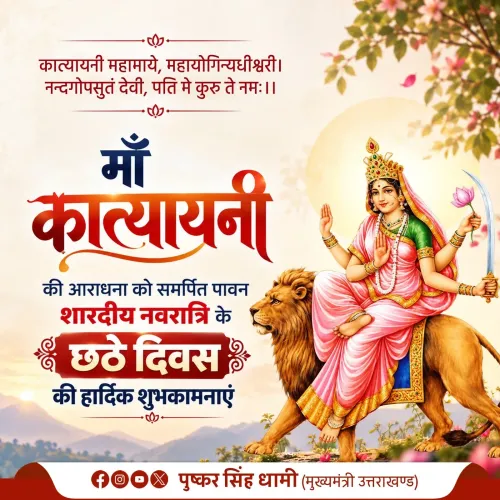
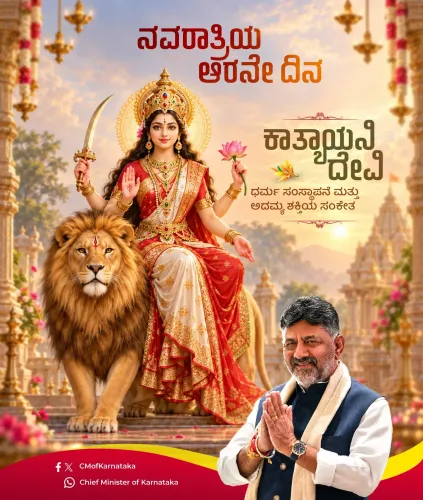
Maa Katyayani is the sixth of the nine Navadurga forms worshipped across nine consecutive nights of Navratri. She is revered as Mahishasura Mardini — the destroyer of the buffalo demon Mahishasura — and is considered among the most warrior-like manifestations of Adi Shakti. Her iconography places her astride a lion or tiger, bearing four arms and a sword, embodying both divine wrath and maternal protection.
Rajnath Singh's message centred on three virtues he attributed to the goddess's form: the courage to resist injustice (anyay ke viruddh khade hone), fidelity to truth (satya ka saath dena), and the protection of the weak (nirbalon ki raksha). He also prayed that the goddess kindle courage, inner strength, and righteousness — saahas, aatmbal aur dharmanishtha — within every devotee.
BJP leaders and Navratri: a well-established public tradition
Senior BJP leaders have long used Navratri's nine days as a moment for public devotional expression, each post timed to the goddess of the respective day. For Rajnath Singh — a politician who has consistently woven cultural and religious idiom into his public persona across tenures as Uttar Pradesh Chief Minister, Union Home Minister, and now Union Defence Minister — such posts reflect a deliberate continuity between personal faith and public office.
The practice carries weight beyond symbolism: for millions of Hindu devotees observing fasts, performing kanya puja, and attending temple gatherings during Navratri, a message from a senior Cabinet minister reinforces the festival's civic dimension alongside its spiritual one.
Point of View
Such messaging during Navratri serves a dual function: it affirms the party's cultural identity to its core voter base while projecting a leader who is personally devout rather than performatively political. The specific virtues Rajnath invoked — courage against injustice, truth, protection of the weak — also carry a subtle resonance with his Defence portfolio, aligning the goddess's martial symbolism with the ministry he heads.
NationPress
16 Oct 2026
Frequently Asked Questions
Which Navratri day is dedicated to Maa Katyayani?
Maa Katyayani is worshipped on the sixth day (Shashthi) of Navratri. She is the sixth of the nine Navadurga forms and is celebrated as the destroyer of the demon Mahishasura.
What did Rajnath Singh post for Navratri 2026?
On October 16, 2026, Rajnath Singh posted greetings for the sixth day of Navratri, invoking Maa Katyayani and sharing a Sanskrit shloka praising her as the sword-bearing, tiger-riding slayer of demons.
What is the meaning of 'Mahishasura Mardini'?
'Mahishasura Mardini' means 'the one who slew Mahishasura', the buffalo demon. It is a widely used epithet for Goddess Durga, especially in her Katyayani form.
What does the Sanskrit shloka in Rajnath Singh's post mean?
The shloka — 'Chandrahasojjvalakarā shārdūlavaravāhanā, Kātyāyanī shubham dadyād devī dānavghātinī' — translates as: 'She whose hands gleam with the Chandrahasa sword, who rides the finest of tigers, may Goddess Katyayani, the slayer of demons, bestow auspiciousness.'
Why do BJP leaders post devotional messages during Navratri?
Senior BJP leaders regularly share devotional posts during Navratri as a form of public cultural expression, timed to each of the nine goddess forms. It reflects the party's emphasis on Hindu cultural identity as part of its public communication.