Rajnath Singh Launches Military Medicine Dept at Lucknow Command Hospital

Synopsis
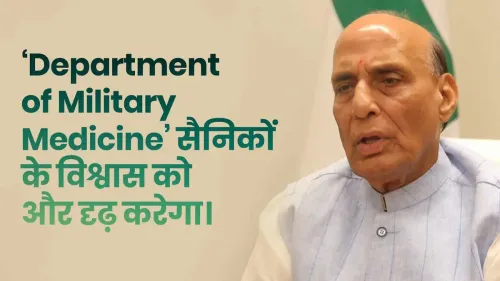
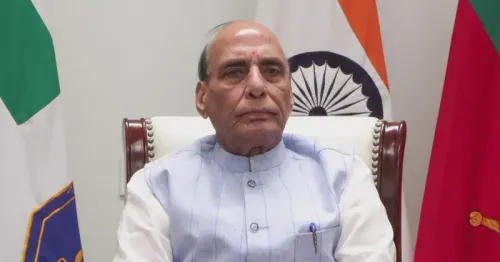
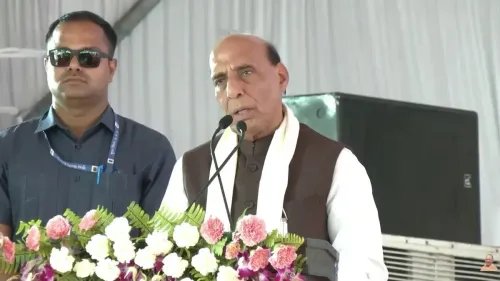
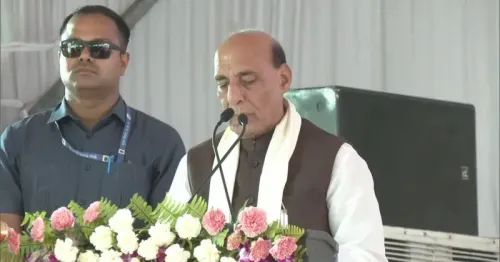
Union Defence Minister Rajnath Singh on 29 July 2026 inaugurated the Department of Military Medicine at Command Hospital, Lucknow, framing it as a milestone in defence modernisation and the Viksit Bharat national development vision.
Key Takeaways
Union Defence Minister Rajnath Singh inaugurated the Department of Military Medicine at Command Hospital, Lucknow on 29 July 2026 .
The department creates a dedicated institutional platform for military medicine research and training within the Central Command's principal hospital.
Singh linked the inauguration to Viksit Bharat , the government's vision for a fully developed India by 2047 .
The move continues a pattern of incremental expansion of Armed Forces Medical Services infrastructure across major commands since the 2010s.
Lucknow's deep military heritage — from 1857 through post-independence cantonment culture — made it a symbolically significant venue for the launch.
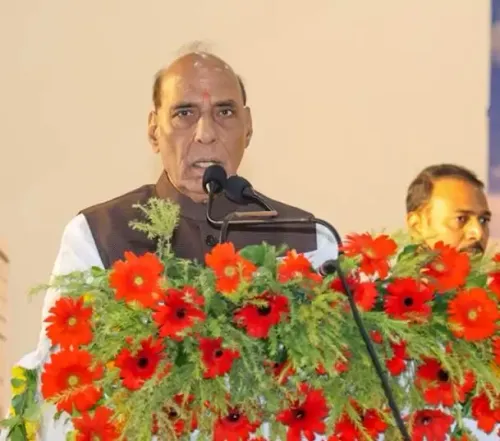
Lucknow has long been synonymous with India's martial heritage — and on Wednesday, 29 July 2026, Union Defence Minister Rajnath Singh added a new chapter to that legacy, inaugurating the Department of Military Medicine at Command Hospital, Lucknow, signalling a deliberate push to strengthen the scientific backbone of soldier healthcare.
Posting on X in Hindi, Singh wrote: 'लखनऊ सदैव हमारी सैन्य परंपराओं का गवाह रहा है' — 'Lucknow has always been a witness to our military traditions. Today, with the launch of the Department of Military Medicine at Command Hospital, this city is witnessing a new chapter in military medicine and research. This will further strengthen our resolve towards a developed India and empowered armed forces.'
A hospital upgraded, a gap addressed
Command Hospital Lucknow is the principal tertiary-care facility for Indian Army personnel across Uttar Pradesh and the surrounding Central Command region. For years, military medicine as a distinct academic and research discipline — separate from routine clinical care — lacked a dedicated institutional home within the hospital's structure. The new department is designed to close that gap, providing a formal platform for research, training, and the development of medical protocols tailored to the unique physiological and operational demands placed on soldiers. The Ministry of Defence has been incrementally expanding Armed Forces Medical Services infrastructure across major commands since the 2010s, with a focus on building research capacity alongside clinical services. Today's inauguration fits that pattern — an upgrade to an existing institution rather than a greenfield project, but one with structural significance for how military medicine is taught and practised within the command.Where 'Viksit Bharat' meets the barracks
Singh explicitly linked the inauguration to Viksit Bharat — the government's flagship national vision targeting a fully developed India by 2047. The framing is deliberate: defence modernisation, in the government's telling, is not separate from economic and social development but integral to it. Stronger medical research within the armed forces means healthier, more operationally ready soldiers; it also means potential spillovers into civilian medical science, particularly in trauma care, high-altitude medicine, and disaster response — domains where military researchers have historically led. The Atmanirbhar Bharat initiative, launched in 2020, extended this logic to defence medical technology — pushing for indigenous development of equipment, pharmaceuticals, and training protocols rather than reliance on imports. A dedicated Department of Military Medicine at a command hospital is one institutional expression of that ambition. Lucknow's choice as the venue carries its own weight. The city's military history stretches from the 1857 Siege of Lucknow through post-independence cantonment culture, and it remains home to significant Army infrastructure. Launching a research-oriented medical department here sends a signal about the government's intent to anchor defence modernisation in cities with deep institutional roots — not just in metros or newer defence corridors. The next test will be whether similar departments follow at Command Hospitals in other commands — and whether the research mandate translates into published outcomes, new medical protocols, or indigenous medical technology that reaches the field soldier.Point of View
Rajnath Singh is doing political and policy work simultaneously — tethering a service-level institutional upgrade to the government's overarching 2047 development narrative. The choice of Lucknow is also pointed: as Singh's own political home ground and a city with layered military history, it reinforces the BJP's effort to present defence modernisation as culturally rooted, not merely technocratic. The real measure of impact will come if this department model is replicated across other commands and produces verifiable research outcomes.
NationPress
28 Oct 2026
Frequently Asked Questions
What is the Department of Military Medicine launched in Lucknow?
It is a newly inaugurated department at Command Hospital Lucknow dedicated to military medicine research and training, providing a formal institutional home for medical science tailored to the needs of Indian Army personnel.
Who inaugurated the Department of Military Medicine at Command Hospital Lucknow?
Union Defence Minister Rajnath Singh inaugurated the department on 29 July 2026.
What is Command Hospital Lucknow?
Command Hospital Lucknow is the Indian Army's principal tertiary-care hospital for the Central Command, serving defence personnel across Uttar Pradesh and surrounding regions.
How does this relate to Viksit Bharat?
Rajnath Singh directly linked the inauguration to Viksit Bharat, the government's national vision for a fully developed India by 2047, framing stronger military medical research as integral to that goal.
Will other Command Hospitals get similar departments?
No official announcement has been made, but the pattern of incremental expansion of Armed Forces Medical Services infrastructure suggests similar upgrades at other command hospitals are possible to watch for.