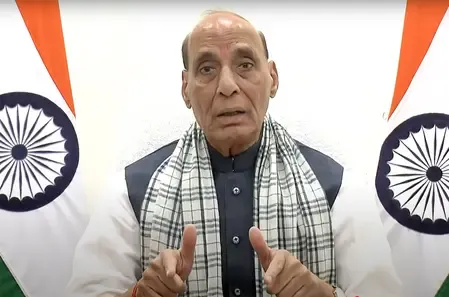
Rajnath Singh reviews 16 defence PSUs, orders five-year self-reliance roadmap
Synopsis
Rajnath Singh's review of all 16 defence PSUs on 1 September was more than a performance check — it was a direct order to plan for the next five years of India's self-reliance push. With AI, drones, and autonomous systems reshaping warfare, Singh framed DPSU transformation not as industrial policy but as a national security imperative.
Key Takeaways
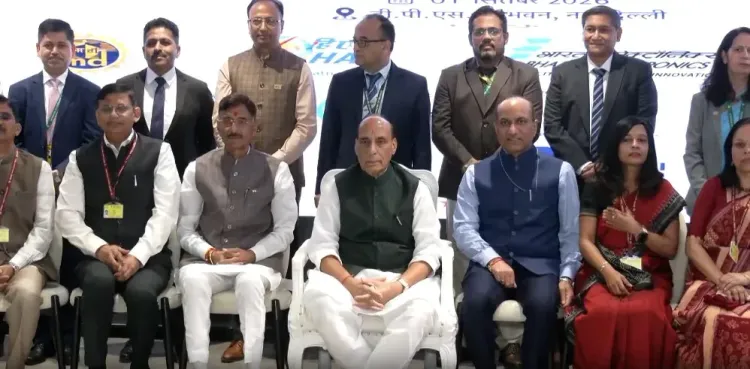
Defence Minister Rajnath Singh reviewed all 16 DPSUs on 1 September at Defence PSU Bhawan, New Delhi .
DPSUs have been directed to prepare a five-year roadmap aligned with India's emerging security challenges.
Priority areas include indigenous production, R&D, technological innovation, and defence exports.
Singh called DPSU transformation 'a national security imperative' , not merely an economic reform.
DPSUs are expected to adopt AI, drones, autonomous systems , and cyber capabilities to match evolving warfare demands.
India's growing defence export footprint was cited as a key opportunity for DPSUs to leverage.
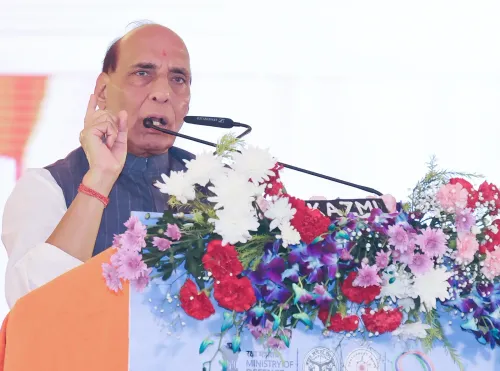
Defence Minister Rajnath Singh on Tuesday, 1 September conducted a wide-ranging review of all 16 Defence Public Sector Undertakings (DPSUs) at Defence PSU Bhawan, New Delhi, directing each unit to prepare a concrete five-year roadmap aligned with India's evolving security requirements. The review underscored the Centre's push to deepen indigenous defence production and reduce dependence on foreign military technology.
Key Developments from the Review
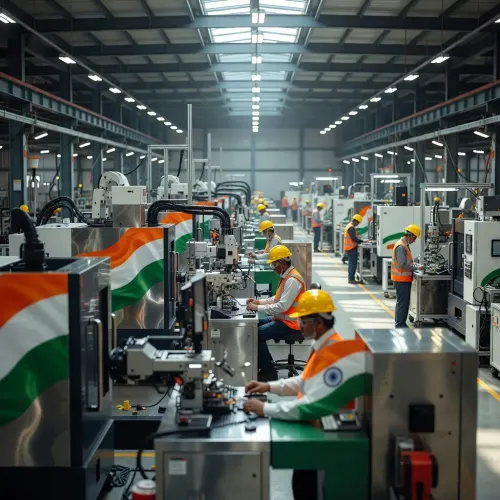
The meeting centred on four priority areas: boosting indigenous production, accelerating technological innovation, strengthening research and development, and expanding defence exports. Singh assessed the performance and achievements of all 16 DPSUs and commended their contribution to India's record defence production figures, according to the Ministry of Defence.
He urged the public sector companies to continuously upgrade their production capabilities, technological competence, and R&D efforts to meet the future requirements of the Indian Armed Forces through homegrown solutions.
What the Defence Minister Said
Singh was unambiguous about the strategic stakes involved. 'The transformation of DPSUs is not only an economic or industrial necessity but a national security imperative,' he said at the meeting.
He stressed that the overhaul of defence PSUs should not be viewed as a mere industrial reform exercise but as a foundational shift in how India secures itself. He also called on DPSUs to adopt emerging technologies — including artificial intelligence, autonomous systems, drones, and cyber capabilities — and adapt to the realities of modern, technology-driven warfare.
Focus on Defence Exports
Singh highlighted the growing global acceptance of Indian defence products and urged DPSUs to develop competitive, high-quality systems capable of capturing a larger share of international markets. With Indian defence exports on an upward trajectory in recent years, the minister signalled that DPSUs are expected to be central to sustaining and accelerating that momentum.
He directed the units to strengthen their export pipelines and position themselves as credible suppliers in the global defence market — a goal that aligns with India's broader Aatmanirbhar Bharat defence agenda.
Broader Context and What Comes Next
The review comes at a moment when the nature of warfare is shifting rapidly. AI-enabled systems, drone warfare, and advanced weapon platforms are redefining military power, placing a premium on technological agility. According to the Ministry of Defence, DPSUs are already undertaking reforms to align their operations with this changing landscape.
The five-year roadmaps, once submitted, are expected to guide investment priorities, R&D allocation, and export strategy for each DPSU. How rigorously those plans are implemented — and measured — will determine whether this review translates into a structural shift or remains a policy directive on paper.
Point of View
But accountability mechanisms — independent audits, export targets with teeth, R&D spend thresholds — are what separate a strategic reset from a well-attended review meeting. With modern warfare increasingly decided by AI and autonomous systems, the five-year window is narrow.
NationPress
17 Oct 2026
Frequently Asked Questions
Why did Rajnath Singh review the 16 DPSUs on 1 September?
Defence Minister Rajnath Singh conducted the review to assess the annual performance of all 16 Defence Public Sector Undertakings and to direct them to prepare a five-year roadmap for strengthening India's indigenous defence production and self-reliance. The meeting was held at Defence PSU Bhawan in New Delhi.
What is the five-year roadmap that DPSUs have been asked to prepare?
Each of the 16 DPSUs has been directed to draw up a concrete, practical plan covering the next five years, focused on enhancing indigenous production, accelerating R&D, adopting emerging technologies such as AI and drones, and expanding defence exports. The roadmaps are intended to align DPSU capabilities with India's evolving security requirements.
What did Rajnath Singh say about the importance of DPSU transformation?
Singh stated that 'the transformation of DPSUs is not only an economic or industrial necessity but a national security imperative.' He emphasised that the shift should be seen as foundational to India's security architecture, not merely as an industrial reform exercise.
How does this review connect to India's defence export ambitions?
Singh urged DPSUs to develop competitive, high-quality products for global markets, noting that Indian defence products are gaining increasing international acceptance. DPSUs are expected to play a central role in sustaining India's upward defence export trajectory.
Which technologies did the Defence Minister highlight as priorities for DPSUs?
Singh specifically called on DPSUs to adopt artificial intelligence, autonomous systems, drones, cyber capabilities, and advanced weapon platforms — technologies he described as key components of modern, technology-driven warfare.