Rajnath Singh hails GSLV-F18/NVS-03 launch, cites NavIC boost
Synopsis
Union Defence Minister Rajnath Singh congratulated ISRO on the successful launch of GSLV-F18 carrying NVS-03, a second-generation NavIC navigation satellite. The mission advances India's indigenous regional navigation system and reinforces the Atmanirbhar Bharat framework linking space capability to strategic self-reliance.
Key Takeaways
GSLV-F18 successfully placed the NVS-03 navigation satellite into orbit, ISRO confirmed on 31 October 2026 .
NVS-03 is a second-generation satellite for India's indigenous NavIC regional navigation system, first approved in 2006 and operational since 2018 .
Union Defence Minister Rajnath Singh specifically cited 'strategic and critical technologies,' highlighting NavIC's dual civilian-military significance.
The mission is framed within the Atmanirbhar Bharat initiative launched in 2020 , which positions space infrastructure as strategic infrastructure.
India aims to complete a robust seven-satellite NVS constellation , reducing positional dependence on foreign-controlled systems like the US GPS.
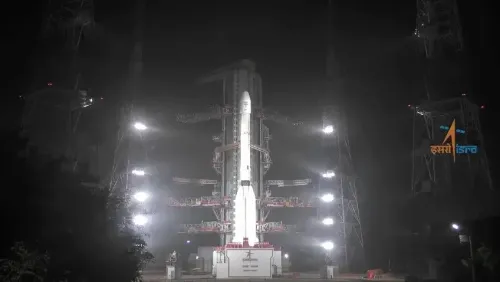
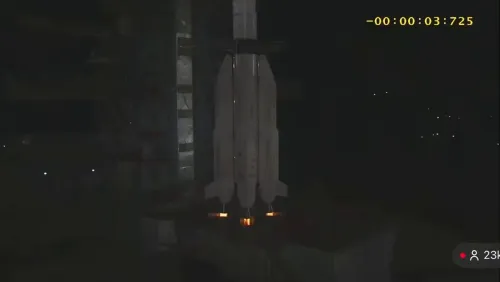
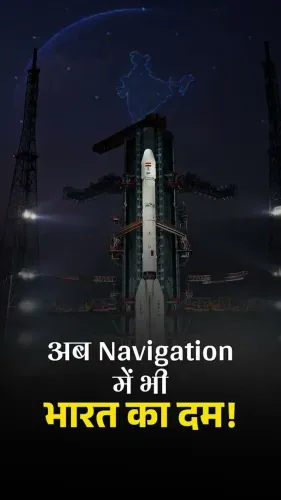
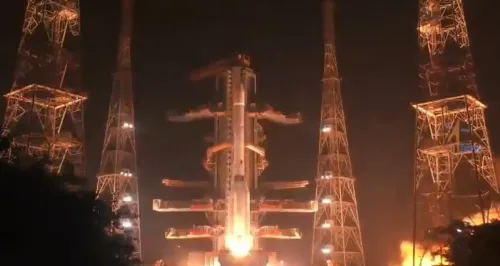
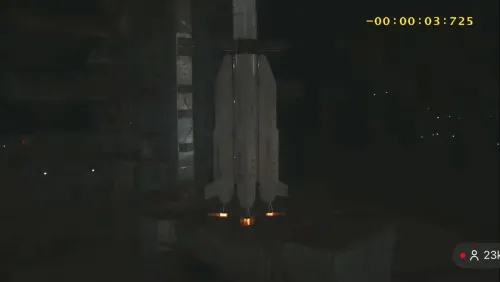
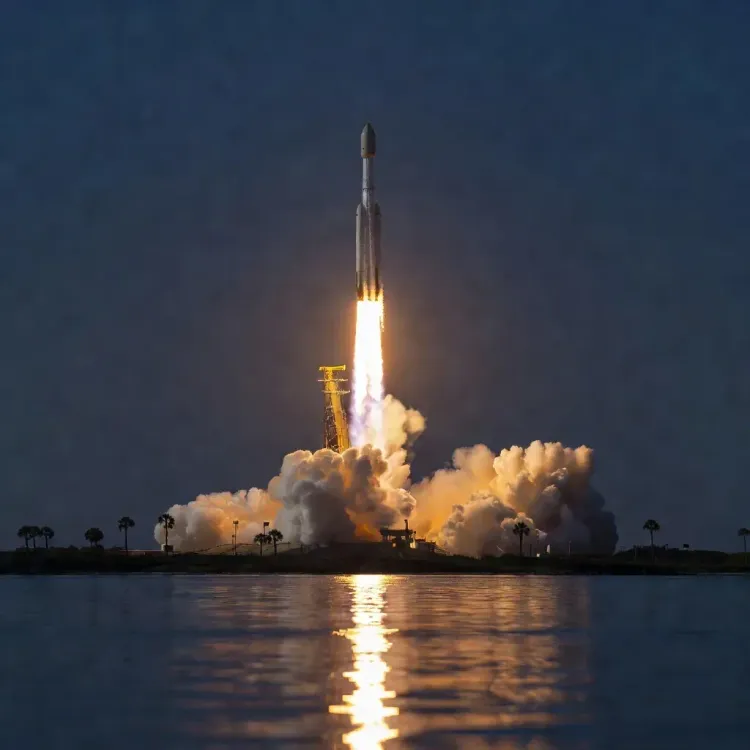
India's drive for navigation sovereignty just cleared another orbital milestone. Union Defence Minister Rajnath Singh on Saturday, 31 October 2026, congratulated ISRO scientists and engineers on the successful launch of GSLV-F18 carrying the NVS-03 navigation satellite, calling it a direct advance of India's indigenous NavIC positioning system and a proof-point of strategic technological self-reliance.
Posting on X, Singh said: 'This achievement strengthens India's indigenous NavIC navigation system and advances our capabilities in strategic and critical technologies. It reflects the vision of an Atmanirbhar Bharat [self-reliant India], driven by innovation and technological self-reliance.'
What NVS-03 adds to the NavIC constellation
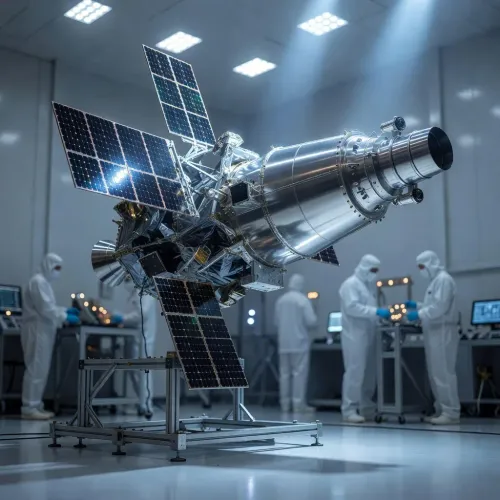
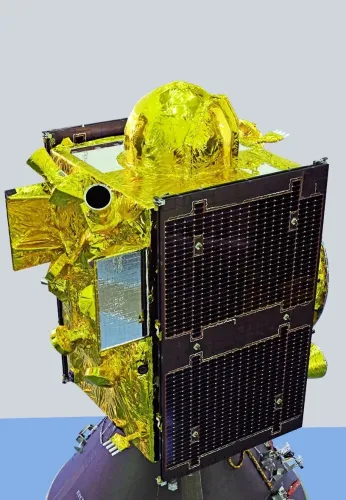
NavIC — Navigation with Indian Constellation — was conceived as India's answer to GPS, Galileo, and China's BeiDou. The project received government approval in 2006; ISRO began orbital deployments in 2013, and the system was declared operational for civilian use in 2018. The NVS series represents the second generation of NavIC satellites, designed with improved signal coverage, higher accuracy, and longer operational lifespans. Each new NVS satellite nudges the constellation closer to a robust, redundant seven-satellite architecture that can underpin both civilian and defence-grade positioning services. The Geosynchronous Satellite Launch Vehicle (GSLV) — the workhorse that carried NVS-03 into geostationary transfer orbit — is itself an indigenous programme, making the mission a double demonstration of Indian launch and payload capability in the same flight.Why the Defence Ministry's voice matters here
It is notable that the congratulatory statement comes from the Ministry of Defence, not just the Space Department. Navigation satellites sit at an explicit civil-military intersection: precise, jamming-resistant positioning is as critical to a guided munition or a naval vessel as it is to a smartphone map. Successive administrations have framed NavIC within the broader Atmanirbhar Bharat initiative — launched in 2020 — precisely to signal that space infrastructure is strategic infrastructure. Singh's phrasing, 'strategic and critical technologies,' underlines that dual-use logic without ambiguity. Rajnath Singh, who also served as Union Home Minister and Chief Minister of Uttar Pradesh before taking the Defence portfolio, has consistently used ISRO milestones to reinforce the government's technology-sovereignty messaging. This launch fits that pattern squarely.The road the NVS series still has to travel
A full, resilient NavIC constellation requires completing the planned seven-satellite NVS build-out. Each successful launch reduces India's positional dependence on the US-controlled GPS, which can theoretically be degraded or denied in conflict scenarios. Analysts tracking the programme will now watch for announcements on NavIC chipset integration into defence platforms — aircraft, warships, and precision-guided systems — where an indigenous navigation signal offers both operational security and supply-chain independence that no foreign system can guarantee. For India's space scientists, this is one more mission nominal. For India's strategic planners, it is one fewer vulnerability.Point of View
Not routine courtesy. By invoking 'strategic and critical technologies,' Rajnath Singh frames NavIC explicitly as a national security asset — a posture that justifies continued defence-budget alignment with space infrastructure spending. The NVS series build-out fits a decade-long pattern of India insulating its military positioning capability from the kind of GPS denial that adversaries could theoretically exploit during a conflict. Each launch also serves a domestic political function: reinforcing the Atmanirbhar Bharat narrative ahead of any defence procurement or export diplomacy conversation.
NationPress
31 Oct 2026
Frequently Asked Questions
What is the NVS-03 satellite and what does it do?
NVS-03 is a second-generation NavIC navigation satellite launched aboard ISRO's GSLV-F18. It strengthens India's indigenous regional satellite navigation system, providing accurate positioning, navigation and timing services independent of foreign systems like the US GPS.
What is NavIC and how does it differ from GPS?
NavIC (Navigation with Indian Constellation) is India's own regional satellite navigation system, designed and operated by ISRO. Unlike GPS, which is controlled by the United States military, NavIC is entirely under Indian control, making it more secure for both civilian and defence applications within the region.
Why did the Defence Minister comment on an ISRO space launch?
Navigation satellites have clear dual-use value — they support both civilian services and military operations such as precision guidance and maritime navigation. The Defence Ministry routinely engages with NavIC milestones because independent navigation capability is a strategic asset.
What is the Atmanirbhar Bharat initiative?
Atmanirbhar Bharat, meaning 'self-reliant India,' is a government initiative launched in 2020 that promotes indigenous development across defence, technology and strategic sectors to reduce dependence on foreign suppliers and systems.
How many satellites does NavIC need to be fully operational?
The planned NVS-series constellation aims for seven satellites to provide robust, redundant coverage. Each successful NVS launch moves India closer to a complete second-generation NavIC system.